Satluj row: Khalra's wife Paramjit Kaur urges Akal Takht to form 'People's Commission'
Source Entity
Latest News: Today's Latest News Headlines from India & World | Hindustan Times | Hindustan Times
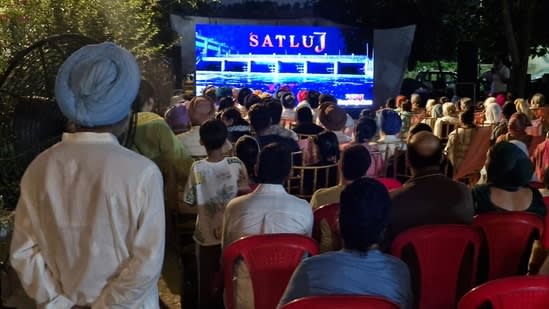
Kaur's remarks followed renewed public attention on the Khalra case after the release, and takedown, of the Diljit Dosanjh-starrer film 'Satluj' from Zee5.
The Intersection of Art and Justice: The 'Satluj' Row and the Khalra Case
The recent controversy surrounding the film Satluj, starring Diljit Dosanjh, has reignited a painful and complex chapter of Punjab's history. The film's abrupt release and subsequent removal from the streaming platform Zee5 have acted as a catalyst, bringing the long-standing quest for justice in the Dasmesh Khalra case back into the public consciousness. Paramjit Kaur, the wife of the late activist, has leveraged this moment of heightened visibility to appeal to the Akal Takht, the highest temporal seat of Sikhism, to intervene by forming a 'People's Commission'.
The Catalyst: The 'Satluj' Film Controversy
The removal of Satluj from Zee5 suggests a tension between creative storytelling and the political sensitivities surrounding the insurgency period in Punjab. When films touch upon state violence or human rights abuses, they often face censorship or corporate withdrawal to avoid political friction. In this instance, the film's removal did not silence the conversation; instead, it amplified the grievances of families who feel that the truth of their loved ones' disappearances has been systematically suppressed. The 'Satluj row' thus transcends cinema, becoming a proxy for the broader struggle for historical accountability.
Historical Context: The Legacy of Dasmesh Khalra
To understand Paramjit Kaur's plea, one must look back at the work of Dasmesh Khalra. Khalra was a pivotal human rights activist who courageously exposed the practice of 'secret cremations' carried out by security forces during the Punjab insurgency. His efforts to document the thousands of missing persons and force the state to acknowledge these deaths made him a target. His abduction and subsequent killing by security forces became a symbol of the state's brutality and the extreme risks faced by those seeking the truth. The 'Khalra case' is not merely a legal battle but a fight for the dignity of the disappeared.
The Significance of the Akal Takht's Involvement
By urging the Akal Takht to form a 'People's Commission', Paramjit Kaur is seeking a form of legitimacy and justice that the formal legal system has arguably failed to provide. The Akal Takht holds immense moral and spiritual authority over the Sikh community. A commission backed by this institution would carry a weight that transcends government-appointed inquiries, which are often viewed with skepticism by the victims' families. A 'People's Commission' implies a grassroots, community-led effort to document truths and provide a platform for survivors, effectively bypassing the bureaucratic hurdles of state-led investigations.
Broader Implications for Human Rights in Punjab
This event highlights a persistent trend in Punjab: the cyclical return of trauma when the state fails to provide comprehensive closure. The demand for a commission underscores a deep-seated mistrust of official narratives regarding the 1980s and 90s. When the state refuses to acknowledge the scale of forced disappearances, the void is filled by art and personal activism. The current row suggests that as long as there is a lack of official transparency, cultural products like Satluj will continue to trigger social unrest and renewed demands for judicial accountability.
Future Outlook and Conclusion
Looking ahead, the response of the Akal Takht will be critical. If the institution chooses to engage with Paramjit Kaur's request, it could lead to a renewed social movement for truth and reconciliation in the region. Conversely, if the plea goes unanswered, it may deepen the sense of alienation among the families of the disappeared. Ultimately, the 'Satluj' controversy proves that the wounds of the past remain open, and the call for a 'People's Commission' is a poignant reminder that for many in Punjab, justice is not a historical footnote but an ongoing necessity.
Verification Required?