We Know Simple Fluids Can Flow. Turns Out, Some Can Fracture
Source Entity
Hacker News
<a href="https://news.ycombinator.com/item?id=48877668">Comments</a>
The Fluid Fracture Paradox: Challenging Classical Mechanics
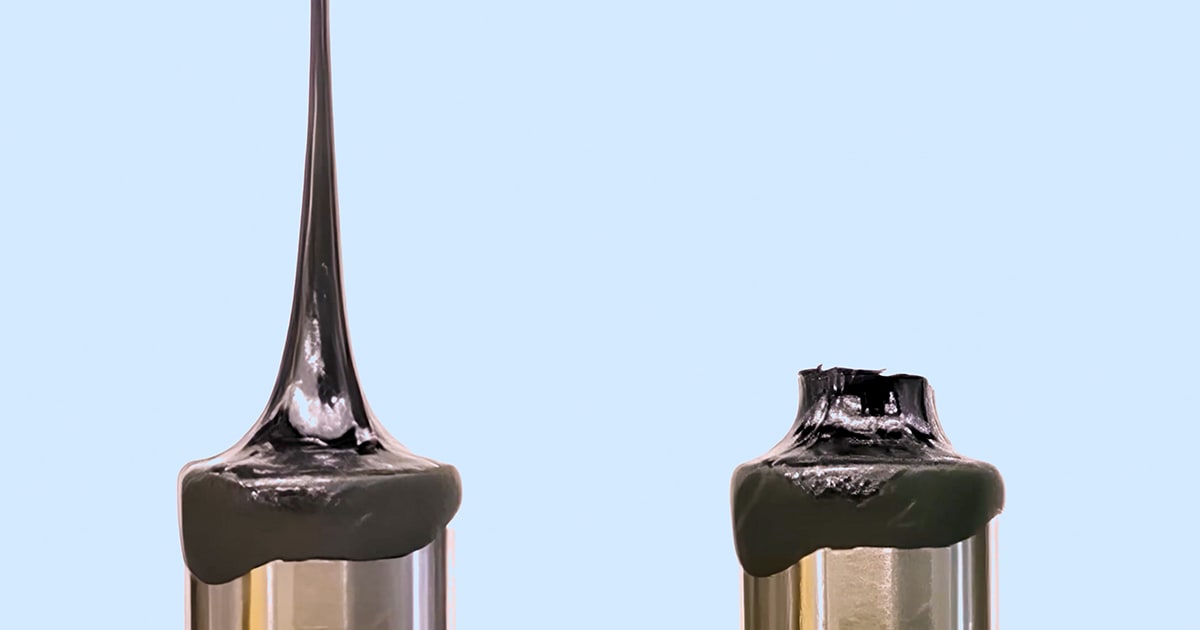
For centuries, the fundamental distinction in physics has been between solids, which maintain shape and can fracture, and fluids, which flow to accommodate stress. This binary view has underpinned much of our understanding of material science and classical mechanics. However, recent scientific observations are shattering this dichotomy, revealing that certain complex fluids can exhibit "fracture"—a behavior previously thought to be the exclusive domain of brittle solids. This discovery suggests that the line between liquid and solid behavior is far more blurred than once believed.
The Mechanics of the Break
Traditional fluid dynamics, largely governed by the Navier-Stokes equations, assumes that fluids will deform continuously under applied stress. In "simple" or Newtonian fluids like water, the viscosity remains relatively constant, and the material flows predictably. The discovery that some fluids can fracture suggests a breakdown in this continuous deformation. Instead of flowing smoothly to relieve pressure, the internal structure of certain fluids reaches a critical tension point where it essentially "snaps," creating localized zones of structural failure that mimic the crack propagation seen in solid materials.
Complexity and the Role of Molecular Entanglement
This phenomenon is most prevalent in non-Newtonian fluids, particularly those with high molecular complexity, such as polymer solutions. In these substances, long-chain molecules become heavily entangled, creating a temporary, web-like internal network. When subjected to rapid or extreme mechanical stress, these entanglements cannot rearrange themselves quickly enough to allow for smooth flow. The resulting buildup of elastic energy leads to a sudden, catastrophic failure of the fluid's internal structure, effectively causing the liquid to "crack" under the strain.
Broader Implications for Engineering and Industry
The ability to predict and control fluid fracture has profound implications for various industrial sectors. In polymer processing and large-scale chemical manufacturing, understanding when a fluid will transition from a flowing state to a fracturing state is critical for preventing equipment damage and ensuring product consistency. Similarly, in the field of high-performance lubrication, where fluids are subjected to intense shear, understanding these fracture mechanics can lead to the development of more resilient synthetic oils that maintain structural integrity under extreme pressure.
Future Trends in Soft Matter Physics
Looking ahead, this discovery is expected to drive a new wave of research in soft matter physics and rheology. As scientists develop more sophisticated computational models, they will be able to simulate these fracture events with unprecedented precision. This will likely lead to the "engineering" of fluids with bespoke properties—materials that can flow like liquids during application but exhibit solid-like fracture resistance when subjected to specific stresses. Such advancements could revolutionize additive manufacturing and the creation of advanced smart materials.
Conclusion
The realization that fluids can fracture represents a significant paradigm shift in our understanding of matter. By bridging the gap between the physics of liquids and the physics of solids, researchers are uncovering a more nuanced continuum of material behavior. This breakthrough not only refines our theoretical frameworks but also provides the foundational knowledge necessary to manipulate complex matter in increasingly sophisticated and controlled ways.