CJP protest day 23: Wangchuk’s health worsens as fast enters 15th day
Source Entity
India Latest News: Top National Headlines Today & Breaking News | The Hindu
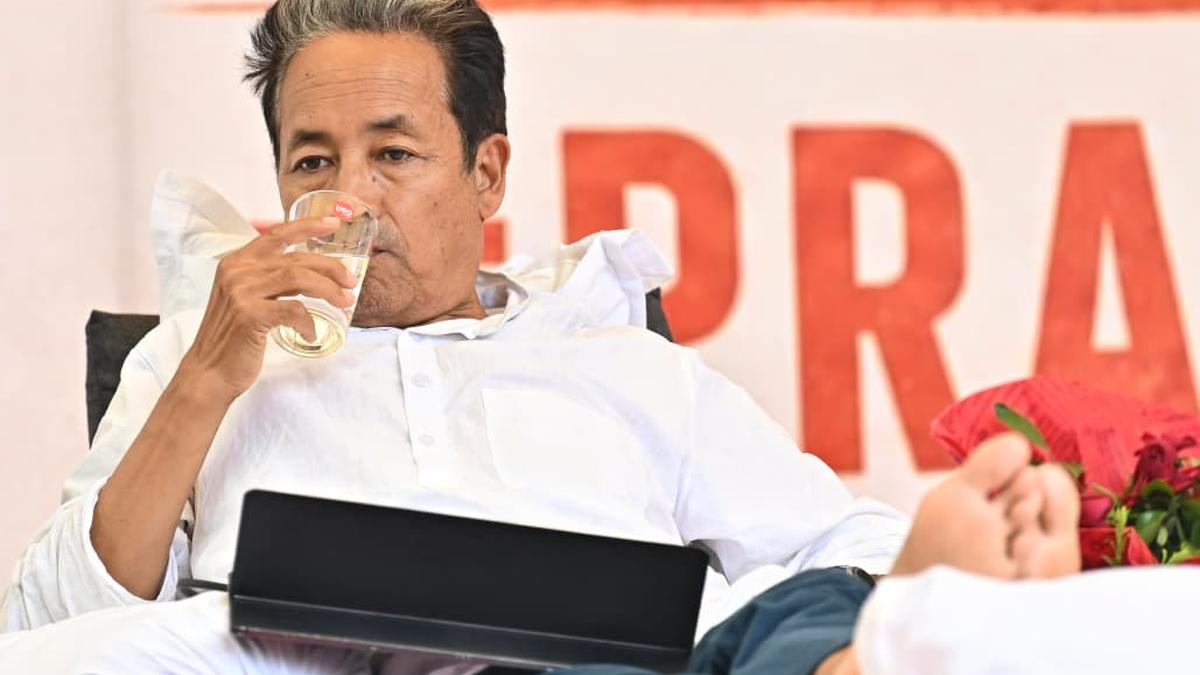
The CJP stated that several political leaders and public intellectuals were scheduled to visit the protest site during the day to express solidarity with the agitation
The Escalating Crisis: Sonam Wangchuk’s Fast and the CJP Protest
The ongoing CJP protest has reached a critical juncture on its 23rd day, marked by the alarming deterioration of Sonam Wangchuk’s health. As Wangchuk enters the 15th day of his fast, the movement has transitioned from a regional demonstration into a high-stakes humanitarian and political concern. The act of fasting, a powerful tool of non-violent resistance deeply rooted in the Indian political tradition, is being used here to draw national attention to the grievances of the people of Ladakh. The physical toll on Wangchuk serves as a visceral symbol of the perceived desperation and urgency of the community's demands.
The Physical and Symbolic Weight of the Fast
A 15-day fast represents a severe physiological strain, often leading to critical electrolyte imbalances and organ stress. In the context of this protest, Wangchuk's declining health is not merely a medical issue but a strategic political signal. By risking his life, Wangchuk is attempting to force a moral reckoning from the central government. Historically, hunger strikes in India—most notably those led by Mahatma Gandhi—have been used to highlight the gap between state power and grassroots justice. The worsening health of a widely respected figure like Wangchuk increases the political cost for the government, as any further decline could ignite widespread public indignation.
Understanding the Core Demands: Statehood and the Sixth Schedule
To understand why this protest has persisted for 23 days, one must look at the underlying demands for statehood and the implementation of the Sixth Schedule of the Indian Constitution. Since the reorganization of Jammu and Kashmir in 2019, Ladakh has been a Union Territory without a legislature, leaving local residents feeling disenfranchised. The demand for the Sixth Schedule is rooted in the need for tribal autonomy and the protection of Ladakh's unique cultural and linguistic identity. Moreover, there is a profound environmental urgency; Ladakh’s fragile Himalayan ecosystem is under threat from industrial exploitation, making constitutional safeguards essential for the region's ecological survival.
The Role of Political Solidarity and Intellectual Support
The announcement that several political leaders and public intellectuals are visiting the protest site is a significant development. This influx of support suggests that the CJP protest is successfully bridging the gap between a localized regional struggle and a broader national discourse. When intellectuals and cross-party political figures align with a movement, it legitimizes the grievances and prevents the state from framing the protest as a fringe or isolated event. This collective solidarity creates a protective layer around the protestors and puts additional pressure on administrative bodies to initiate a formal dialogue rather than relying on containment strategies.
Strategic Implications for Border Security and Governance
From a governance perspective, the unrest in Ladakh is particularly sensitive due to the region's strategic location bordering China and Pakistan. The Indian government faces a complex balancing act: maintaining strict central control for national security reasons while addressing the democratic aspirations of the local population. Prolonged instability or a health crisis involving a prominent leader like Wangchuk could potentially alienate the local populace in a geopolitically volatile zone. The failure to address these grievances through diplomatic channels may lead to a deeper trust deficit between the residents of the frontier and the central administration.
Future Trends and Potential Outcomes
Looking forward, the trajectory of this protest likely depends on the government's immediate response to Wangchuk's health crisis. There are two primary scenarios: a strategic concession where the government opens a high-level dialogue to discuss constitutional safeguards, or a continued standoff that could lead to a medical emergency. If the government remains unresponsive, the movement may see an expansion in participation, drawing in more youth and civil society organizations from across the country. The intersection of environmental activism and political rights is a growing trend in global protests, and this event is a prime example of how ecological concerns are becoming inextricably linked to governance.
Conclusion
The 23rd day of the CJP protest marks a perilous moment for both Sonam Wangchuk and the political stability of the region. The convergence of a deteriorating health condition, a dedicated fast, and growing intellectual solidarity has created a volatile atmosphere. Ultimately, the resolution of this crisis will depend on whether the state views the demands for the Sixth Schedule and statehood as a threat to security or as a necessary step toward inclusive and sustainable governance in the Himalayas.
Verification Required?