Day 24 of CJP protest: Wangchuk loses 8.2 kg as fast enters 16th day; 'lives at stake', says Dipke
Source Entity
India Latest News: Top National Headlines Today & Breaking News | The Hindu
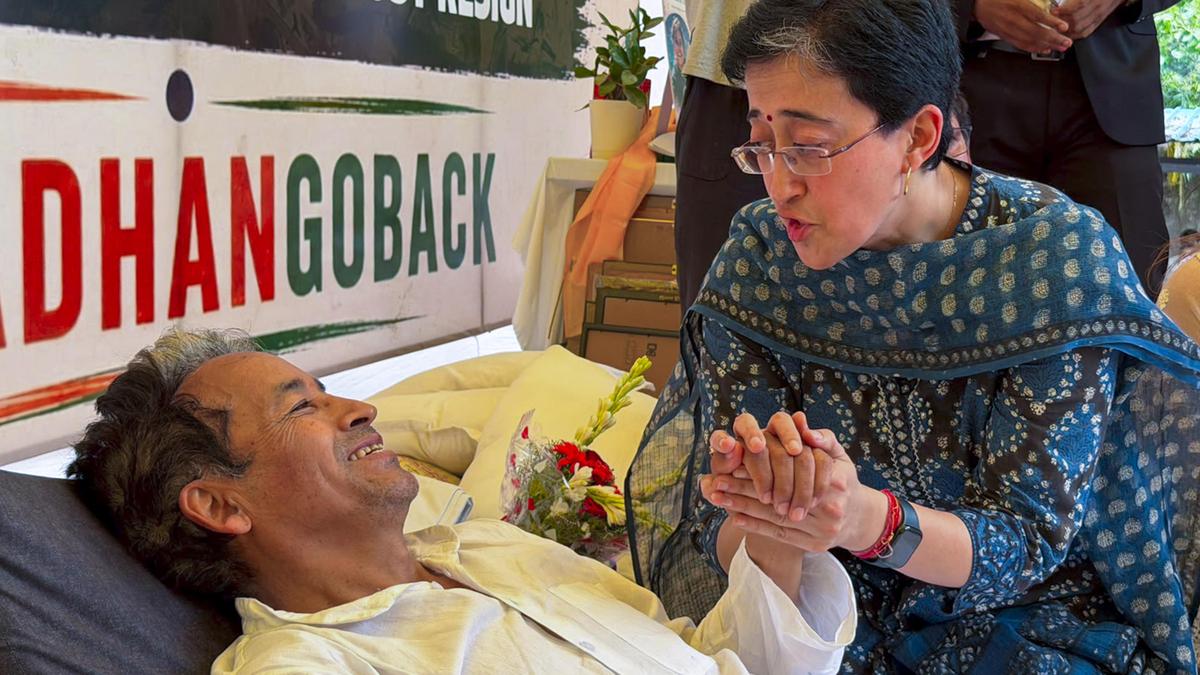
On the day, an AAP delegation led by former Delhi Chief Minister Atishi visited the protest site and expressed solidarity with the agitation, according to the CJP
The Human Cost of Advocacy: Sonam Wangchuk's Fast for Ladakh
The ongoing protests led by the Climate Justice Protest (CJP) have reached a critical juncture, marked by the deteriorating health of renowned environmentalist and educator Sonam Wangchuk. As the overall protest enters its 24th day, Wangchuk's personal fast has stretched to 16 days, resulting in a significant weight loss of 8.2 kg. The warning from Dipke that 'lives are at stake' underscores the physical toll of this hunger strike, transforming a political demand into a medical emergency. This escalation highlights the desperation of the Ladakhi people to secure their environmental and cultural future through constitutional means.
The Political Dimension and External Solidarity
The visit of an Aam Aadmi Party (AAP) delegation, led by former Delhi Chief Minister Atishi, signals a broadening of the protest's political footprint. By expressing solidarity with the CJP, the AAP is aligning itself with a grassroots movement that challenges the central government's administrative approach to Ladakh. This political endorsement suggests that the demands for Ladakh's autonomy are transitioning from a regional grievance to a national talking point, potentially creating a coalition of political entities that are critical of the Union government's handling of the Himalayan territories.
Understanding the Core Demand: The Sixth Schedule
At the heart of this agitation is the demand for the inclusion of Ladakh in the Sixth Schedule of the Indian Constitution. Historically, the Sixth Schedule provides for the administration of tribal areas, allowing for the creation of Autonomous District Councils (ADCs) that have legislative, judicial, and administrative powers. For Ladakh, this is not merely a bureaucratic preference but a survival strategy. The region's inhabitants fear that without these safeguards, their ancestral lands and fragile ecosystems will be exposed to unregulated industrial exploitation and corporate land grabs, erasing the unique cultural identity of the high-altitude desert.
Environmental Stakes in the High Himalayas
Sonam Wangchuk's protest is deeply intertwined with environmental preservation. Ladakh is one of the most ecologically sensitive zones in the world, acting as a critical water tower for millions. The fear of large-scale mining and unplanned urbanization—which often follows the absence of local autonomy—poses a direct threat to the glaciers and biodiversity of the region. By leveraging his global reputation as an innovator and environmentalist, Wangchuk is framing the struggle for the Sixth Schedule as a fight for climate justice, arguing that local governance is the only effective way to ensure sustainable development in the Himalayas.
Historical Context and the Path to Protest
To understand the current tension, one must look back to 2019, when Ladakh was separated from Jammu and Kashmir to become a separate Union Territory (UT). While initially welcomed by many as a fulfillment of a long-standing dream, the lack of a legislature in the UT structure left the local population feeling disenfranchised. The transition from a state-led administration to a centrally-governed UT stripped locals of their representative voice, leading to the current wave of protests. The CJP movement is the culmination of years of perceived neglect and the feeling that the democratic aspirations of the Ladakhi people have been sidelined.
Future Outlook and Potential Implications
Looking ahead, the central government faces a precarious balancing act. Ignoring the protest risks further alienating a strategic border region, while conceding to the Sixth Schedule demands may set a precedent for other Union Territories. The physical condition of Sonam Wangchuk acts as a ticking clock; any medical crisis resulting from his fast could ignite widespread unrest across the region. It is likely that the government will attempt to offer a 'middle-path' solution, perhaps through a modified version of autonomy that falls short of the full Sixth Schedule but provides some local empowerment.
Summary
The CJP protest has evolved into a high-stakes standoff, with Sonam Wangchuk's health serving as a barometer for the urgency of the situation. With political support from parties like the AAP and a clear demand for Sixth Schedule protections, the movement underscores a profound disconnect between the central administration and the people of Ladakh. The outcome of this fast will likely determine the trajectory of governance and environmental conservation in one of India's most strategic and fragile territories.
Verification Required?