Food security calls at risk? Stats ministry flags serious gaps in agri data collection
Source Entity
SHIVA
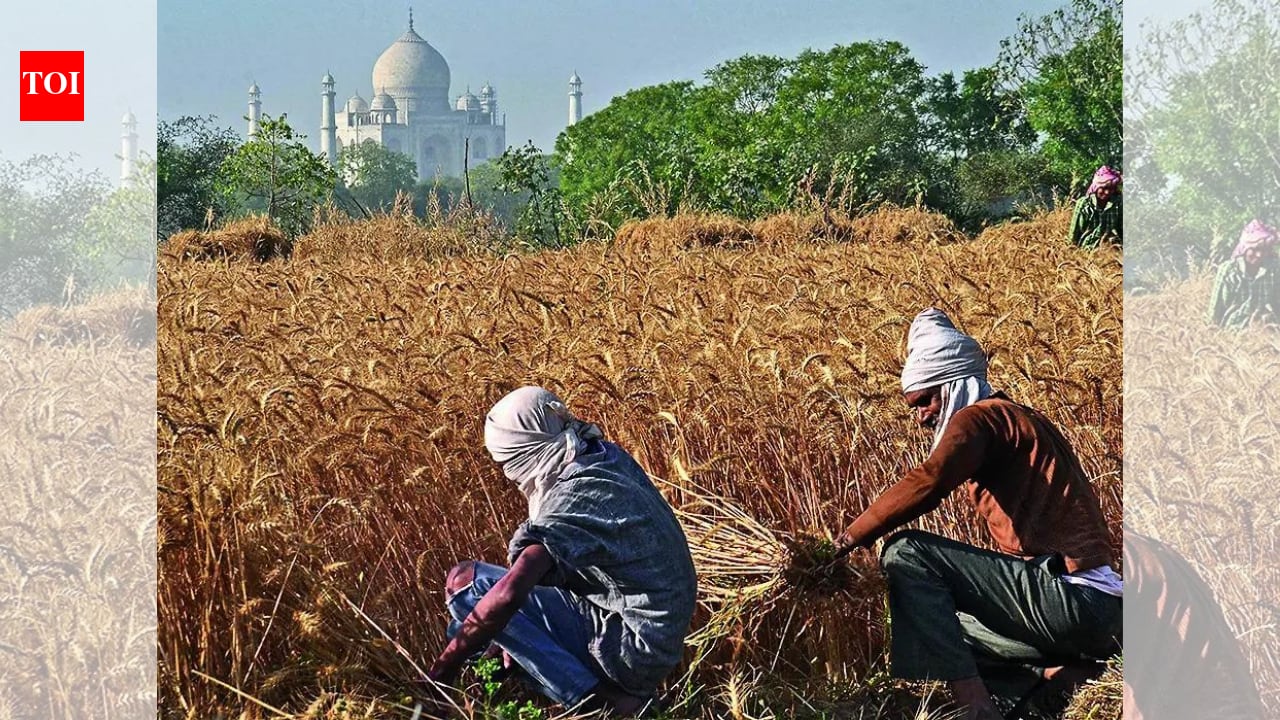
Official crop enumeration inspections were completed on time in less than half of the country's villages. Many village maps used for land tracing are over twenty years old and outdated. Crop-cutting experiments are being conducted by untrained personnel in several key states. These data collection issues affect national food security interventions and advance estimates. Policymakers face challenges due to these significant gaps in agricultural statistics.
Data Integrity Crisis: The Hidden Threat to National Food Security
Agricultural statistics serve as the foundational blueprint for a nation's food security strategy. Recent revelations from the Statistics Ministry indicate a systemic breakdown in the collection of this vital data, raising urgent questions about the reliability of national crop estimates. When the mechanisms for measuring yield and acreage fail, the resulting data gaps create a dangerous blind spot for policymakers who must balance domestic consumption with import and export requirements. This crisis is not merely a bureaucratic failure but a significant risk factor for economic stability and food availability.
The Logistics of Failure: Outdated Mapping and Delayed Inspections
One of the most alarming findings is that official crop enumeration inspections were completed on time in less than half of the country's villages. This lack of timeliness suggests a breakdown in the administrative pipeline, potentially leading to "estimated" rather than "observed" data. Compounding this issue is the reliance on village maps that are over twenty years old. In a dynamic agricultural landscape where land fragmentation, urban encroachment, and changes in land-use patterns are constant, using two-decade-old maps for land tracing is fundamentally flawed. This discrepancy leads to inaccurate acreage reporting, which can skew the perceived productivity of an entire region.
Technical Erosion: The Risk of Untrained Personnel
Beyond the logistical delays, the quality of the data being collected is under scrutiny. Crop-cutting experiments (CCE), which are the gold standard for determining actual yield per hectare, are reportedly being carried out by untrained personnel in several key states. CCE requires precision in sampling and weighing to ensure a representative average of the harvest. When these tasks are delegated to individuals without proper training, the risk of human error increases exponentially. This technical erosion means that the "advance estimates" used by the government may be based on flawed methodology, leading to a disconnect between statistical reports and the reality on the ground.
Implications for Policy and Market Stability
These gaps in data collection have immediate and severe implications for national food security interventions. Advance estimates are critical for deciding whether to release buffer stocks into the market or to initiate emergency imports to prevent price spikes. If the data underestimates a crop failure, the government may react too late, leading to inflation in food prices and hardship for the vulnerable. Conversely, overestimating yields can lead to an unnecessary surplus or a failure to provide timely support to farmers facing shortages. The volatility introduced by unreliable data can destabilize agricultural markets and impact the livelihoods of millions of farmers.
The Broader Context: Modernization vs. Legacy Systems
This situation highlights the tension between legacy manual data collection methods and the urgent need for digital transformation. The reliance on physical maps and manual inspections in an era of satellite imagery and GIS (Geographic Information Systems) mapping appears increasingly obsolete. To resolve these gaps, there must be a shift toward integrating remote sensing technology and digital land records. By automating acreage verification and utilizing AI for yield prediction, the government can bypass the inefficiencies of untrained field staff and outdated paper maps, ensuring that food security decisions are based on real-time, accurate intelligence.
Conclusion: A Call for Systemic Reform
In summary, the Statistics Ministry's warning is a critical wake-up call regarding the fragility of the agricultural data ecosystem. The combination of outdated infrastructure, poor timeliness, and lack of technical expertise creates a precarious environment for food security planning. Addressing these gaps requires more than just a temporary fix; it demands a comprehensive overhaul of how agricultural data is collected, verified, and analyzed. Without a commitment to data integrity and modernization, the nation remains vulnerable to unforeseen food shortages and economic instability driven by inaccurate information.