Supreme Court orders sealing of over 16,000 properties, demolition of illegal structures in Meerut
Source Entity
India Latest News: Top National Headlines Today & Breaking News | The Hindu
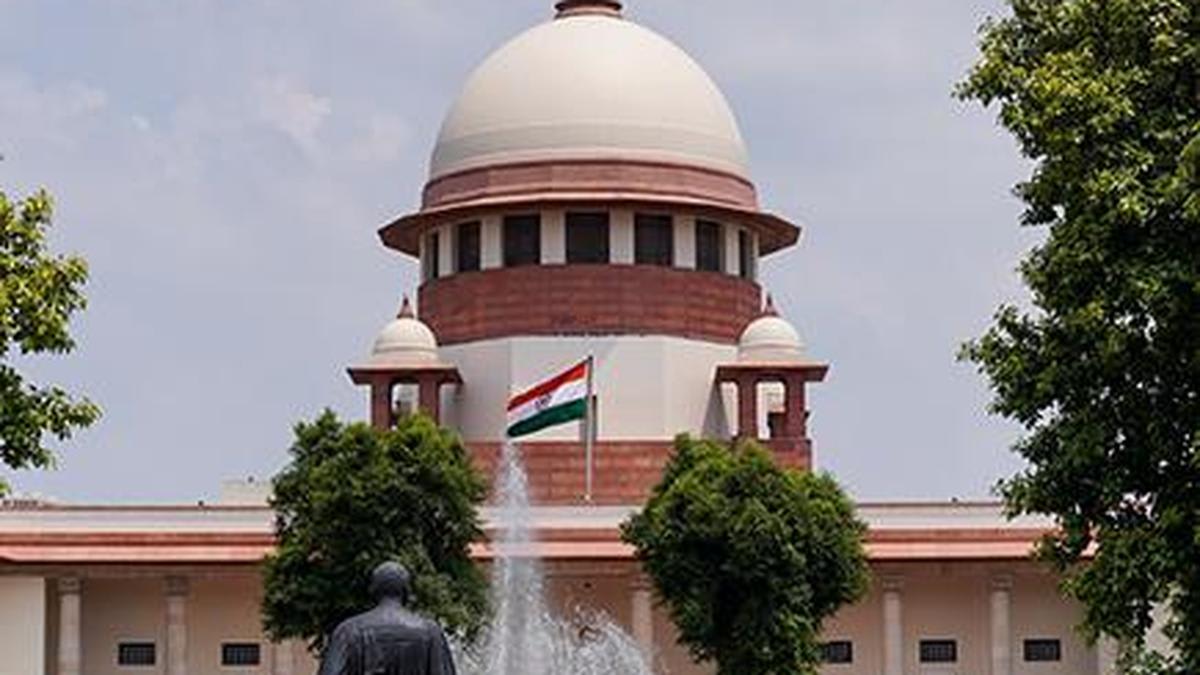
The Supreme Court has ordered the sealing of over 16,000 illegal properties in Meerut and the demolition of unauthorized structures. A judicial commission led by Justice Sudhanshu Dhulia has been appointed to investigate the illegal development of colonies in Uldepur.
Supreme Court Intervention in Meerut Land Violations
The Supreme Court of India has taken a decisive stand against large-scale unauthorized urban development in Meerut, Uttar Pradesh. A Bench comprising Justices J.B. Pardiwala and K.V. Viswanathan issued a stern directive to seal more than 16,000 properties and demolish illegal structures that have proliferated across the region. This judicial action follows a disturbing status report submitted by P. Guruprasad, Chairman of the Uttar Pradesh Awas Evam Vikas Parishad, which highlighted the scale of the crisis.
The Uldepur Inquiry
Central to this intervention is the formation of a high-level judicial commission led by former Supreme Court judge Justice Sudhanshu Dhulia. The commission is tasked with a comprehensive inquiry into the Uldepur area, located on the outskirts of Meerut. The court expressed significant concern regarding the nature of the land in Uldepur, where hundreds of illegal residential colonies have been established, seemingly in direct violation of land-use regulations and planning norms.
Addressing Unchecked Urban Expansion
The court’s directive stems from the alarming conversion of residential properties into commercial hubs without necessary approvals. The Bench explicitly stated that they were "shocked and disturbed" by the findings in the status report. This reflects a broader systemic issue where unauthorized construction often outpaces local administrative oversight, leading to the development of sprawling colonies that lack the structural integrity, safety standards, and legal clearances required for urban habitation.
Regulatory and Administrative Failure
The scale of 16,000 properties underscores a significant failure in municipal governance. By mandating both the sealing of properties and the demolition of illegal structures, the Supreme Court is attempting to force accountability upon the local authorities. The involvement of the Uttar Pradesh Awas Evam Vikas Parishad suggests that this issue is not merely a localized zoning dispute but a significant lapse in the state's urban planning and enforcement mechanisms.
Future Implications for Urban Development
This ruling signals a shift toward stricter judicial oversight regarding illegal land acquisition and construction. By ordering a thorough inquiry into the land status in Uldepur, the court is setting a precedent that authorities cannot ignore the proliferation of illegal colonies. Future development projects in the region will likely face increased scrutiny, and this case may force the Uttar Pradesh government to overhaul its land monitoring systems to prevent similar mass-scale violations in the future.
Conclusion
The Supreme Court's intervention serves as a critical enforcement measure against the rampant, unauthorized urban growth in Meerut. By establishing a judicial commission and ordering immediate corrective actions, the court is prioritizing public safety and the rule of law over unregulated development. The outcome of the Justice Dhulia-led inquiry will be pivotal in determining how the state addresses the displacement of residents and the legal repurcussions for those involved in the illegal construction.
Verification Required?