T. rex could become most expensive fossil ever - but it's a problem for scientists
Source Entity
BBC News
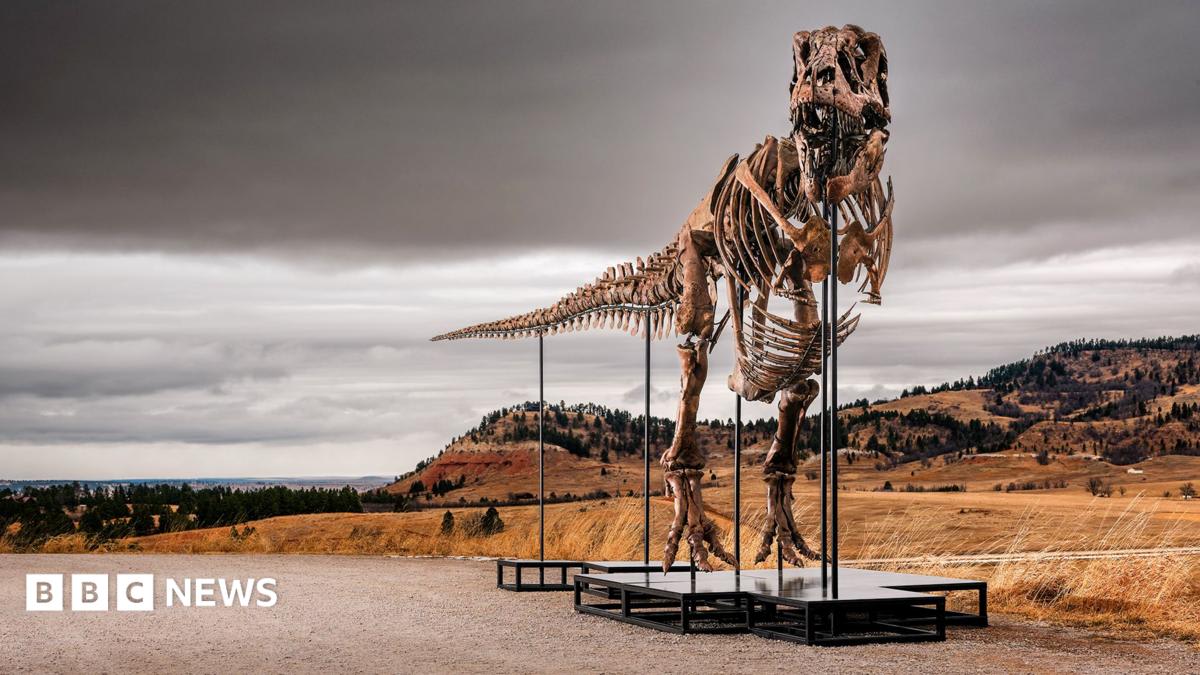
A 67 million-year-old Tyrannosaurus rex will go on sale in New York with a pre-sale value of $30m.
The Billion-Dollar Bone: The T. rex Auction Dilemma
An Unprecedented Valuation
The upcoming auction of a 67-million-year-old Tyrannosaurus rex in New York marks a watershed moment for the intersection of high-end asset collecting and paleontology. With a pre-sale estimate of $30 million, this specimen is poised to challenge the records of fossil valuations, potentially becoming the most expensive prehistoric remains ever sold. This massive price tag reflects not just the biological rarity of the T. rex, but its status as a global cultural icon, bridging the gap between natural history and luxury commodities.
The Conflict Between Commerce and Research
While the auction is a triumph for the sellers, it presents a profound problem for the global scientific community. When high-value fossils enter the private market, they often disappear into what researchers call "dark collections." Unlike specimens housed in public museums or universities, private fossils are frequently inaccessible to the scientific community. This lack of access prevents peer-reviewed studies, morphological analysis, and the sharing of critical data that is essential for understanding the evolution, biology, and behavior of extinct species.
The Erosion of Scientific Provenance
Historically, the scientific value of a fossil is inextricably linked to its "provenance"—the detailed geological and stratigraphic data regarding exactly where and how it was unearthed. In the high-stakes environment of private auctions, there is a significant risk that the scientific context of a specimen may be treated as secondary to its aesthetic or investment appeal. If the specific sedimentary layers or associated microfossils are not meticulously documented and preserved, the specimen loses much of its utility as a data point in the history of life, becoming merely a trophy rather than a tool for discovery.
The Evolution of Fossil Collecting
The trend of treating fossils as investment-grade assets is accelerating. In previous decades, paleontology was primarily driven by academic expeditions and state-funded museum acquisitions. Today, the rise of ultra-high-net-worth individuals has shifted the landscape. This creates a competitive environment where museums, often operating on limited public or donor-funded budgets, find it increasingly difficult to outbid private collectors for the most significant specimens, leading to a gradual "privatization" of Earth's natural history.
Future Implications for Paleontology
Looking ahead, this $30 million auction may force a reckoning within both the scientific and legal communities. There is growing pressure to establish more robust international frameworks or ethical guidelines regarding the sale of significant paleontological finds. If the trend of privatizing "trophy fossils" continues unchecked, we may face a future where our understanding of prehistoric life is fragmented, with critical pieces of the evolutionary puzzle locked away in private vaults, shielded from the eyes of those dedicated to uncovering the truth of our planet's past.
Conclusion
The T. rex auction in New York is more than just a high-profile sale; it is a symbol of the growing tension between the commodification of nature and the pursuit of scientific knowledge. As the auction approaches, the scientific community remains watchful, concerned that the most significant windows into our ancient world may soon be behind closed doors.