Tesla workers balk at training Optimus humanoid robots as replacements
Source Entity
Jeremy Hsu
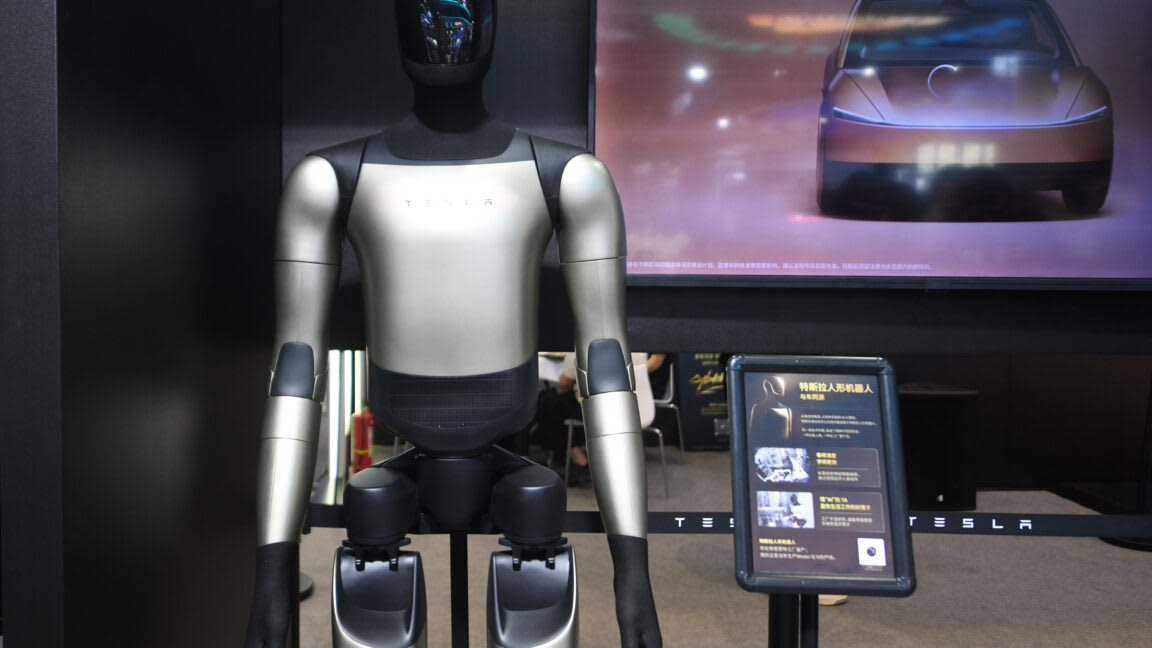
Tesla is facing significant manufacturing and labor challenges in its ambitious pivot toward mass-producing Optimus humanoid robots. Despite a target of 1,000 units per week by 2026, technical complexities and employee pushback are hindering progress.
The Challenges of Tesla’s Robotics Pivot
Tesla is currently navigating a pivotal, yet fraught, transition as it pivots its core focus from automotive manufacturing to the development of the Optimus humanoid robot. CEO Elon Musk has characterized the project as potentially the company's most significant product, yet the path to scaling production is obstructed by both technical and human-centric hurdles. As Tesla attempts to redefine itself as an AI and robotics powerhouse, the internal strain of this mission is becoming increasingly apparent.
Manufacturing Snags and Assembly Complexities
The ambition to reach a production capacity of 1,000 robots per week by the end of 2026—and eventually much higher—is colliding with the reality of assembly precision. Reports indicate that Tesla has repurposed existing Model S and Model X production lines to accommodate Optimus, a strategy that has introduced unexpected manufacturing snags. Unlike the larger components of an electric vehicle, Optimus parts are significantly smaller and require a level of alignment precision that current infrastructure struggles to achieve.
The Human Element: The Paradox of Training Replacements
A particularly unique complication in this industrial shift is the role of the human workforce. Employees are reportedly pushing back against the requirement to train the very robots that are intended to eventually replace their labor. This creates a difficult cultural and operational environment, as workers are tasked with teaching robots to handle complex manual tasks, such as the assembly of hands and forearms, which currently require human dexterity for the installation of over 100 small screws and components.
Scaling and the 'V3' Development Stage
Tesla is currently producing the "V3" iteration of the Optimus robot, yet the transition from prototype to mass-market manufacturing remains a steep climb. While the company produced several hundred robots a month recently, the disparity between this output and their long-term goals highlights the difficulty of scaling. Musk himself has admitted that creating an autonomous robot capable of versatile task management is one of the most difficult engineering challenges to solve, acknowledging the gap between ambitious projections and current technical realities.
Future Trends and Corporate Implications
The success of the Optimus program is central to the future valuation and strategic identity of Tesla. If the company can overcome the "growing pains" associated with precision assembly and internal labor resistance, it could pioneer a new era of general-purpose robotics. However, if the technical limitations of the robot's hands and the inability to automate assembly continue to persist, Tesla may face significant delays that challenge the confidence of stakeholders who have bought into the vision of a robot-driven future.
Multiple Citing Sources