The first ping from Tonga (1997)
Source Entity
Hacker News
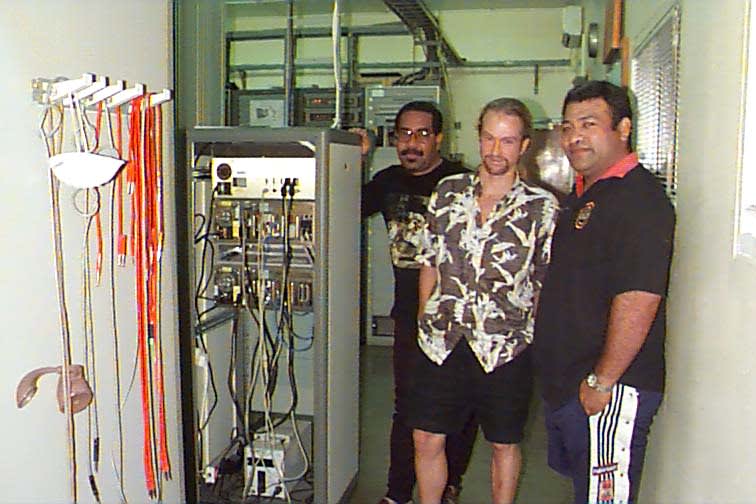
In January 1997, Tonga established its first permanent internet connection via a 64 kb/s satellite link. This milestone overcame significant logistical hurdles and monopoly telecommunications pricing.
The Digital Dawn of Tonga: A 1997 Milestone
In January 1997, the Kingdom of Tonga achieved a pivotal technological milestone: the establishment of its first permanent internet connection. Orchestrated by a team including Tim Katoanga, Eric Gullichsen, and Sione Veikoso, this connection—a 64 kb/s satellite link—represented a massive leap forward for a nation previously isolated by limited and prohibitively expensive telecommunications infrastructure.
The Monopoly Barrier
Before the arrival of the internet, the telecommunications landscape in Tonga was dominated by Cable & Wireless. The state of connectivity was defined by a monopoly that charged US$3 per minute for international calls. For the local population, this created an environment where global communication was effectively a luxury, forcing residents to queue for limited services that were financially inaccessible for most.
Improvisation and Ingenuity
The transition to the digital age was not a seamless rollout by a major corporation, but rather a triumph of grassroots engineering. The report highlights that the project relied on an assortment of secondhand hardware and improvised network configurations. This process was far from conventional, requiring unconventional tactics such as unauthorized rooftop climbs to position equipment, demonstrating the sheer determination required to bridge the digital divide in the Pacific.
The Role of Leadership and Collaboration
Crucially, the success of this project was not purely technical; it involved political navigation, including the support of the Crown Prince of Tonga. By bypassing traditional institutional inertia, the team managed to secure the necessary environment to deploy the satellite link. This collaboration between local stakeholders and technical innovators highlights how emerging nations in the late 90s sought to leapfrog traditional infrastructure barriers.
Broader Implications and Future Trends
The 64 kb/s connection of 1997 served as the foundational "ping" that eventually integrated Tonga into the global digital economy. Historically, this period marked the beginning of the end for local telecom monopolies in the Pacific. Today, Tonga’s connectivity has evolved from these improvised satellite beginnings to sophisticated undersea fiber-optic cables, illustrating the rapid acceleration of global network integration over the last three decades.
Conclusion
The first ping from Tonga remains a powerful case study in the democratization of information technology. It serves as a reminder that the early internet was built on the back of persistent individuals willing to improvise, challenge monopolies, and physical climb rooftops to ensure their nation was not left behind in the rapidly expanding global digital landscape.