India's Essar Group to invest $18 billion in 'largest' US steel plant, Trump announces
Source Entity
VIVEK DUBEY
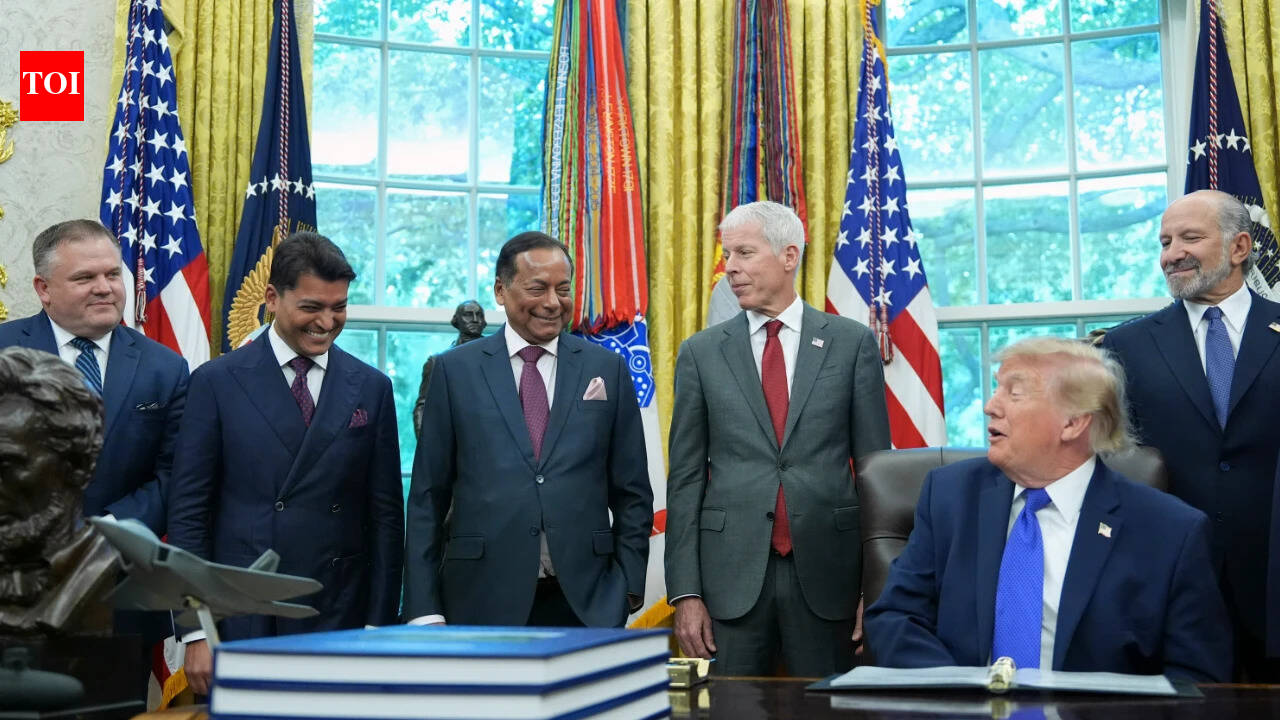
President Trump has announced an $18 billion investment by India's Essar Group to build a massive steel plant in Iowa. The project aims to link Minnesota iron ore mines to the new facility, though the event was marked by public scrutiny over the President's demeanor.
A Landmark Industrial Investment
President Donald Trump has officially announced a massive $18 billion investment by the Indian conglomerate Essar Group, through its subsidiary Mesabi Metallics, to construct what is being touted as the largest steel plant in American history. The project, which involves linking iron ore mining operations in Minnesota with a new, state-of-the-art steel production facility in Iowa, represents a significant infusion of foreign capital into the U.S. industrial sector. The announcement, which featured key administration figures including Commerce Secretary Howard Lutnick and Energy Secretary Chris Wright, underscores a strategic push to bolster domestic manufacturing capabilities.
Strategic Economic Implications
The ambition behind this project is to integrate the supply chain from raw material extraction in the Mesabi Range to finished steel production in Iowa. By streamlining the logistics between Minnesota and Iowa, the Essar Group aims to create a highly efficient production cycle. This move aligns with the administration's broader industrialization goals, which seek to revitalize American manufacturing hubs and reduce reliance on imported steel. The target date for production to commence is set for 2030, marking a long-term commitment to U.S. infrastructure and employment.
The Political Context of the Announcement
The timing of this announcement is highly significant, arriving just weeks before the November midterm elections. With public sentiment regarding the economy remaining a critical factor for voters, the administration is leveraging large-scale industrial projects to demonstrate progress in economic management. During the event, President Trump contrasted his administration's policies with those of his predecessor, Joe Biden, framing the investment as a direct consequence of current pro-American economic strategies.
Media Scrutiny and Public Perception
Beyond the economic data, the event at the White House drew intense media attention for reasons unrelated to the steel industry. Following his remarks, reports emerged that President Trump appeared to doze off while Energy Secretary Chris Wright was outlining the technical details of the partnership. This moment quickly became a focal point of online discourse, overshadowing the policy substance for many observers. Such incidents often become flashpoints in the modern political media cycle, where the optics of an event can carry as much weight as the economic announcements themselves.
Future Trends in Domestic Steel Production
Looking ahead, the success of the Mesabi Metallics project will likely serve as a litmus test for large-scale industrial foreign investment in the United States. If the project successfully navigates the complex regulatory and logistical landscape required to link Minnesota ore to Iowa steel, it could set a template for future 'mega-projects' aimed at domesticating heavy industry. However, the project also faces the challenge of maintaining momentum through shifting political administrations over the next several years leading up to its 2030 production target.
Conclusion
In summary, the Essar Group’s $18 billion investment is a transformative development for the American steel industry, promising to link critical resource regions with manufacturing centers. While the economic promise of the project is substantial, the surrounding political climate and the President's personal performance during the announcement have added a layer of complexity to the narrative. As the nation approaches the midterm elections, this project will remain a central exhibit in the administration’s case for its economic stewardship.
Multiple Citing Sources