Trump pokes fun at Lindsey Graham, discloses Senator's ‘one bad moment’ in bizarre rambling
Source Entity
Latest News: Today's Latest News Headlines from India & World | Hindustan Times | Hindustan Times
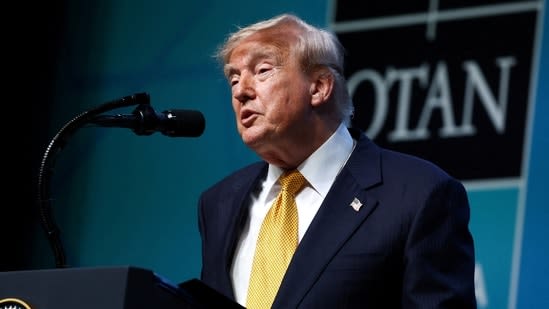
President Trump reflected on Senator Lindsey Graham's legacy, noting his retraction of criticism after the January 6 incident.
The Dynamics of Loyalty: Analyzing Trump's Comments on Lindsey Graham
In a recent series of remarks characterized by his signature rambling style, former President Donald Trump turned his attention to Senator Lindsey Graham, specifically referencing what he termed Graham's "one bad moment." This comment refers to the period following the January 6 Capitol riot, during which Senator Graham—typically one of Trump's most steadfast defenders in the Senate—publicly suggested that the former President should have done more to stop the unrest. By framing this period of criticism as a momentary lapse in judgment rather than a principled stance, Trump effectively reasserts his dominance over the narrative of their relationship.
The Evolution of a Political Alliance
To understand the significance of this "bad moment," one must look at the historical trajectory of the relationship between Trump and Graham. Early in the 2016 primary cycle, Graham was a vocal critic of Trump, questioning his temperament and fitness for office. However, following Trump's victory, Graham underwent a dramatic political transformation, evolving into one of the most loyal allies in the Republican establishment. This shift underscored a broader trend within the GOP: the necessity of aligning with Trump to maintain political viability within the MAGA movement. The tension following January 6 represented a rare crack in this alliance, where the gravity of the events forced even Graham to temporarily distance himself from Trump's rhetoric.
The Rhetoric of Redemption and Power
Trump's decision to "poke fun" at Graham while disclosing this rift serves a dual purpose. First, it signals a public forgiveness, which reinforces Graham's current position as a loyal lieutenant. Second, it serves as a subtle reminder of the cost of dissent. By labeling Graham's criticism as a "bad moment," Trump minimizes the validity of the critique itself while reminding both Graham and other GOP members that deviations from the party leader's narrative are recorded and remembered. This dynamic creates a psychological environment where loyalty is not merely expected but is a prerequisite for redemption.
Broader Implications for the GOP
This interaction reflects the overarching power structure of the current Republican Party, where the center of gravity remains firmly fixed on Donald Trump. The fact that a senior Senator like Lindsey Graham must navigate the nuances of Trump's approval suggests that the traditional hierarchy of the U.S. Senate has been superseded by a personality-driven loyalty system. The "bad moment" narrative indicates that in the modern GOP, ideological consistency is less valuable than personal loyalty to the leader. This shift has profound implications for how legislation is negotiated and how the party handles internal dissent.
Predicting Future Trends in the Trump-Graham Partnership
Looking forward, it is likely that Senator Graham will continue to serve as a critical bridge between the Trump wing of the party and the remaining institutionalist elements of the Senate. However, the "one bad moment" label ensures that Graham remains in a subordinate position. As Trump continues to engage in political campaigns and public discourse, he will likely continue to use these anecdotal reminders of past disloyalty to keep his inner circle disciplined. The relationship will likely remain a symbiotic one: Graham provides the legislative expertise and institutional access, while Trump provides the populist energy and base support.
Summary
Ultimately, Trump's comments about Lindsey Graham are less about the specifics of January 6 and more about the maintenance of political authority. By characterizing Graham's brief period of criticism as a "bad moment," Trump reinforces a culture of absolute loyalty within his orbit, ensuring that his allies understand that while forgiveness is possible, the memory of dissent is permanent.
Verification Required?