Tuchel wasn't happy with the performance. So why do England keep winning?
Source Entity
BBC News
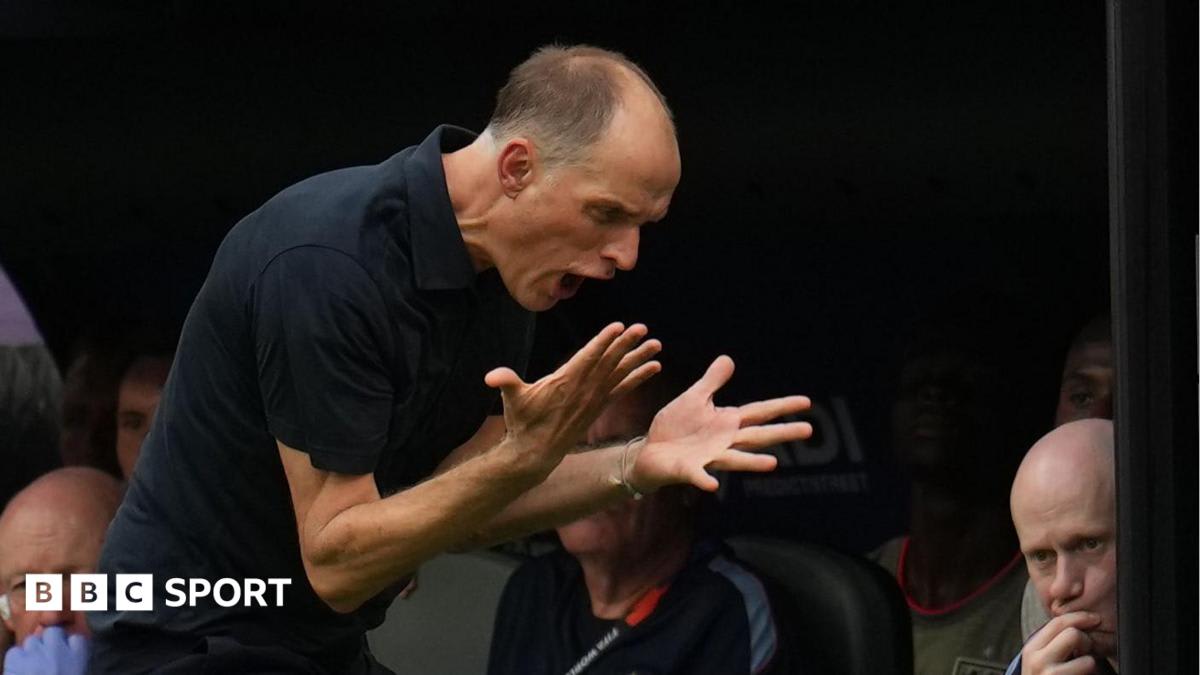
Football tactics correspondent Umir Irfan examines why England are still winning games despite Thomas Tuchel insisting performances are not good.
The Paradox of Success: Analyzing the Gap Between England's Results and Tuchel's Standards
In the high-stakes world of international football, there is often a contentious divide between 'results' and 'process.' The current state of the England national team, as highlighted by tactics correspondent Umir Irfan, presents a fascinating case study in this dichotomy. Despite a streak of victories, head coach Thomas Tuchel has remained vocal about his dissatisfaction with the team's actual performance on the pitch. This tension suggests that while England is achieving the primary objective—winning—they are doing so without meeting the tactical benchmarks required for elite-level dominance.
The Perfectionist's Lens: Why Winning Isn't Enough
Thomas Tuchel is renowned in the footballing world as a tactical perfectionist. For a manager of his pedigree, a win is not merely defined by the scoreline, but by the manner in which the game is controlled. When Tuchel expresses unhappiness despite a victory, he is likely referring to a lack of structural cohesion, inefficiency in the build-up play, or a failure to execute specific positional instructions. In his view, winning 'ugly' or relying on moments of individual brilliance rather than a systemic approach is a dangerous precedent that can be exploited by world-class opponents in a tournament setting.
Individual Brilliance vs. Tactical Rigor
One of the primary reasons England continues to win despite these perceived shortcomings is the sheer depth of individual talent within the squad. With a roster boasting some of the world's most clinical finishers and creative midfielders, England possesses the ability to override tactical deficiencies through moments of magic. However, this creates a 'performance mask' where the final result hides systemic flaws. If the team relies too heavily on individual quality to bail them out of tactical errors, they risk hitting a ceiling when facing opponents who are equally talented but more tactically disciplined.
The Psychological Strategy of Dissatisfaction
From a leadership perspective, Tuchel's refusal to celebrate these wins may be a calculated psychological move. By maintaining a narrative of dissatisfaction, he prevents the squad from falling into a trap of complacency. In international football, the danger of 'feeling too good' can lead to a drop in intensity. By keeping the players focused on the gaps in their performance rather than the points on the board, Tuchel is attempting to foster a culture of continuous improvement and mental toughness, ensuring the team remains hungry for a higher standard of play.
Historical Context and Future Risks
Historically, England has often struggled with the balance between talent and tactical execution. Past iterations of the national team have frequently entered tournaments with high expectations, only to be undone by a lack of a cohesive 'Plan B' when their primary stars were neutralized. Tuchel's current insistence on performance quality is a direct attempt to avoid this historical pitfall. He recognizes that while winning qualifiers or friendlies is essential for morale, the knockout stages of major tournaments demand a level of tactical precision that cannot be substituted by individual talent alone.
Conclusion: The Path to Sustained Dominance
Ultimately, the disconnect between England's results and Tuchel's approval is a sign of a manager attempting to elevate a team from 'competitive' to 'dominant.' The current winning streak provides a safety net that allows Tuchel to implement his rigorous tactical demands without the immediate pressure of a losing streak. For England to translate these wins into a major trophy, they must bridge the gap between their output and their execution, evolving from a team that wins despite its flaws into a team that wins because of its systemic superiority.