UPSC Mains Answer Practice — GS 2: India’s role in BRICS for engagement in West Asia and Constitutional Safeguards (Week 173)
Source Entity
Nitendra Pal Singh
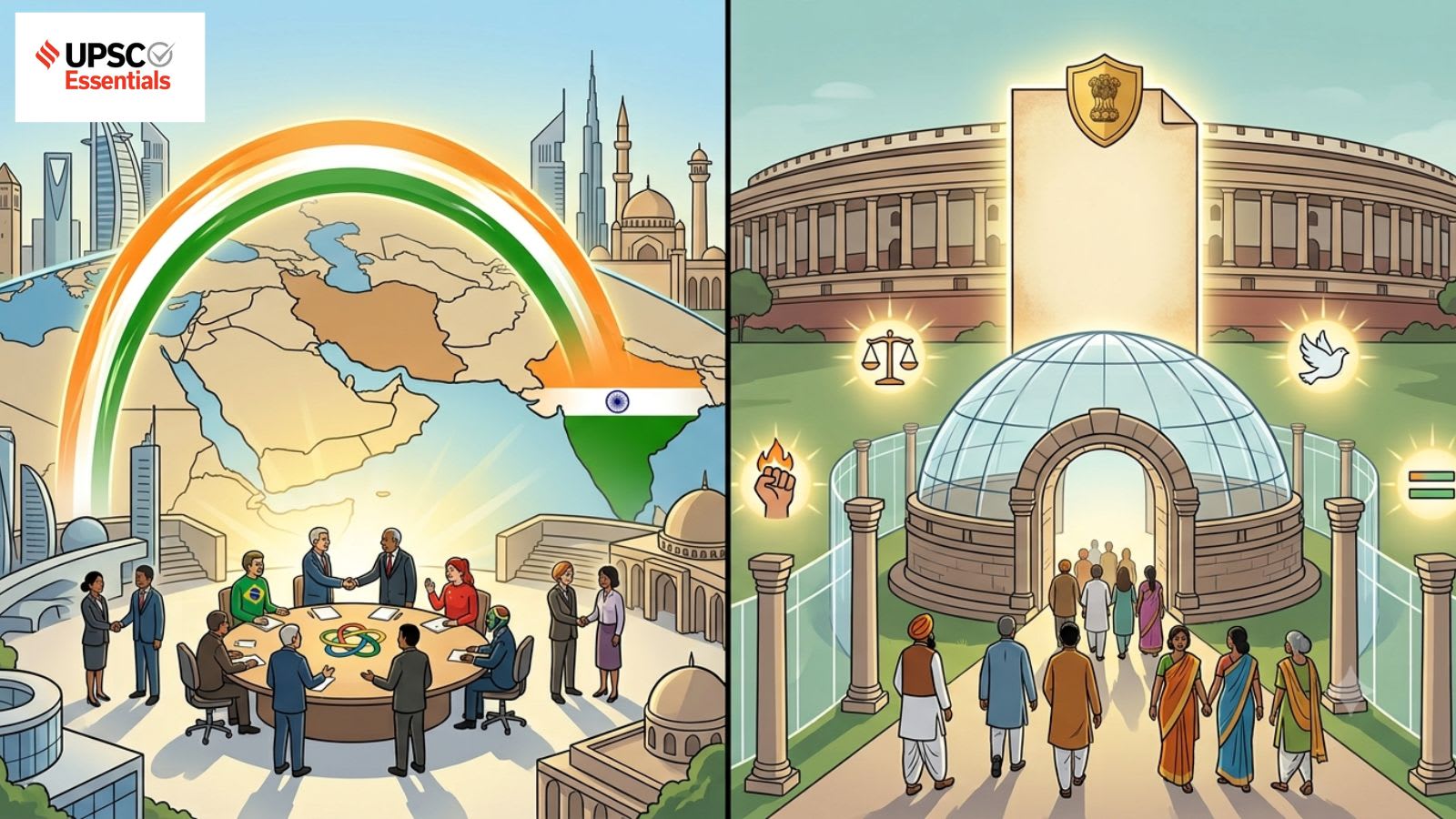
The UPSC Essentials initiative marks its third anniversary, continuing its support for civil services aspirants through structured Mains answer-writing practice. The latest curriculum focuses on India’s role in BRICS regarding West Asian engagement and constitutional safeguards.
Enhancing Civil Services Preparation: The Role of UPSC Essentials
The UPSC Essentials initiative has established itself as a critical resource for aspirants preparing for the Civil Services Examination (CSE). By focusing on both static and dynamic components of the General Studies (GS) syllabus, the platform bridges the gap between theoretical knowledge and the practical, analytical writing skills required for the Mains examination. This week’s focus, centered on GS Paper 2, highlights the importance of critical thinking in subjects ranging from international relations to constitutional law.
Analyzing Geopolitical Dynamics: India and BRICS in West Asia
One of the core topics addressed is India’s evolving role within the BRICS bloc, specifically regarding its strategic engagement in West Asia. As the global geopolitical landscape shifts, India’s ability to leverage multilateral platforms like BRICS to stabilize ties in the Middle East is a vital area of study. Aspirants are encouraged to analyze how India can balance its diverse partnerships while promoting regional stability and economic cooperation through these frameworks.
Strengthening Constitutional Literacy
Beyond international affairs, the initiative emphasizes the necessity of understanding constitutional safeguards. For a civil servant, a deep comprehension of the mechanisms designed to protect fundamental rights and the federal structure of India is paramount. By integrating these static constitutional principles with dynamic current events, the platform ensures that students are not merely memorizing articles, but understanding their application in contemporary governance.
The Value of Consistent Answer Writing
Writing practice is the bedrock of success in the UPSC CSE Mains. The methodology promoted by UPSC Essentials forces students to synthesize vast amounts of information into coherent, structured, and time-bound arguments. This process simulates the high-pressure environment of the actual examination, enabling aspirants to refine their clarity of thought and precision in communication.
Three Years of Educational Impact
As the magazine celebrates its third anniversary, the longevity of this initiative speaks to its role in the competitive exam ecosystem. The platform’s evolution, driven by reader feedback and consistent updates, reflects the changing nature of the UPSC syllabus. By maintaining a focus on high-quality content, it serves as a vital value-addition tool for thousands of students navigating the complexities of the civil services preparation process.
Conclusion: Looking Toward Future Trends
Moving forward, the integration of dynamic, real-time global events into the UPSC curriculum will remain essential. As India’s influence in international forums grows and its internal constitutional discourse matures, resources like UPSC Essentials will continue to be indispensable. Through continued focus on rigorous answer-writing practice, aspirants can better align their academic preparation with the evolving expectations of the Union Public Service Commission.