US and Iran trade fire as tensions rise over Strait of Hormuz
Source Entity
BBC News
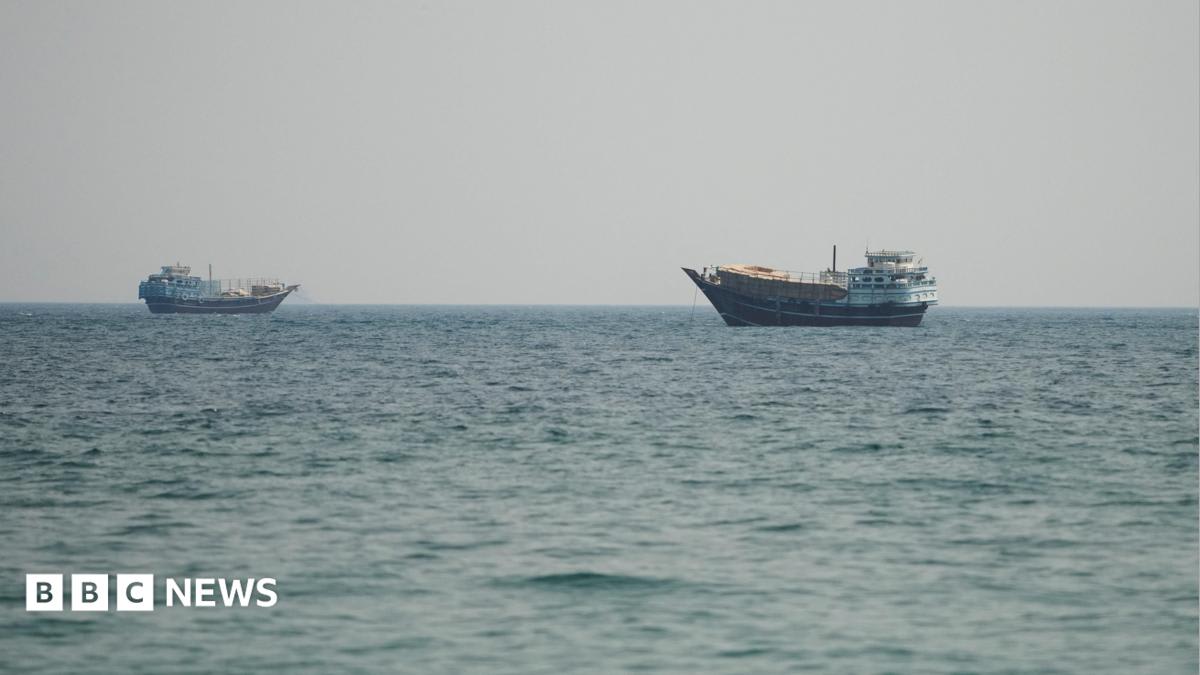
Within hours of fresh US attacks, Iran said it had struck US military bases in Kuwait, Jordan and Bahrain.
Escalation in the Persian Gulf: A Direct Confrontation
The recent exchange of military strikes between the United States and Iran marks a perilous shift from a 'shadow war' of proxies and cyber-attacks to direct kinetic engagement. The reports indicate a rapid escalation cycle: fresh US attacks were met almost immediately by Iranian strikes targeting US military installations in Kuwait, Jordan, and Bahrain. This sequence of events suggests a breakdown in diplomatic deterrence and a willingness by both superpowers to risk a full-scale regional conflict. The speed of the Iranian response indicates a high state of readiness and a strategic intent to demonstrate that US allies in the region are vulnerable targets.
The Strategic Chokepoint: The Strait of Hormuz
At the heart of this conflict is the Strait of Hormuz, one of the world's most critical maritime chokepoints. As the primary artery for the export of oil from the Persian Gulf to global markets, any instability in this narrow waterway has immediate repercussions for the global economy. Historically, Iran has used the threat of closing the Strait as a lever against international sanctions and US military pressure. By trading fire in the immediate vicinity of this waterway, both nations are playing a high-stakes game of chicken where a single miscalculation could lead to a blockade, causing oil prices to skyrocket and triggering a global economic recession.
Regional Implications and Allied Vulnerability
Iran's decision to strike bases in Kuwait, Jordan, and Bahrain is a calculated move designed to signal that the US cannot rely on its regional partners for safe sanctuary. By extending the theater of war beyond Iranian borders and into the territories of sovereign US allies, Tehran is attempting to pressure these nations to distance themselves from Washington. This strategy aims to isolate the US militarily and politically within the Middle East. The involvement of Jordan, in particular, expands the conflict's geography significantly, indicating that Iran is capable of projecting power far beyond the immediate coastline of the Gulf.
Historical Context of US-Iran Hostility
To understand the current volatility, one must look back at the decades of friction between Washington and Tehran, characterized by the 1979 Hostage Crisis, the 'Tanker War' of the 1980s, and the more recent tensions following the US withdrawal from the JCPOA (Nuclear Deal). The current aggression is a continuation of this historical trajectory, where the US seeks to contain Iranian influence and nuclear ambitions, while Iran seeks to expel US forces from the region. The shift toward direct attacks on bases represents the most significant escalation in this rivalry since the 2020 assassination of Qasem Soleimani, suggesting that previous norms of 'calculated restraint' have been discarded.
Future Trends and Global Risks
Looking forward, the trajectory of this conflict will likely depend on whether the US opts for a proportional response or a massive retaliatory strike. If the US increases its military footprint in the region to protect its bases in Kuwait, Jordan, and Bahrain, it may inadvertently trigger a wider regional war involving other Gulf states. Conversely, a move toward immediate ceasefire negotiations mediated by third parties, such as China or the European Union, could stabilize the region. However, the precedent of direct strikes on military bases makes a return to the status quo unlikely; the region is now entering an era of heightened military alertness and unpredictability.
Conclusion
The current military exchange between the US and Iran is more than a localized skirmish; it is a systemic shock to Middle Eastern stability. By targeting multiple US bases across three different countries, Iran has fundamentally altered the risk calculus of the region. With the global economy hanging in the balance due to the volatility of the Strait of Hormuz, the international community faces a critical window to prevent a localized trade of fire from evolving into a global catastrophe.