Why are US stocks falling today? Oil, 5% Treasury yields and AI fears hit Wall Street
Source Entity
Latest News: Todays Latest News Headlines from India & World | Hindustan Times | Hindustan Times
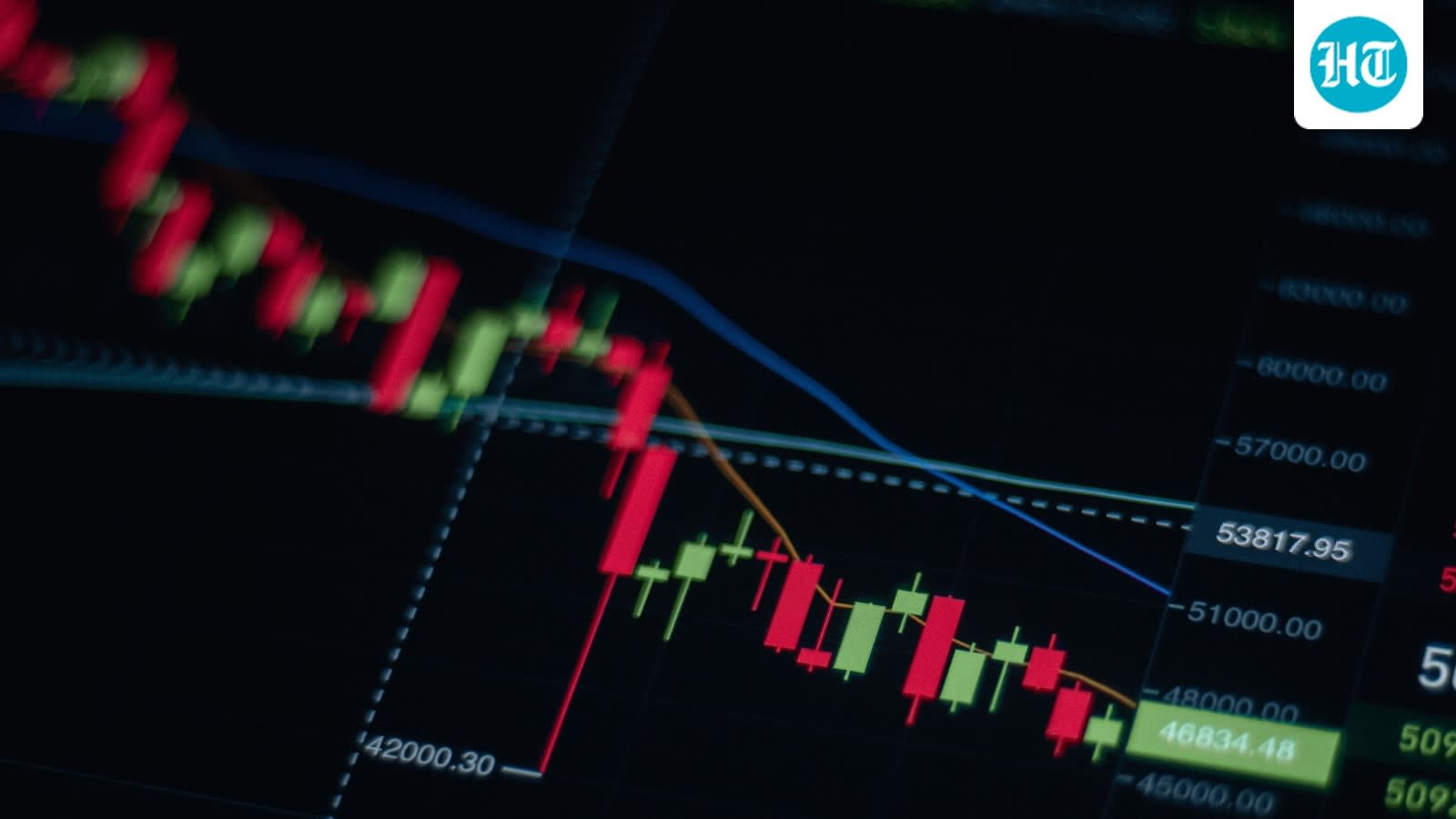
US stock futures declined as investors grapple with rising oil prices, surging Treasury yields, and uncertainty surrounding AI safety. The market remains cautious ahead of the Federal Reserve's critical two-day policy meeting.
Market Volatility Amid Macroeconomic Headwinds
US stock futures faced downward pressure on Tuesday morning, as the Dow Jones Industrial Average, S&P 500, and Nasdaq-100 indexes all retreated. This decline reflects a broader market apprehension as investors prepare for the Federal Reserve’s upcoming two-day policy meeting. The central bank's stance on interest rates remains the primary focus, with concerns mounting that persistent inflation could force the Fed to maintain a restrictive monetary policy, thereby increasing the cost of capital for businesses and consumers alike.
The Impact of Soaring Treasury Yields
A significant contributor to the current market malaise is the rapid ascent of bond yields. The 10-year Treasury yield recently reached 5%, marking its highest level since 2007. This spike in yields creates a challenging environment for equity valuations, as higher "risk-free" rates make traditional bonds more attractive compared to stocks. When borrowing costs rise, capital-intensive industries and growth-oriented companies often face significant valuation compression, contributing to the broader weakness observed across major indices.
Geopolitical Instability and Energy Markets
Energy prices are exerting additional pressure on the financial markets, with Brent and WTI crude oil trading at elevated levels near $102 and $103 per barrel, respectively. This rally is driven by geopolitical instability, specifically the closure of Saudi Arabia’s East-West pipeline and renewed attacks by Iranian-backed Houthis in the Middle East. High energy costs act as a tax on the global economy, threatening to keep inflation elevated and further complicating the Federal Reserve's ability to pivot toward a more dovish interest rate strategy.
The Intersection of AI Sentiment and Market Performance
Beyond macroeconomic factors, the technology sector is facing a distinct narrative shift regarding artificial intelligence. Investors are closely monitoring the fallout from Anthropic CEO Dario Amodei’s essay concerning AI safety, which has introduced a layer of uncertainty regarding the future of the sector. While major players like Alphabet and Microsoft saw early declines, the performance of chipmakers remains mixed; Nvidia, for instance, showed signs of a potential rebound, suggesting that the market is beginning to differentiate between specific AI-related firms rather than applying a blanket selloff to the entire sector.
Future Trends and Investor Outlook
The immediate future of the stock market hinges largely on the Federal Reserve’s communication regarding its interest rate trajectory. Should the Fed signal a prolonged high-rate environment to combat inflation, volatility is likely to persist. Furthermore, the interplay between technological optimism and the growing concerns over AI safety will remain a key theme for investors. As the market digests these multifaceted risks—ranging from energy security to the ethical and safety implications of emerging technology—investors are likely to maintain a defensive posture until more clarity emerges from the central bank’s policy conclusion.
Verification Required?