Research achieves its highest purpose when it serves society: Vice-President
Source Entity
India Latest News: Top National Headlines Today & Breaking News | The Hindu
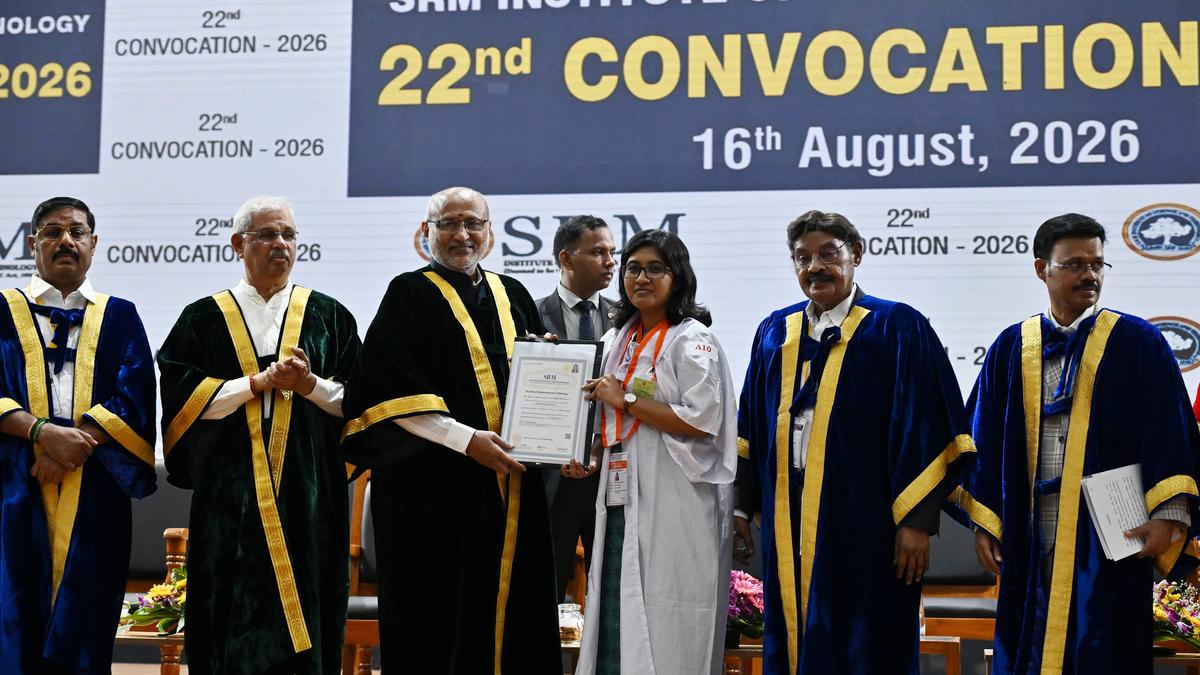
Vice-President Jagdeep Dhankhar highlighted the importance of research serving society during the 22nd convocation of SRMIST. He underscored India's humanitarian role by providing COVID vaccines to over 100 nations, emphasizing the nation's commitment to global welfare.
Research for the Greater Good: A Vision for Indian Academia
At the 22nd convocation of the SRM Institute of Science and Technology (SRMIST) in Kattankulathur, Vice-President Jagdeep Dhankhar delivered a powerful address defining the true trajectory of academic inquiry. He posited that research achieves its highest purpose only when it functions as a tool for societal advancement rather than a mechanism for mere financial gain. This sentiment reflects a growing national push to align higher education with the tangible needs of the public, encouraging institutions to prioritize impact over profit.
The Humanitarian Legacy of India’s Vaccine Diplomacy
A cornerstone of the Vice-President’s address was the mention of India’s response to the COVID-19 pandemic. Under the guidance of Prime Minister Narendra Modi, India undertook a historic mission, distributing vaccines to over 100 countries free of charge. This 'Vaccine Maitri' initiative serves as a testament to the nation’s commitment to global health security. The Vice-President’s anecdote regarding his meeting with the Speaker of the Kenyan Parliament illustrates that this goodwill has left a lasting impression on the international stage, positioning India as a reliable partner in times of crisis.
Integrating Research with Practical Solutions
The Vice-President specifically praised SRMIST for its robust academic ecosystem, which fosters interdisciplinary learning, creativity, and entrepreneurship. By cultivating an environment that champions critical thinking, the institution is effectively bridging the gap between theoretical research and practical application. This shift is essential for India’s future, as the country aims to transform its academic institutions into hubs of innovation that address real-world problems in sectors like healthcare, agriculture, and infrastructure.
The Philosophical Shift in Indian Education
The address signals a broader shift in the Indian intellectual landscape—moving away from a purely capitalistic view of research toward a 'service-first' philosophy. By explicitly stating that the intent was never to 'encash' research, the Vice-President is setting a standard for future generations of scholars. This philosophy encourages students to view their work through the lens of human welfare, suggesting that the most valuable contributions are those that improve the human condition on a global scale.
Future Trends and Global Responsibility
As India continues to grow as a global power, its academic institutions will play an increasingly pivotal role in shaping its soft power. The emphasis placed on peace, development, and humanity suggests that India’s future research output will likely continue to focus on solving global challenges. The success of the SRMIST model in promoting entrepreneurship alongside humanitarian values provides a roadmap for other universities to follow, ensuring that the next generation of Indian innovators is equipped to lead with both technical proficiency and a deep sense of social responsibility.
Verification Required?