Vijayanagar acquires air-conditioned bus stop, but commuters ask if that is priority
Source Entity
India Latest News: Top National Headlines Today & Breaking News | The Hindu
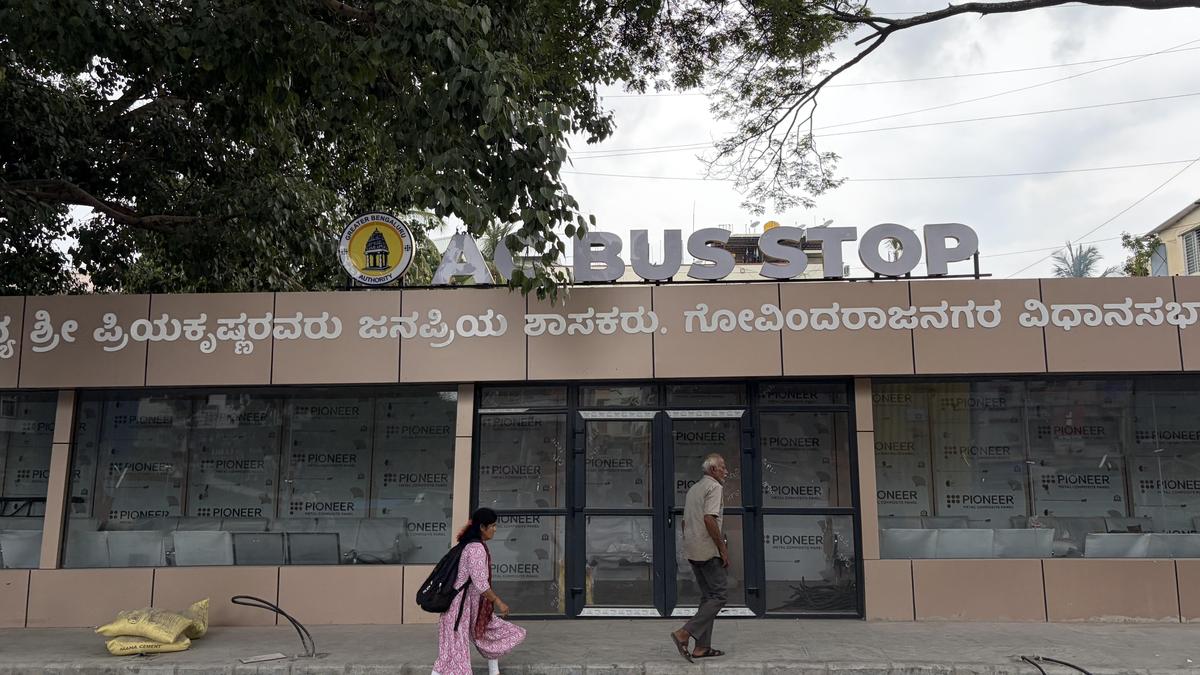
Even as Greater Bengaluru Development Minister Krishna Byre Gowda has stepped up efforts to clear footpaths of encroachments across the city, Priya Krishna, Govindarajanagar MLA, has come under critic...
Urban Luxury vs. Basic Utility: The Vijayanagar AC Bus Stop Controversy
In a city grappling with chronic traffic congestion and crumbling pedestrian infrastructure, the recent installation of an air-conditioned bus stop in Vijayanagar has become a flashpoint for debate. While the initiative, led by Govindarajanagar MLA Priya Krishna, was likely intended as a modernization effort to improve commuter comfort, it has instead triggered a wave of criticism from the public. The core of the controversy lies in the perceived misalignment of priorities: the government is investing in high-end, energy-intensive amenities while the basic right to walkable, encroachment-free footpaths remains unfulfilled for the average citizen.
The Paradox of Infrastructure Priorities
The timing of this installation is particularly poignant given that Greater Bengaluru Development Minister Krishna Byre Gowda has recently intensified efforts to clear footpaths of illegal encroachments across the city. This creates a stark architectural and political paradox. On one hand, the state is attempting to reclaim public spaces for pedestrians to ensure safety and flow; on the other, it is installing 'prestige' projects like AC bus stops that serve a small fraction of the population's immediate needs. For many commuters, the luxury of air conditioning is irrelevant if the path leading to the bus stop is blocked by vendors, debris, or illegal constructions, forcing pedestrians into the path of oncoming traffic.
Socio-Economic Implications of 'Gimmick' Urbanism
From an urban planning perspective, the Vijayanagar case highlights a recurring trend in Indian municipal governance known as 'gimmick urbanism.' This occurs when elected officials prioritize highly visible, 'modern' installations over the systemic, often invisible work of maintenance and regulation. While an AC bus stop provides a tangible, photogenic symbol of progress, it does not address the systemic failures of the public transport ecosystem. The broader implication is a widening gap between the 'aspirational' image of a Smart City and the 'functional' reality of a city where basic mobility is hindered by poor planning and lack of enforcement.
Environmental and Operational Concerns
Beyond the social debate, the operational viability of air-conditioned transit hubs in Bengaluru raises significant questions. The city's power grid is often strained, and the maintenance of such specialized equipment in a dusty, high-pollution environment is notoriously difficult. There is a high probability that these facilities may fall into disrepair, becoming 'white elephants' that consume public funds without providing long-term value. When compared to the low-cost, high-impact result of clearing footpaths—which improves safety for thousands of pedestrians daily—the ROI (Return on Investment) of an AC bus stop appears negligible.
Political Friction and Public Accountability
The friction between the actions of MLA Priya Krishna and the directives of Minister Krishna Byre Gowda suggests a lack of coordinated urban strategy. When different levels of government pursue conflicting agendas—one focusing on luxury upgrades and the other on basic regulatory clearances—the result is a fragmented urban experience. This situation has empowered local commuter groups to demand more transparency in how development funds are allocated, pushing for a shift toward 'people-centric' design rather than 'politician-centric' showcases.
Conclusion and Future Trends
The backlash in Vijayanagar serves as a critical reminder that urban development must be grounded in the lived experience of the commuter. Moving forward, the trend in Bengaluru's urban planning must shift from isolated luxury projects to holistic corridor management. The success of the city's infrastructure will not be measured by the temperature inside a bus stop, but by the ease with which a citizen can walk from their home to that stop without risking their life in traffic. Unless the government synchronizes its 'modernization' goals with basic civic maintenance, such projects will continue to be viewed as misplaced priorities.
Verification Required?