‘Money has no utility’: Warren Buffett prizes 1 personal asset above all else — here's how you can take advantage of it
Source Entity
Yahoo Finance
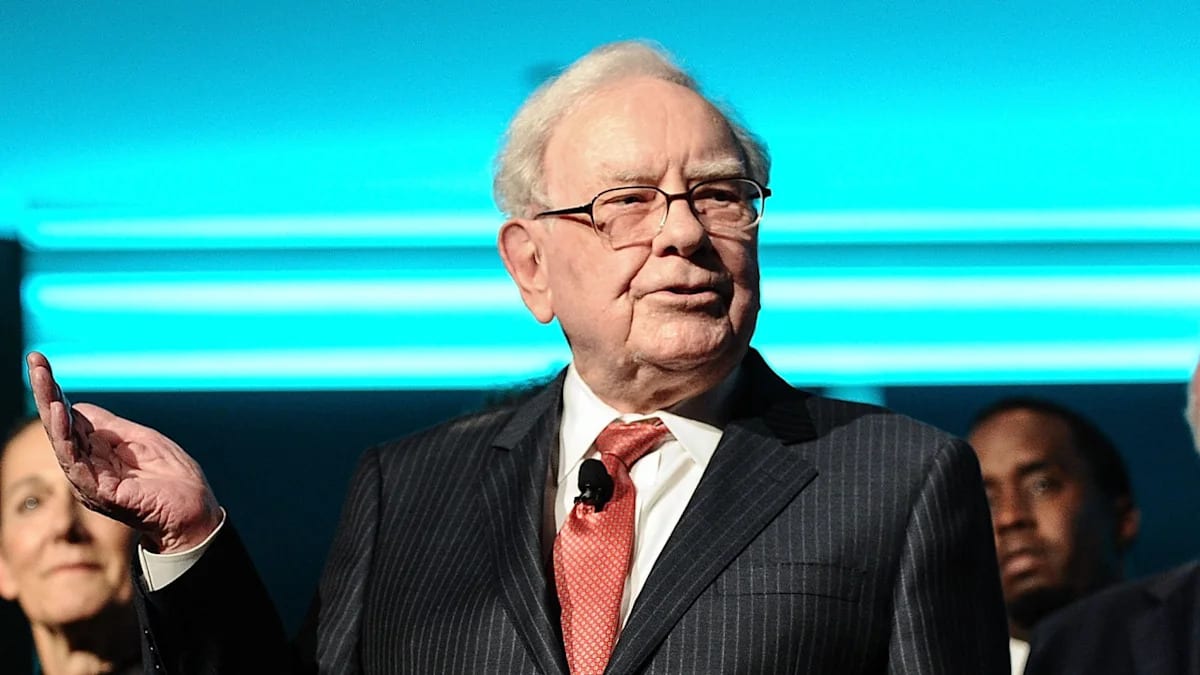
Warren Buffett emphasizes that while money is a tool for retirement, time is the ultimate asset. By prioritizing long-term investment strategies and balancing work with life, individuals can achieve financial freedom.
The Buffett Philosophy: Redefining Wealth Beyond Capital
Warren Buffett, often regarded as one of the most successful investors in history, has recently offered a provocative perspective on the nature of personal success. While his own life is defined by the accumulation of a massive investment empire, Buffett argues that 'money has no utility' for him personally. This statement serves as a foundational shift in how we perceive the role of capital; rather than being an end in itself, money is framed as a functional instrument—a utility meant to secure the freedom to exit the workforce and reclaim one's time.
The Mechanics of Financial Utility
For the average American, the utility of money is inextricably linked to the ability to eventually stop working. Buffett’s approach highlights the necessity of utilizing tax-advantaged vehicles such as 401(k) plans and Individual Retirement Accounts (IRAs). These mechanisms are not merely financial products but are strategic tools designed to compound wealth over decades. By leveraging these accounts, individuals can transition from a 'work to live' mindset—where employment is a constant necessity—to a state where financial assets provide the stability required to pursue personal interests.
Diversification as a Risk-Mitigation Strategy
Beyond basic savings, the narrative emphasizes the critical importance of a diversified portfolio. By blending traditional assets like stocks and bonds with alternative investments and real estate, investors can insulate themselves against market volatility. This strategy is essential for those who lack the infinite capital of a billionaire but possess the most valuable asset of all: time. The discipline to allocate resources wisely during one's working years is the primary driver of long-term success.
Redefining the 'Game of Life'
One of the most profound takeaways from Buffett’s outlook is the decoupling of 'winning' from the scale of one's business empire. Society often equates success with the accumulation of billions, yet Buffett suggests that the real victory lies in personal agency. If the ultimate goal of saving and investing is to reach a point where one is no longer beholden to employment, then the 'win' is defined by the quality of one's life rather than the size of a balance sheet.
Future Trends in Personal Finance
As the global economy faces increasing uncertainty, the shift toward a 'time-first' financial philosophy is likely to gain momentum. We are seeing a trend where younger generations are prioritizing financial independence—the ability to control one's time—over traditional career ladders. By focusing on high-interest savings and early adoption of investment accounts, individuals are effectively 'buying back' their future years, echoing Buffett’s sentiment that time is the one asset that, once spent, can never be replenished.
Conclusion
In summary, Warren Buffett’s insights remind us that financial planning is not merely about math; it is about lifestyle design. By viewing money as a utility that facilitates a transition away from mandatory labor, individuals can reclaim their autonomy. Whether one is building a modest retirement fund or a diversified portfolio, the core lesson remains: use your working years to secure your freedom, ensuring that money serves your life, rather than your life serving the pursuit of money.