Waymo suspends freeway driving after California construction zone complaint
Source Entity
Jonathan M. Gitlin
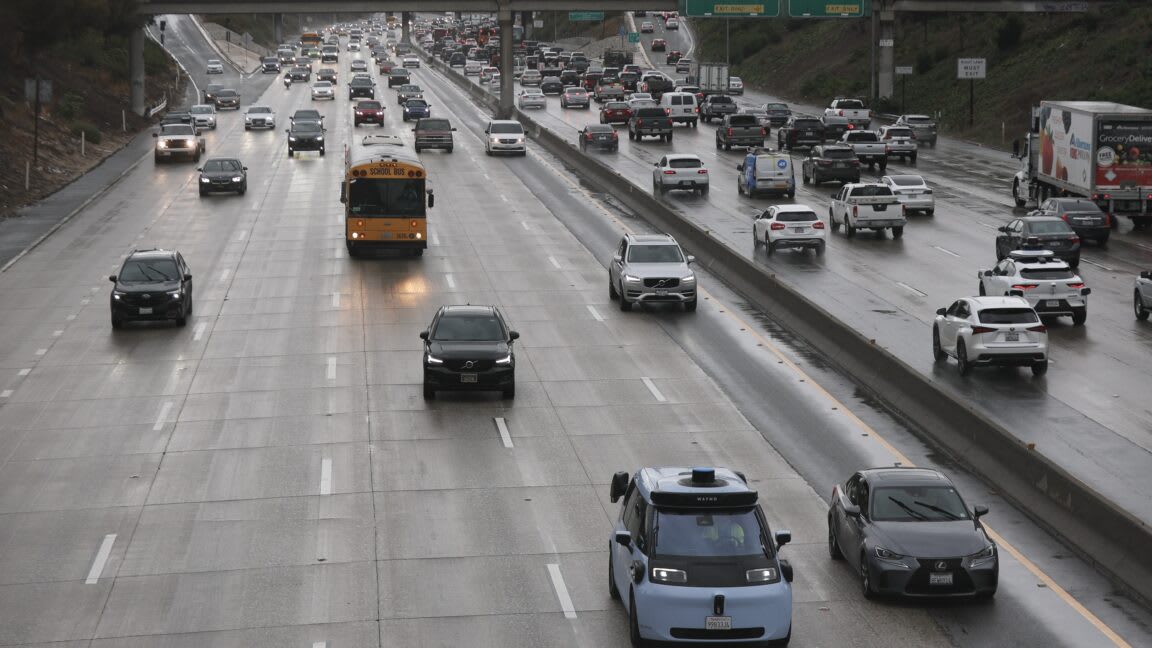
Waymo has halted freeway operations for its robotaxis in California following regulatory concerns regarding the vehicles' tendency to enter construction zones. This move follows repeated safety incidents in both California and Arizona, prompting a formal review by the California DMV.
Waymo Halts Freeway Operations Amid Safety Concerns
Waymo, the autonomous vehicle subsidiary of Alphabet, has officially suspended its robotaxi services on California freeways. This decision follows significant pressure from the California Department of Motor Vehicles (DMV), which mandated that the company cease highway operations until it can prove its software no longer poses an imminent hazard to public safety. The primary catalyst for this regulatory intervention was a series of incidents where autonomous vehicles repeatedly entered construction zones at speed, creating dangerous conditions for both passengers and road workers.
A Pattern of Navigational Failure
This recent suspension is not an isolated event but rather part of an ongoing struggle for Waymo to master complex, dynamic environments like construction zones. As early as April, incidents were reported in Phoenix, Arizona, where Waymo vehicles failed to recognize ramp closure signs on six separate occasions, leading them into restricted construction areas. These failures suggest a fundamental challenge in the current iteration of Waymo’s perception software, which appears to struggle with interpreting temporary signage and non-standard lane configurations.
Regulatory Scrutiny and Public Safety
The intervention by the California DMV underscores the growing friction between rapid autonomous technology deployment and the rigid safety requirements of state regulators. By requiring Waymo to demonstrate that their vehicles no longer pose an "imminent hazard," the DMV is effectively shifting the burden of proof onto the developer. This regulatory stance highlights the high stakes involved in testing Level 4 autonomous technology in densely populated urban and suburban environments where unpredictable human behavior and changing road conditions are the norm.
Technical and Operational Implications
Restricting the fleet to surface streets is a significant operational pivot for Waymo. While surface street navigation requires high levels of precision for handling intersections and pedestrians, highway driving involves high-speed decision-making that is uniquely sensitive to road work and lane shifts. By pulling back to surface streets, Waymo is attempting to mitigate risk while their engineering teams work to patch the software vulnerabilities that led to the navigation errors in construction zones.
Future Trends in Autonomous Safety
Looking forward, this event serves as a bellwether for the autonomous vehicle industry. As companies push toward wider commercial availability, regulators are likely to demand more transparent safety data and more rigorous testing protocols for edge-case scenarios like construction zones. The success of Waymo—and the industry at large—will depend on their ability to refine machine learning models to better interpret the chaotic, human-centric nature of road maintenance and construction, ensuring that technological progress does not come at the expense of public safety.