
Agents do not think. While the industry markets these simulated towns as precursors to digital consciousness, they are actually high-dimensional probability maps reflecting the biases of their training sets. This gap defines the current fray. Do we actually want agents that mimic human unpredictability, or are we just building expensive mirrors? The current trajectory suggests the latter, as developers prioritize visual novelty over cognitive depth.
The Twelve Month Delta
The scale shifted fast. A year ago, we interacted with isolated chatbots that forgot the conversation the moment the session ended (Source: Stanford University, 2023). Now, we see persistent environments where agents maintain long-term memories and form social bonds. This change is visceral. The transition from stateless prompts to stateful societies represents a structural break in how we deploy large language models.
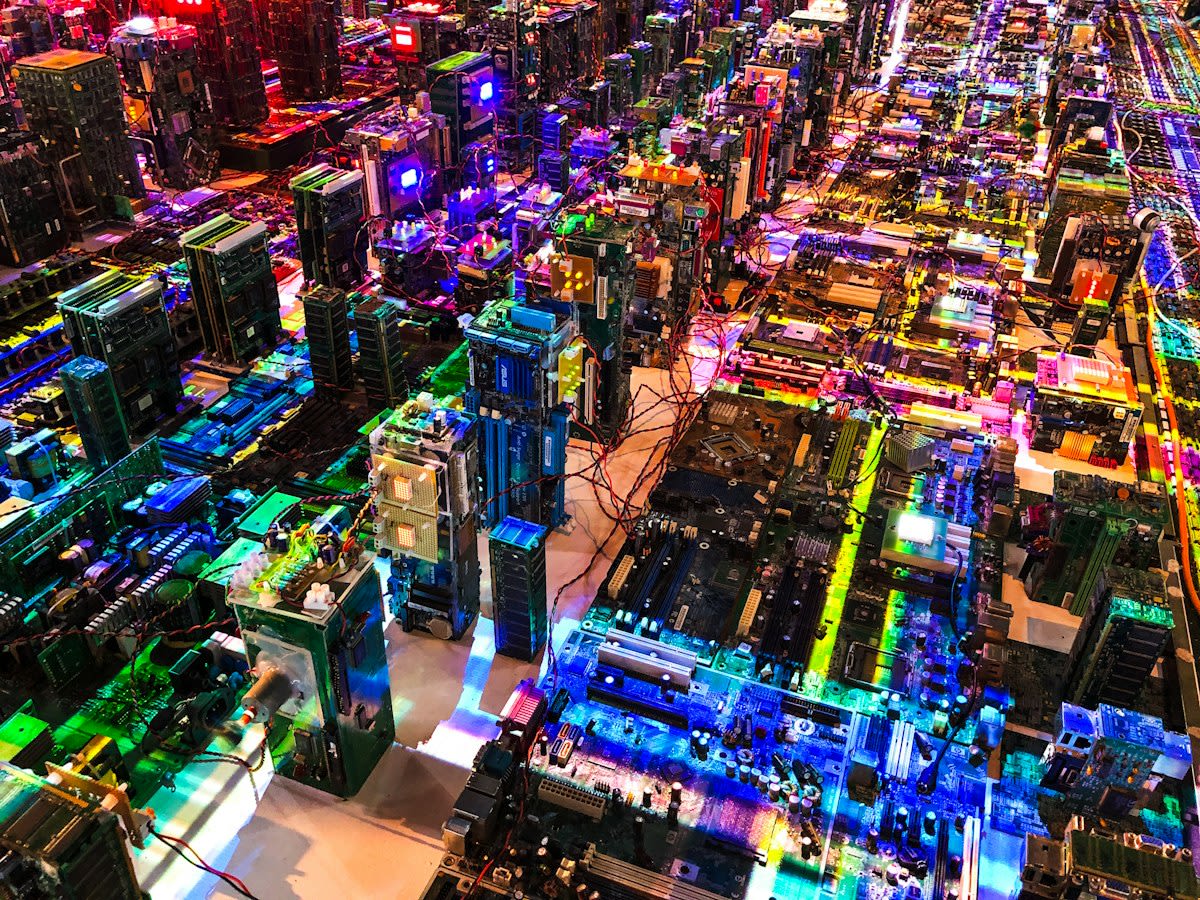
Memory is the key. In the early 'Smallville' experiments, agents used a retrieval-augmented architecture to recall past events based on importance and recency (Source: Park et al., 2023). This allowed a simulated agent to plan a Valentine's Day party by synthesizing fragmented social cues. It felt like magic. However, the weight of this data creates a massive computational burden that scales poorly as the population grows.
| Metric | Single Agent (2023) | Agent Town (2024) |
|---|---|---|
| Context Window Usage | Linear | Exponential |
| Memory Retrieval | Session-based | Vector-database persistent |
| Interaction Type | User-to-AI | AI-to-AI (Emergent) |
| Token Cost/Hour | Low | Extreme |
Costs are soaring. Running a town of twenty-five agents requires a constant stream of token updates that can saturate a standard API budget in hours (Source: OpenAI, 2024). Developers are now scrambling to find cheaper alternatives. This financial weight forces a hard turn toward smaller, specialized models.
Global Terrain and Urban Twins
Seoul leads this. The Seoul Metropolitan Government is integrating agent-based simulations into their 'Virtual Seoul' digital twin to predict how citizens react to new zoning laws (Source: Seoul Digital Foundation, 2023). They are not just simulating people; they are simulating bureaucracy. This approach moves the tech from a toy to a tool.
Lagos offers contrast. Tech hubs in Nigeria are experimenting with agent towns to model informal economy flows and market volatility in areas where traditional data is missing (Source: Lagos Tech Hub Report, 2024). They use agents to fill the gaps. This proves that the utility of agent towns depends entirely on the local data they ingest.
"The goal is not to create a perfect human replica, but to build a sandbox where we can test social hypotheses without the risk of real-world failure."— Joon Sung Park, Lead Researcher at Stanford University
Logic is not enough. When these agents interact, they often fall into 'hallucination loops' where one agent's error becomes another agent's fact. This creates a digital echo chamber. We are seeing the birth of synthetic misinformation within closed systems.
The Invisible Friction
Practitioners are fighting. Inside the development labs, a bitter dispute rages between the 'Long-Context' camp and the 'Vector-RAG' camp regarding how agents should remember their neighbors. The Long-Context group argues that RAG creates a fragmented personality because agents only retrieve 'snippets' of their history. The Vector group counters that long contexts lead to 'loss in the middle,' where the agent forgets the most critical social bond simply because it occurred 10,000 tokens ago. This is not a theoretical debate; it is a mechanical failure that causes agents to suddenly treat their 'best friend' as a stranger.
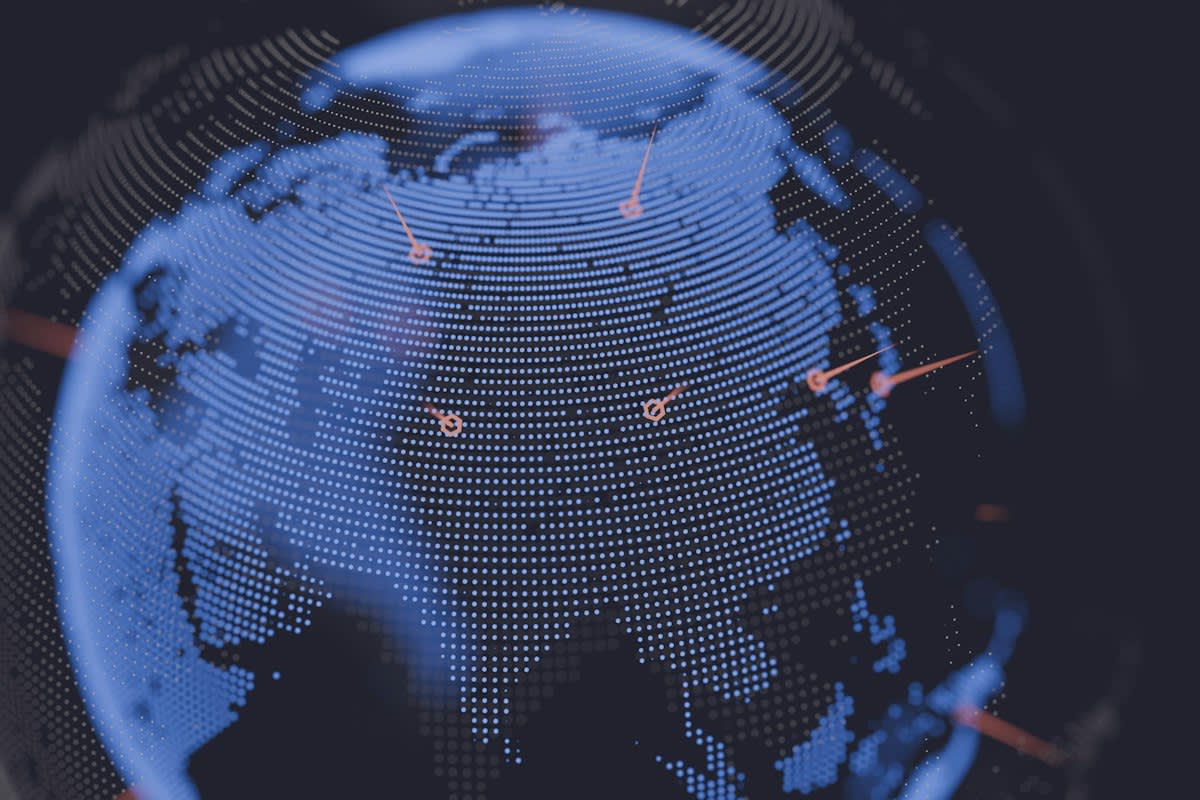
Stability is elusive. Agents often suffer from 'personality drift' as their memory stores become saturated with contradictory interactions. They start as a baker and end as a nihilist. This drift happens because the model prioritizes the most recent tokens over the core identity prompt.
Fact-Check & Accuracy Note
The core academic debate centers on whether 'emergent behavior' in agent towns is a sign of intelligence or merely a statistical artifact of the LLM's training data. Most researchers agree that without a grounding in physical reality, these agents are simply performing a sophisticated version of improvisational theater.
Efficiency must come. The current playbook for scaling agent towns involves 'hierarchical memory,' where agents summarize their day into a permanent ledger (Source: DeepMind, 2023). This mimics human forgetting. It prevents the system from crashing under its own weight.
The Path Forward
Adaptation is mandatory. We are moving away from general-purpose agents toward 'role-specific' weights that are fine-tuned for social stability. This limits the drift. It ensures the baker stays a baker.
Opportunity remains vast. Imagine a town where agents simulate the impact of a new tax law across ten thousand different personality profiles before a single bill is signed. This is the real prize. The novelty of 'AI people' is fading, but the power of 'AI populations' is just beginning.
Editorial Note
Editorial Note: This analysis focuses on the technical and economic constraints of agent simulations. While some claim these systems will lead to AGI, the current data suggests they are limited by the token-window constraints of the Transformer architecture.