
July 20, 2026, marked a quiet but definitive strike against the traditional logistics hierarchy. The launch of the AI & Agentic Payments Working Group by HSBC and the Emerging Payments Association Asia (EPAA) signals a move toward agentic commerce, where autonomous systems handle the financial and operational triggers of trade. For decades, the middle manager served as the human bridge between a purchase order and a delivery, reconciling payments and verifying milestones. Now, as these institutions define standards for agentic commerce across the ASEAN and APEC regions, that bridge is being replaced by code.
Consider the delta between now and twelve months ago. In 2025, AI was primarily a tool for visibility, providing dashboards that managers used to make decisions. By mid-2026, the objective has shifted from visibility to execution. The HSBC-EPAA initiative is not merely about faster payments; it is about creating commercial frameworks where AI agents negotiate, execute, and settle transactions without human oversight. When the payment settles itself based on real-time delivery telemetry, the role of the payment coordinator vanishes.
The Automation of the Dispatcher
In Singapore, the erosion of the middle layer is most visible in fleet operations. Logistics firms are aggressively deploying AI-powered fleet management systems to squeeze every percentage of utility out of existing assets. Roger Calisto, CEO at Cartrack Technologies Asia Pte. Ltd., emphasizes that the current priority is ensuring assets are utilized to their maximum capacity. This is a direct response to high ownership costs that have squeezed returns, making the margin for human error in routing unacceptable.
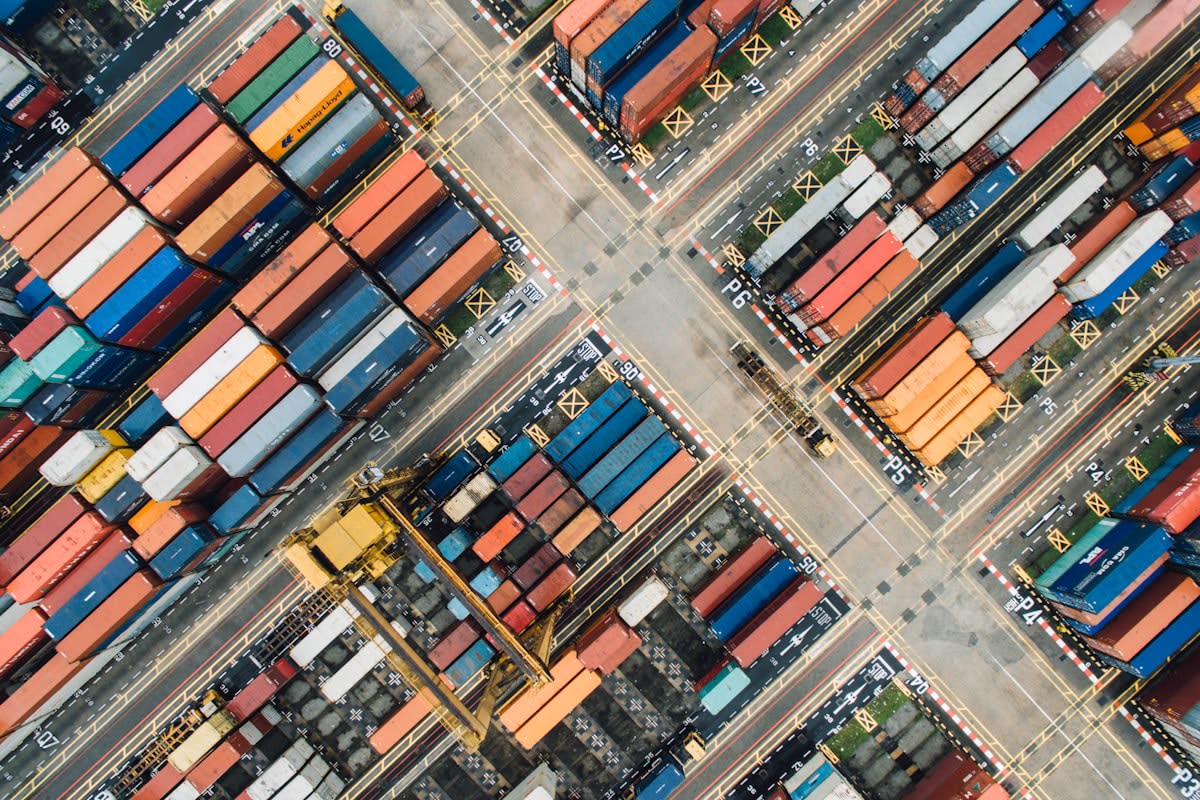
Why does this kill the middle manager? Traditionally, a regional fleet manager spent their day solving the puzzle of vehicle placement and cargo matching. Mark Goh of the Logistics Institute-Asia Pacific notes that the last thing a firm wants is a vehicle moving while searching for cargo. When AI handles live traffic information and route planning in real-time, the 'puzzle solver' is no longer needed. The machine does not just suggest a route; it optimizes the entire network of assets simultaneously.
"Connected vehicle technology doesn't really help logistics firms to grow, but basically helps them to do business better."— Mark Goh, Director for Industry Research, Logistics Institute-Asia Pacific
This 'doing business better' is a euphemism for lean operationalization. By removing the human latency involved in dispatching and route adjustment, firms are reducing their headcount in the supervisory layer. The gap between the executive who sets the budget and the driver who moves the goods is closing. The middle manager, who once translated the budget into a schedule, is now a legacy cost.
From Inventory Storage to Real-Time Flow
The physical landscape of logistics is also rewriting the job descriptions of those who manage it. We are seeing the end of inventory as a safety net. For decades, industrial real estate was designed to manage uncertainty through storage. However, predictive analytics and robotics are enabling supply chains that move goods continuously. As visibility improves, the need for large-scale inventory diminishes, transforming warehouses from storage hubs into flow-optimized nodes.
| Coordination Function | 2025 Human-Led Model | 2026 Agent-Driven Model |
|---|---|---|
| Route Optimization | Manual dispatch based on driver feedback | AI-powered live telemetry and route planning |
| Payment Settlement | Manual invoice reconciliation and approval | Agentic commerce with automated triggers |
| Inventory Management | Safety stock buffering and manual audits | Predictive flow and real-time coordination |
| Asset Utilization | Supervisory oversight of fleet capacity | Algorithmic maximization of asset load |
This transition shifts the burden of competence from management to engineering. When a facility is designed for throughput rather than storage, the 'Warehouse Manager' role evolves into a 'Systems Engineer' role. The focus is no longer on where a pallet is located, but on how the automation logic is performing. This is not a gradual change; it is a fundamental redesign of the physical and digital constraints of the industry.
The Efficiency Paradox
The 'Coordination Gap'—the space where middle managers once lived—is being closed by the integration of agentic payments and predictive flow. If the system knows where the cargo is and pays the carrier automatically, the coordinator becomes an obstacle to speed.
The Engineering Reality of the ASEAN Value Chain
The shift is extending into the very hardware of the supply chain. In Malaysia, the 4th ASEAN Battery Technology Conference (August 19-21, 2026) highlights a move away from policy frameworks toward engineering realities. The discussion has migrated from 'how do we adopt EVs' to the technical specifics of cell manufacturing and thermal runaway mitigation. This mirrors the broader trend in logistics: the era of high-level management is being superseded by a demand for deep technical execution.
When the focus becomes localized chemical supply loops and thermal management, the generalist manager is useless. The industry requires experts who can manage the physical constraints of the new energy economy. This technicalization of the workforce is the final nail in the coffin for the traditional middle management layer. You cannot 'manage' a thermal runaway problem with a weekly status report; you solve it with chemical engineering.
The upcoming NextGen Supply Chain Conference in October 2026 further confirms this trajectory. With an agenda focused on AI execution and the future of leadership, the conversation has moved past the 'why' of digital transformation. The industry is now obsessing over the 'how' of execution. This is where the professional risk lies: leadership is no longer about coordinating people, but about orchestrating AI-driven systems.
Does this mean the end of leadership? No, but it means the end of the coordinator. The new leadership profile in Southeast Asian logistics is one of clinical precision and technical fluency. Those who cannot speak the language of agentic commerce or predictive analytics will find themselves managing a shrinking territory. The middle is vanishing because the gap it once filled no longer exists.