
For decades, the professional mantra was simple: specialize or perish. We were told to carve out a niche, dominate a vertical, and become the undisputed authority in a specific domain. But there is a dark side to this mastery that few mentors discuss. When you spend fifteen years perfecting a specific set of skills, you don't just build expertise; you build a psychological anchor. This anchor keeps you moored to a specific way of solving problems, making you blind to the systemic shifts that render those very solutions obsolete. Why do the most experienced people often struggle the most during a pivot? Because their identity is fused with a methodology that the market no longer values.
We are currently witnessing this friction in real-time across global industries. The shift isn't just about new tools; it is about the total reconfiguration of value. When a company pivots its core engine, the people who were 'experts' in the old engine often become the primary obstacles to progress. They fight the new system not because it is inferior, but because its success proves their life's work is no longer the primary driver of growth. This is the competency trap: the more successful you are at a specific task, the less likely you are to imagine a world where that task is irrelevant.
The Automation Pivot: A Lesson from the Ride-Hailing Giant
Look at the recent strategic shifts at Uber. The company is reportedly planning to slash approximately 10% of its global workforce, which equates to roughly 3,300 jobs (Source: Bloomberg, 2026). On the surface, this looks like a standard corporate downsizing. However, the underlying driver is a bet on autonomous mobility. According to Wells Fargo, these cuts could unlock $580 million in annual cost savings, creating a buffer as the company pivots toward a future where the human driver—and the operational expertise required to manage a massive human fleet—is no longer the central pillar of the business (Source: Wells Fargo, 2026).
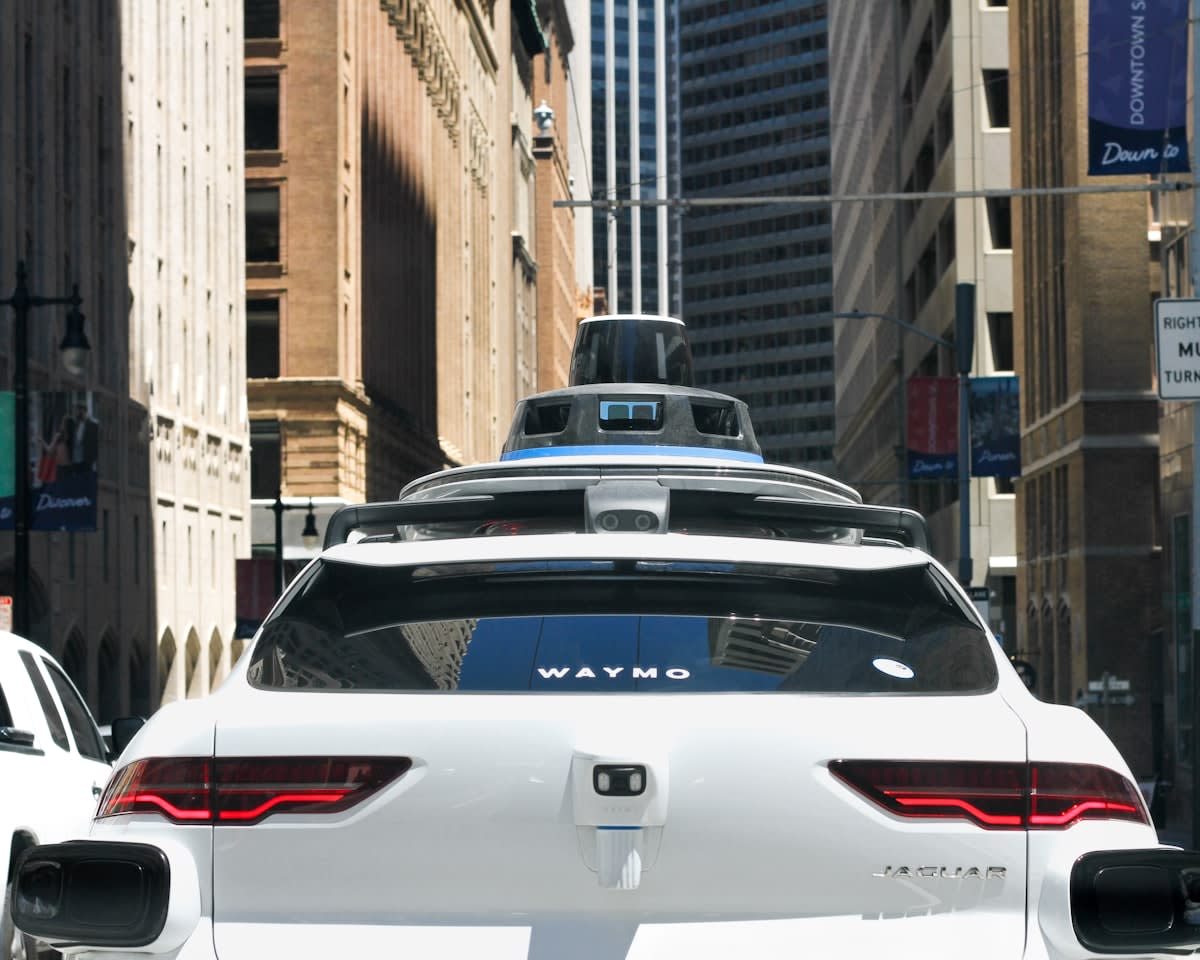
What happens to the middle managers and operational experts who spent a decade optimizing human-driver logistics? Their deep expertise in human incentive structures, driver retention, and urban traffic patterns becomes a liability. They are conditioned to solve for 'human' variables in a system that is moving toward 'algorithmic' variables. The very precision that made them valuable in 2020 becomes a blind spot in 2026. They aren't being replaced by a better version of themselves; they are being replaced by a different category of intelligence entirely.
"Uber's reported job cut plans could provide a meaningful boost to its earnings next year, as the ride-hailing giant bets big on its autonomous mobility business."— Wells Fargo Analysis, 2026
This isn't just a Silicon Valley phenomenon. We see this pattern in any sector where the 'unit of value' changes. When the unit of value shifts from human labor to autonomous output, the expert in human labor becomes an overhead cost. The challenge for the modern professional is to decouple their identity from their current utility. If you define yourself by what you do, you are vulnerable. If you define yourself by how you adapt, you are an asset.
Infrastructure as the New Alpha: The Microsoft Model
The shift toward AI isn't just about chatbots; it is about the massive reallocation of capital toward the infrastructure that powers them. Microsoft provides a stark example of this transition. For the fiscal year ended June 30, the company reported a staggering $101.9 billion in Azure revenue, with the most recent quarter alone bringing in $29.4 billion (Source: TheStreet/Reuters, 2026). This explosion in revenue signals a systemic shift where the expertise in traditional software licensing is far less valuable than the expertise in scaling AI-integrated cloud infrastructure.
| Metric | Value | Source |
|---|---|---|
| Microsoft Azure Annual Revenue | $101.9 Billion | TheStreet/Reuters, 2026 |
| Microsoft Azure Quarterly Revenue | $29.4 Billion | TheStreet/Reuters, 2026 |
| Uber Planned Workforce Reduction | 10% (~3,300 jobs) | Bloomberg, 2026 |
| Uber Estimated Annual Savings | $580 Million | Wells Fargo, 2026 |
Consider the internal friction this creates. You have legacy architects who spent twenty years mastering the nuances of on-premise server deployments. Suddenly, the world moves to a model where AI manages the scaling, the security, and the distribution. The legacy expert's instinct is to 'fix' the new system to look like the old one. They attempt to apply old-world rigor to new-world fluidity. In doing so, they slow down the very innovation that the company is betting its survival on. Their expertise acts as a brake on the organization's velocity.
Does this mean specialization is dead? Not exactly. It means the duration of the half-life of expertise has shrunk. In the past, a degree or a certification could sustain a career for two decades. Now, the half-life of a technical skill is barely five years. The real expertise is no longer in the 'knowing,' but in the 'unlearning.' The ability to aggressively discard outdated mental models is now a more valuable skill than the ability to acquire new ones.
The Innovation Crisis in Traditional Bastions
Even the most conservative industries, like law, are feeling the pressure to evolve. The recognition of Debevoise & Plimpton as an 'Innovation of the Year' winner (Source: Law.com, 2026) highlights a growing divide in the legal profession. For centuries, the legal 'expert' was the person with the most exhaustive memory of case law and the most rigid adherence to precedent. But when AI can synthesize thousands of pages of discovery in seconds, the value of the 'human encyclopedia' plummets.

The legal experts who survive this shift are those who realize that their value isn't in the 'law'—which is now a commodity—but in the 'strategy' and 'judgment' that AI cannot yet replicate. Those who cling to the prestige of their traditional research methods find themselves relegated to administrative roles or replaced by leaner, tech-augmented firms. The liability isn't a lack of knowledge; it is an abundance of the wrong kind of knowledge.
This trend mirrors the broader economic volatility we see in the markets. With US companies adding 38,000 jobs in August (Source: ADP Data/Bloomberg, 2026) and the Federal Reserve contemplating rate hikes based on inflation data, the macroeconomic environment is in a state of flux. Professionals who rely on a stable, predictable economic playbook are finding that the old rules of 'safe' career paths no longer apply. Agility is the only true hedge against inflation and automation.
The Practitioner's View: The Internal War of Ideologies
On the ground, this looks like a quiet war in the boardroom. I have seen it repeatedly: the 'Old Guard' argues for stability and the preservation of proven methods, while the 'New Wave' pushes for rapid experimentation and the abandonment of legacy systems. The debate isn't actually about efficiency—it is about status. The expert's status is derived from their mastery of the old system. To admit the system is obsolete is to admit that their status is gone. This creates a toxic friction where the most senior people in the room are the ones most incentivized to block the necessary evolution of the company.
Practitioners in the field are currently debating whether 'generalist' skills are making a comeback. We are seeing a rise in the 'T-shaped' professional—someone with deep expertise in one area but a broad ability to collaborate across disciplines. The friction occurs when the 'I' shaped professional—the hyper-specialist—tries to maintain control over a process that now requires cross-functional agility. They view the generalist as 'shallow,' while the generalist views the specialist as 'brittle.' In a volatile market, brittle things break.
How do you avoid becoming a legacy asset? You must treat your expertise as a hypothesis, not a fact. Every six months, ask yourself: 'If I were starting my career today, would I spend any time learning the things I currently consider my greatest strengths?' If the answer is no, you are in the competency trap. The goal is to maintain a state of perpetual beta, where you are always slightly uncomfortable with your own level of mastery.
Fact-Check & Accuracy Note
Key claims regarding Uber's workforce reductions and projected savings are sourced from Bloomberg and Wells Fargo (2026). Microsoft's Azure revenue figures are attributed to TheStreet and Reuters (2026). US employment data is sourced from ADP via Bloomberg (2026). The debate regarding the 'half-life of skills' is an ongoing discourse in professional development and human capital management, not a settled statistic.