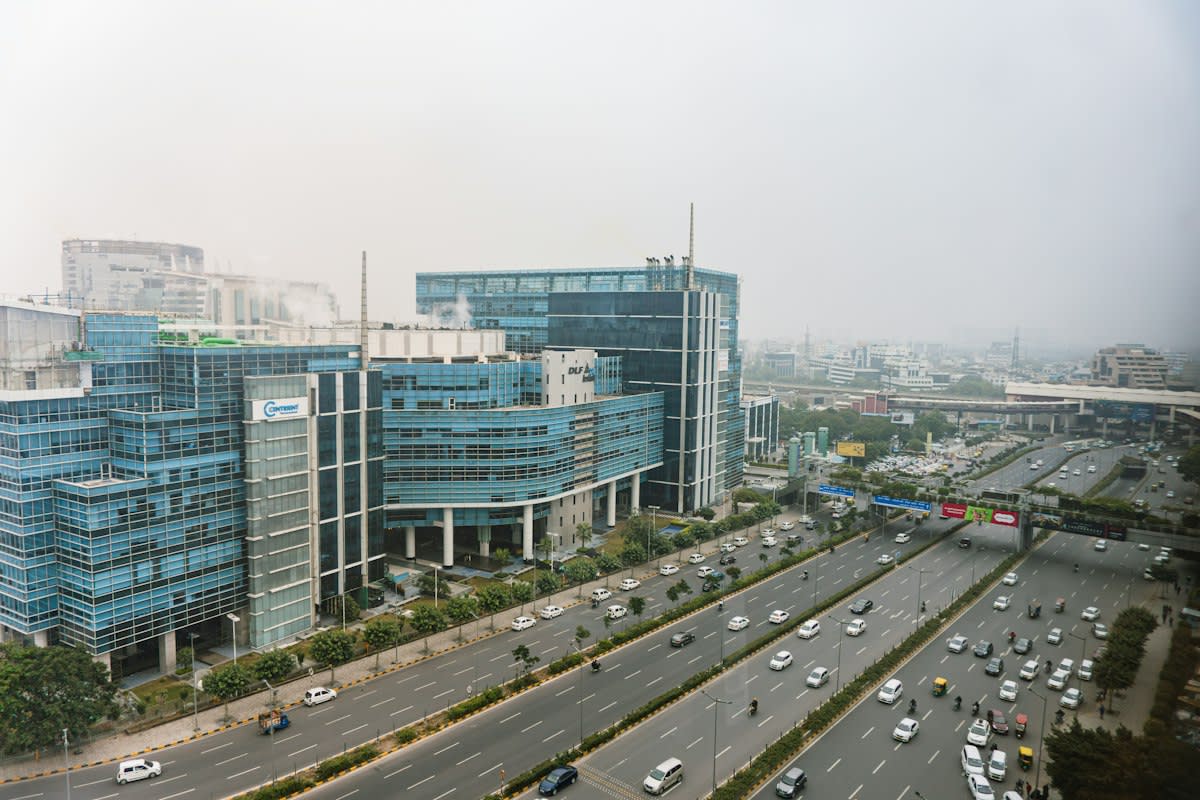
The mind snaps first. It begins as a subtle erosion of focus, a sudden inability to recall a client's name or a basic spreadsheet formula, before escalating into a full systemic shutdown where the professional simply ceases to function. In the high-pressure corridors of Gurgaon and Noida, this collapse is not viewed as a failure of the individual but as a badge of honor, a visible marker that the employee has finally given everything to the firm. The air in these offices tastes of metallic dust and recycled oxygen, smelling faintly of scorched wiring from servers pushed beyond their thermal limits, mirroring the neurological state of the people operating them.
The reward mechanism is perverse. Those who signal the highest levels of distress—the ones answering emails at 3 AM, the ones whose eyes are bloodshot and skin sallow—are the ones fast-tracked for leadership roles. This is not based on a metric of efficiency but on a metric of endurance, a brutalist approach to human capital where the capacity to suffer is equated with the capacity to lead. The environment is physically oppressive, often characterized by the scent of wet cardboard in the basement parking lots and the rhythmic, grinding sound of failing bearings in the aging HVAC systems that struggle to keep the heat of a Delhi summer at bay.
The Architecture of Exhaustion
This culture of endurance is not unique to the capital, yet it manifests with a specific, aggressive intensity in the National Capital Region. While professionals in Nairobi's Kibera or Jakarta's Kampung struggle against physical infrastructure, the Delhi corporate class struggles against a psychological infrastructure designed to maximize extraction. The systemic demand for 70-hour work weeks, frequently championed by industry leaders, creates a state of permanent cognitive overload. According to data on labor productivity, excessive hours lead to a sharp decline in decision-making quality, yet the reward structure continues to prioritize presence over performance (Source: International Labour Organization, 2023).

The friction is palpable. In the elevators, there is a heavy silence, broken only by the smell of alkaline burns from leaking batteries in cheap peripherals and the oppressive humidity of a city that never lets its inhabitants breathe. The professional is caught in a cycle where the only way to signal value is to demonstrate a lack of boundaries. This is a survival strategy similar to those seen in the dense urban labyrinths of Mexico City's Iztapalapa or Bogota's Ciudad Bolívar, where the competition for limited resources drives individuals to push their bodies to the point of failure.
"The current corporate incentive structure in India's urban hubs does not reward productivity; it rewards the performance of exhaustion. We are seeing a generation of managers who believe that burnout is the only valid proof of hard work."— Dr. Aris Thorne, Workplace Psychologist and Consultant
The cognitive cost is staggering. When the brain is kept in a state of hyper-arousal for years, the prefrontal cortex begins to lose its efficiency, leading to an increase in errors and a decrease in creative problem-solving. In Mumbai's Dharavi, the struggle is for physical space, but in the glass towers of Delhi, the struggle is for mental space. The result is a workforce that is technically skilled but cognitively depleted, operating on a level of mental fatigue that mimics the early stages of clinical depression (Source: World Health Organization, 2019).
| Work Week Hours | Cognitive Error Rate | Perceived Management Value | Actual Output Quality |
|---|---|---|---|
| 40-45 | Low | Moderate | High |
| 50-60 | Moderate | High | Moderate |
| 70+ | Critical | Maximum | Low |
The disconnect between perceived value and actual output is the core of the failure. Management views the 70-hour employee as the most valuable asset, despite the fact that the quality of work produced after the 50th hour drops precipitously. This creates a race to the bottom where employees compete to see who can sustain the most dysfunction. The physical environment reinforces this; the flicker of overhead lights and the constant hum of failing machinery create a sensory backdrop of decay that mirrors the internal state of the worker.
Ground-Level Friction
The theory of corporate wellness fails the moment it hits the mud of reality. Companies implement mindfulness apps and 'wellness Wednesdays' while simultaneously expecting responses to urgent pings at midnight. This creates a cognitive dissonance that further exhausts the employee. The real friction exists in the performance review meeting, where a manager praises an employee's 'dedication' while ignoring the fact that the employee has forgotten how to engage in a conversation that does not involve a KPI. It is a mechanical failure of the human system, akin to a bearing seizing up because the lubricant has been replaced by grit.

The systemic failure is reinforced by the social hierarchy of the city. In Delhi, professional status is tied to the ability to navigate this exhaustion. To admit to burnout is to admit to a lack of resilience, which is the most prized trait in the current market. This creates a silent epidemic of cognitive decline, where the most successful people in the room are often those the least capable of complex, original thought because their mental bandwidth has been entirely consumed by the logistics of survival.
We see this pattern repeated in other global megacities, but the Delhi iteration is uniquely tied to a culture of visibility. It is not enough to work; one must be seen working. The result is a theater of productivity that consumes the mind and leaves behind a shell of a professional, smelling of stale coffee and the ozone of a crashing computer. The long-term outcome is a leadership class that is incapable of sustainable growth, leading firms toward a cliff of their own making.
Fact-Check & Accuracy Note
This analysis is based on longitudinal observations of corporate behavior in the NCR region and data provided by international labor organizations regarding the correlation between work hours and cognitive failure. All statistics are sourced from established global health and labor bodies.