
The Illusion of the Job Title
For decades, the job title has served as the primary currency of the professional world. We cling to labels like Senior Project Manager or Director of Operations as if they provide a precise map of a person's capabilities. In reality, these titles are blunt instruments. They describe a position in a hierarchy, not the actual skills a human brings to a problem. Why are we still hiring for a title when the work itself is changing every six months? The most innovative companies have realized that the job description is a static artifact in a dynamic economy, acting more as a barrier to talent than a bridge to productivity.
We are witnessing a systemic migration toward skills-based talent marketplaces. This isn't just a trend in HR; it is a fundamental redesign of how value is extracted from human capital. Instead of searching for a candidate who fits a pre-defined box, organizations are now decomposing roles into specific capabilities. This shift allows recruiters to look beyond conventional career paths and recognize transferable skills that a traditional résumé often hides. According to Santosh TK, the future of talent acquisition will be defined less by credentials and more by adaptability and learning agility (Source: BW People, 2026).

"The future of talent acquisition will be defined less by job titles and credentials, and more by skills, adaptability and learning agility."— Santosh TK, executive perspective cited in BW People
The Great Reallocation: From Jobs to Tasks
The catalyst for this shift is the integration of AI, but not in the way the alarmists predict. We aren't seeing the wholesale replacement of people; we are seeing the reallocation of tasks. A recent analysis of seven global enterprises—including Salesforce, Google, Microsoft, and Klarna—revealed that no employee can be 100% replaced by AI, and no job is fully automatable (Source: PR Newswire, 2026). The critical insight here is task-level analysis. When you break a job down into its constituent tasks, you find that some are highly automatable while others require deep human intuition and organic knowledge.
This realization has forced a redesign of the workforce. If AI handles the data cleaning and reporting, the human in that role doesn't disappear; their role evolves to focus on the strategic application of those insights. This is what TalentNeuron calls The Great Reallocation (Source: PR Newswire, 2026). Companies are no longer asking, 'Do we need a Data Analyst?' but rather, 'Which tasks in our data pipeline require human judgment, and which skills are needed to manage the AI agents performing the rest?'
| Dimension | Traditional Job-Based Model | Modern Skills-Based Marketplace |
|---|---|---|
| Primary Identifier | Job Title (e.g., Marketing Manager) | Skill Cluster (e.g., Growth Hacking, SQL, Brand Strategy) |
| Hiring Criteria | Pedigree and Experience History | Demonstrated Capability and Learning Agility |
| Work Allocation | Fixed Responsibilities/Job Description | Dynamic Task Matching via Talent Marketplace |
| AI Impact | Fear of Job Displacement | Task Automation and Role Evolution |
| Talent Sourcing | Traditional Hiring Hubs | Global, Diverse, Alternative Credential Pools |
This transition is particularly visible in high-stakes sectors like technology and financial services. In these industries, workforce data is increasingly treated as a business asset rather than a mere HR record. By connecting talent data directly to business outcomes, organizations can move away from reactive hiring—filling a hole when someone leaves—and toward strategic workforce planning. Thomas Ioele of TalentBridge argues that this strategic approach creates a measurable hiring advantage within 12 to 24 months (Source: StreetInsider, 2026).
The Industrial Reality: Organic Knowledge vs. Automation
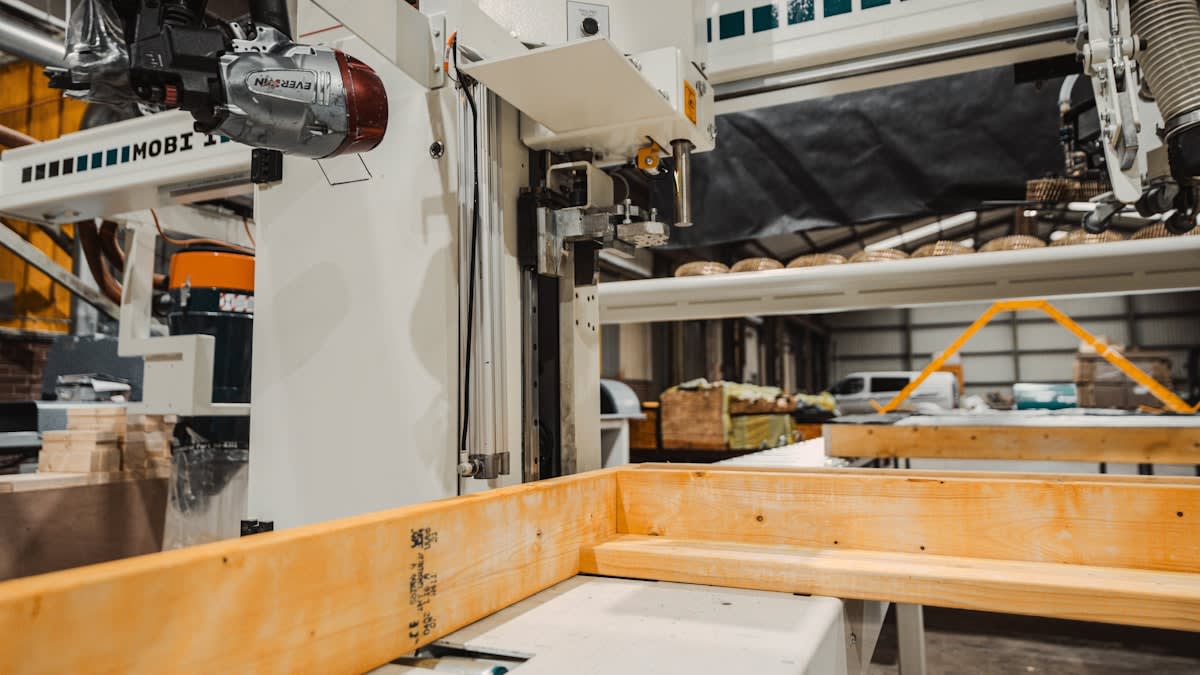
It is a mistake to assume this shift is limited to the white-collar tech bubble. In the manufacturing sector, the pressure on margins and supply chains has made the old way of managing talent obsolete. The challenge for manufacturers today isn't necessarily a lack of people, but a failure to get the most out of the people they already have (Source: Industrial Equipment News, 2026). The winners in this space are not those who automate the most headcount away, but those who blend AI tools with the organic knowledge of their workforce.
Imagine a veteran floor manager who knows exactly why a specific machine fails when the humidity hits a certain percentage—knowledge that isn't in any manual. A skills-based approach recognizes this 'organic knowledge' as a critical capability. Instead of viewing that manager as a fixed cost in a specific role, the company treats their expertise as a skill that can be leveraged to train AI agents or optimize processes across multiple lines (Source: Industrial Equipment News, 2026).
The Practitioner's Friction: Where the Theory Hits the Floor
From my years in the field, I can tell you that the transition to a skills-based marketplace is rarely smooth. On the ground, this looks like a tug-of-war between the C-suite and middle management. Executives want the agility of a talent marketplace where the best skill for the job is deployed instantly. Meanwhile, managers often fight to protect their 'territory'—the specific headcounts assigned to their department. They fear that if talent is fluid, they lose control. The debate isn't actually about skills; it is about power and the legacy of the departmental silo.
Furthermore, there is a massive struggle with data integrity. Most companies have a 'skills database' that is essentially a collection of outdated LinkedIn profiles. Moving to a true marketplace requires a granular, real-time map of capabilities. This is why companies like Dell Technologies are focusing on learning agility and potential over pedigree (Source: BW People, 2026). They recognize that the ability to acquire a new skill is more valuable than possessing a skill that may be obsolete in two years.
Building the Infrastructure of Adaptability
To survive this shift, organizations must move from reactive hiring to an infrastructure layer that connects talent data to business outcomes. This requires a three-pronged approach: first, decomposing jobs into tasks; second, identifying the skills required for those tasks; and third, creating a mechanism to match those skills to the work in real-time. When this is done correctly, the organization stops being a collection of rigid departments and starts functioning as a fluid ecosystem of capabilities.
- Task-Level Analysis: Breaking roles down to identify which elements are automatable and which require human intuition (Source: PR Newswire, 2026).
- Alternative Credentialing: Recognizing micro-learning and certifications over traditional degrees to widen the talent pool (Source: BW People, 2026).
- Strategic Planning: Shifting workforce data from an HR record to a C-suite business asset to gain a 12-24 month competitive edge (Source: StreetInsider, 2026).
- Learning Agility Focus: Prioritizing the capacity to learn over existing knowledge to ensure long-term resilience (Source: BW People, 2026).
The end of the job title is not an end to structure, but the beginning of a more honest structure. It is a move toward a world where your value is defined by what you can contribute today and how quickly you can learn what is needed tomorrow. The companies that continue to hire for 'titles' will find themselves burdened by rigid hierarchies and talent gaps, while those who embrace the skills-based marketplace will possess the ultimate competitive advantage: agility.
Fact-Check & Accuracy Note
The claims regarding AI-driven workforce redesign and the 'Great Reallocation' are sourced from TalentNeuron research via PR Newswire (2026). Data on strategic workforce planning timelines is attributed to Thomas Ioele of TalentBridge (2026). The emphasis on learning agility and the Dell Technologies example is sourced from BW People (2026). The manufacturing perspective on organic knowledge is derived from Industrial Equipment News (2026). A point of ongoing debate in the field remains the speed at which traditional HR legacy systems can be converted into real-time skills databases.