
The global labor market is currently undergoing a quiet but violent decoupling. We are moving away from the era of 'offshoring'—where work was sent to cheaper geographies—and entering the era of 'intellectual exports,' where specialized knowledge is traded as a high-value commodity regardless of the provider's physical coordinates. This shift isn't just about software engineering. It is manifesting in everything from advanced atmospheric research to digital beauty education. The core driver? A systemic transition where regional resilience and high literacy are being converted into global competitive advantages.
Kerala provides a stark, real-world case study in this evolution. Often cited for its social indicators, the region's true blueprint for the remote era is found in its capacity for resilience. Consider the catastrophic floods of August 2018. This event was one of the most severe hydrometeorological crises in Indian monsoon history, causing 433 fatalities, displacing 1.4 million people, and inflicting approximately USD 4.4 billion in damage (Source: UCSD, 2026). While the immediate aftermath was a story of survival, the long-term result was a forced acceleration of digital dependency and institutional adaptation.
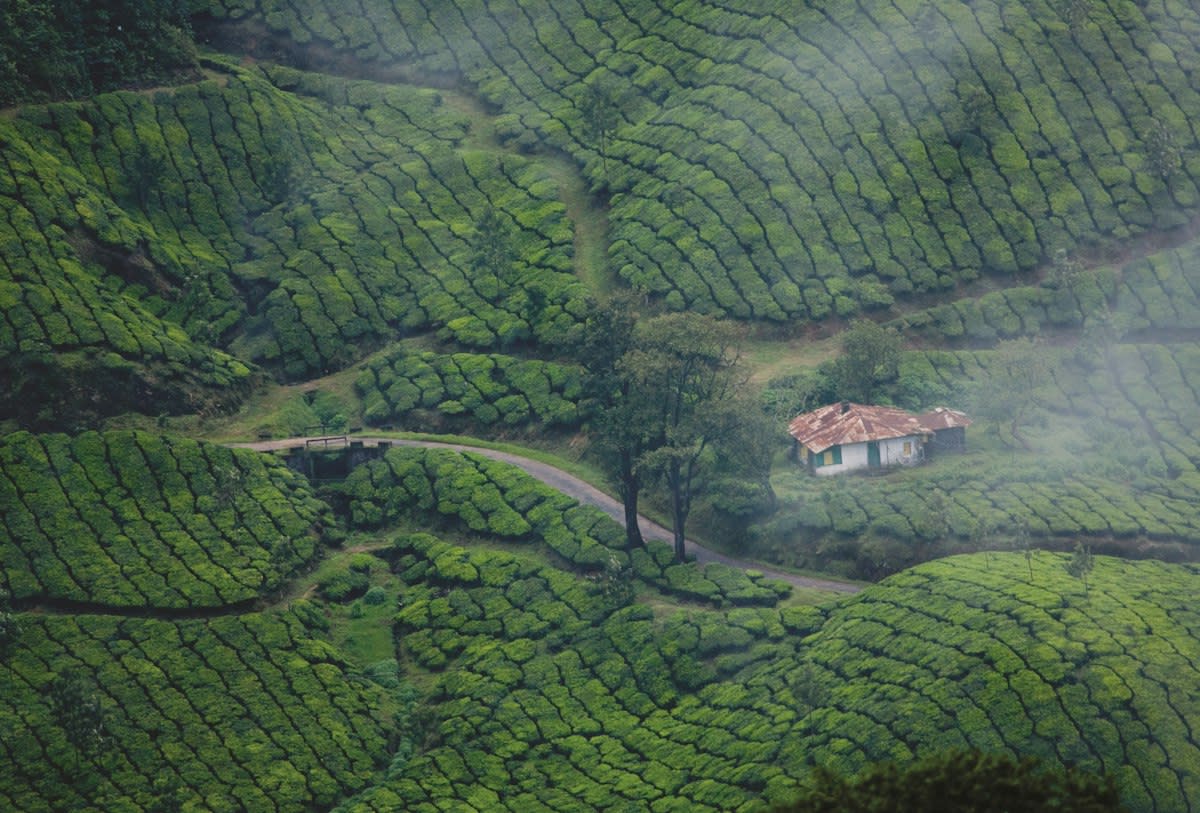
Why does a flood from 2018 matter to a 2026 business trend? Because the recovery effort cemented the role of specialized local institutions. The Advanced Centre for Atmospheric Radar Research at Cochin University of Science and Technology, for instance, has become a hub for analyzing the very Atmospheric Rivers (ARs) that drive these extreme events (Source: UCSD, 2026). This is the 'Digital Village' in action: high-level academic specialization occurring in a regional hub, then being exported as data and expertise to the global scientific community. It is no longer about moving the person to the job, but moving the expertise to the market.
The Pivot to Intellectual Exports
This regional phenomenon mirrors a broader global macroeconomic trend. We are seeing a shift where nations are prioritizing 'intellectual exports' over physical goods to stabilize their economies against inflation. Taimur Baig of DBS Bank has highlighted the growing importance of China's intellectual exports as a stabilizing force in the global market (Source: CNBC, 2026). When a region stops exporting just labor or raw materials and starts exporting specialized intellectual property, the economic delta changes. The value is no longer in the volume of hours worked, but in the scarcity of the expertise provided.
"Digital learning is reshaping beauty education, giving schools new ways to reach students without compromising the hands-on training that's essential to the profession."— Corina Santoro, Vice President and General Manager at Milady
The infrastructure supporting this shift is digital education. It isn't limited to STEM. Even vocational fields are being disrupted. In the beauty industry, for example, the integration of AI and digital media is allowing students to build foundational knowledge remotely, ensuring they can navigate a workplace that demands both technical skill and digital client engagement (Source: Newsweek, 2026). This creates a flexible working environment that appeals to a younger generation, effectively decoupling the 'learning' phase from the 'physical' phase of professional development.
That flexibility is the secret sauce for the Digital Village. When you combine a culture of high literacy with digital tools that allow for specialized training—whether in atmospheric science or digital aesthetics—you create a workforce that is 'globally ready' before they ever leave their hometown. This is the exact synergy being discussed at the UNC K-12 Global Education Symposium, where educators from 19 countries and 30 North Carolina counties converged to align pedagogy with rapid shifts in global trade and technology (Source: Fashion United, 2026).

The Practitioner's Friction: Theory vs. Ground Reality
On the ground, this transition isn't seamless. If you talk to Talent Acquisition (TA) leads in India today, the debate isn't about whether remote work exists, but about 'Employer Branding' and 'fit' (Source: FashionJobs India, 2026). Practitioners are struggling to build recruiting strategies that can identify 'passive candidates'—those highly specialized experts who are already working for global firms from their living rooms and aren't looking at job boards. The friction lies in the mismatch between old-school corporate hiring metrics and the reality of a fluid, specialized remote workforce.
There is also a heated internal debate regarding the 'hands-on' gap. As Corina Santoro noted, digital learning cannot replace the essential physical training of a profession (Source: Newsweek, 2026). In the Digital Village model, the challenge is determining exactly where the digital training ends and the physical application begins. For a remote specialist in Kerala, this might mean using AI to model weather patterns but still requiring physical sensors on the ground. The winners in this new economy will be those who can blend this 'hybridity' without losing the quality of the output.
Mapping the Global Readiness Framework
To scale this model, regions are now focusing on 'global readiness.' This isn't just about teaching English or coding; it is about integrating international perspectives into standard curricula to prepare students for international labor dynamics and regulatory environments (Source: Fashion United, 2026). The goal is to make the local worker a 'global citizen' who understands multi-market consumer demands before they even enter a specialized higher education program.
| Traditional Outsourcing | Remote Specialization (Digital Village) |
|---|---|
| Cost-driven (Cheap Labor) | Value-driven (Rare Expertise) |
| Generalist Tasks | Hyper-Specialized Roles |
| Centralized Hubs (Cities) | Decentralized Hubs (Villages/Towns) |
| Local Education/Global Job | Global Education/Local Living |
The result is a new economic geography. We are seeing the rise of the 'specialized node'—small towns or regions that become globally famous for one specific thing. Kerala's focus on atmospheric research and high literacy is one such node. China's pivot to intellectual exports is another (Source: CNBC, 2026). When a region aligns its educational pedagogy with these global shifts, it ceases to be a periphery and becomes a center.
Strategic Insight
The transition to a Digital Village economy requires more than just fast internet; it requires a fundamental shift in how regional governments view education. The move from 'vocational training' to 'global readiness' is the difference between producing employees and producing intellectual exporters.
As we look toward the end of the decade, the blueprint is clear. The regions that will thrive are those that can absorb systemic shocks—like the $4.4 billion disaster in Kerala—and use those shocks to accelerate their digital and intellectual infrastructure (Source: UCSD, 2026). The 'Digital Village' is not a utopia; it is a survival strategy that has been successfully commodified into a business model.
Fact-Check & Accuracy Note
Key claims regarding Kerala's 2018 flood damages and fatalities are sourced from the UCSD Book of Abstracts (2026). Data on China's intellectual exports is attributed to Taimur Baig via CNBC (2026). Workforce development trends are based on the UNC K-12 Global Education Symposium reports (Fashion United, 2026), and digital education shifts are sourced from Milady's Corina Santoro via Newsweek (2026).