
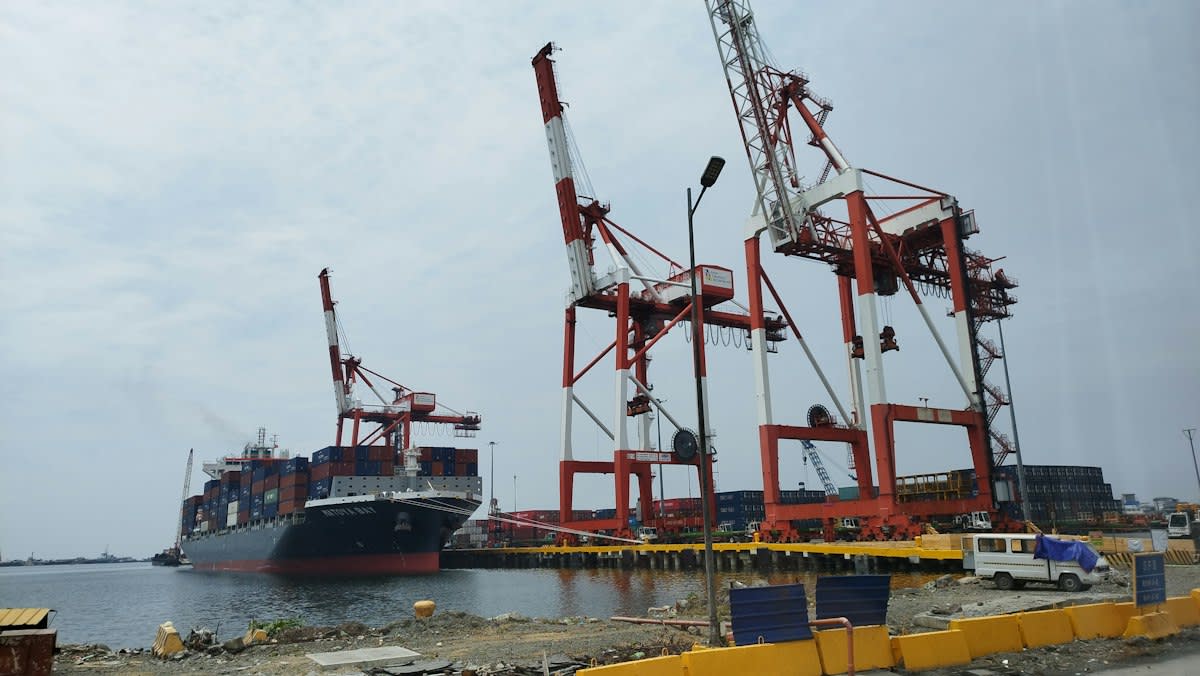
Most executives believe productivity is a matter of visible headcount and software efficiency. They are wrong. In Manila, the real engine of output often exists entirely off the books. While corporate filings show skeleton crews, the ships continue to leave the ports full of exports. This is the reality of invisible labor. It is a silent agreement between the state and the sector to maintain a facade of lean operations while relying on a vast, unrecorded workforce to meet global demand (Source: Inquirer.net, 2026).
Prerequisites for the Labor Audit
You cannot audit a ghost with a standard spreadsheet. To uncover the actual labor costs and human weight behind a Manila-based operation, you need specific tools. First, you must secure the General Information Sheets (GIS) and compare them against actual production-inventory records. Second, you need a deep understanding of Republic Act 12066, the CREATE MORE law of 2024, which defines the current incentives for industrial policy (Source: Daily Tribune, 2026). Finally, you need a forensic accounting lens that looks for the absence of raw materials and work-in-process inventory in financial statements.
The Three Gs: Understanding the Economic Terrain
To manage labor in this region, you must recognize the dominant forces. Some observers categorize the growth areas as the Three Gs: Government, Gaming, and Glam (Source: Daily Tribune, 2026). Government involves the allocation of budgets. Glam focuses on vanity and entertainment. Gaming, however, is where the most invisible labor resides. It does not create wealth in the traditional sense; it transfers it from the desperate to the shady (Source: Daily Tribune, 2026). When your productivity depends on these sectors, you are not building an industrial base. You are renting a temporary workforce.
"The absence of a statute as the most important gap in the regulation of online gaming in the country... reforms implemented over the past year are significant, but they can still be reversed."— Toney Quiogue, Founder and CEO at Arden Consult
This regulatory gap creates a precarious grip on productivity. Without a formal statute, the online gaming industry remains vulnerable to sudden bans, similar to those seen in Brazil and India (Source: IAG, 2026). For a practitioner, this means your labor supply can vanish overnight. You are not managing a workforce; you are managing a risk. If the government decides to block illegal sites or stop e-wallet payments, the invisible labor force disappears (Source: IAG, 2026).
How to Audit Invisible Labor Chains
The disconnect between reported activity and actual staffing is where the truth hides. Consider the case of Cale88. Forensic analysts identified a company with massive banana-chip export operations but almost no raw materials or work-in-process inventory in its financial statements (Source: Inquirer.net, 2026). The question is simple: who performed the work? When the GIS shows no outsourcing or subcontracting arrangements, but the products are shipping, you have found a hidden labor chain.
- Cross-reference the General Information Sheet (GIS) against shipping manifests. If volume exceeds capacity, labor is hidden.
- Analyze the financial statements for raw material procurement. A lack of inputs combined with high outputs indicates a third-party invisible provider.
- Map the payment flows. Look for payments to e-wallets or non-corporate entities that bypass the official payroll.
- Evaluate the regulatory risk. Check if the operation relies on the Three Gs, specifically gaming, which lacks a protective statute (Source: IAG, 2026).
- Apply the forensic playbook: Interview floor managers, not corporate officers, to identify the actual number of bodies required for production.
This process is not without conflict. In the field, you will encounter intense disputes between forensic analysts and corporate officers. The officers will point to efficiency. The analysts will point to the laws of physics. You cannot produce tons of banana chips with three employees and no raw materials (Source: Inquirer.net, 2026). This friction is where the real audit begins. It is a battle over who is allowed to be seen in the corporate record.

The Macro Weight of Manila's Labor
The scale of this invisible labor is mirrored in the national statistics. The Philippines supports a population of approximately 116 million people (Source: OECD, 2026). Despite this human capital, the GDP per capita in purchasing power parity stands at USD 11,794, which is only 37% of the global average (Source: OECD, 2026). This gap suggests a hollow productivity model. The country is well integrated into international markets with a trade-to-GDP ratio of 22% in 2024 (Source: OECD, 2026), yet the wealth does not distribute to the recorded workforce.
Global companies are starting to notice the costs of this invisibility. For instance, Fujifilm has integrated questions regarding the payment of recruitment fees into its supplier surveys (Source: Fujifilm, 2026). This is a direct response to the hidden costs of labor migration and recruitment. When the labor is invisible, the fees are often predatory. By the time a worker reaches the production line, they are already in debt to an unrecorded agent.
Common Pitfalls in Labor Management
- Trusting the GIS: Never assume the General Information Sheet represents the actual workforce.
- Ignoring the 3 Gs: Failing to see how gaming and government influence labor availability can lead to sudden operational collapse.
- Overlooking Recruitment Fees: Ignoring the debt-burden of workers can lead to sudden strikes or supply chain breaks (Source: Fujifilm, 2026).
- Assuming Legal Stability: Relying on gaming operations without a formal statute exposes you to Brazil-style bans (Source: IAG, 2026).
Fact-Check & Accuracy Note
The data regarding GDP per capita (USD 11,794) and the trade-to-GDP ratio (22%) are sourced from the OECD 2026 Agricultural Policy Monitoring and Evaluation report. There is an ongoing academic debate regarding whether high trade integration in the Philippines correlates with actual industrialization or merely reflects the role of the country as a service and labor hub for the West.
Editorial Note
This guide is based on forensic evidence from the Cale88 impeachment trial records and regulatory warnings from Arden Consult. It is intended for operational managers and auditors, not as legal advice.
Ultimately, Manila's invisible labor is a tool for survival in a brittle economic environment. It allows companies to bypass the costs of formal employment while still delivering global output. But the cost is stability. When you build your productivity on a foundation of ghosts, you are one regulatory shift away from a total mechanical failure. The goal for any serious practitioner is to bring this labor into the light, ensuring that the people doing the work are the ones appearing on the balance sheet.