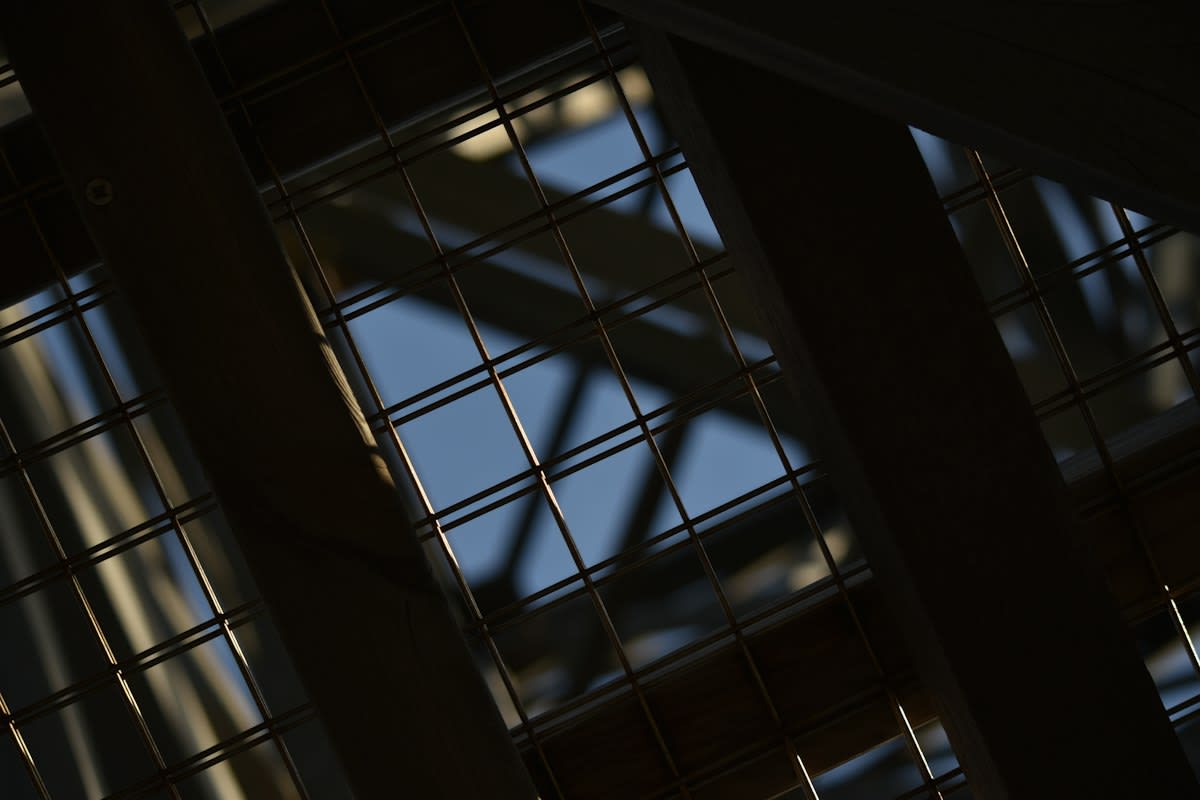
The open office failed. The insistence that a grid of steel and glass could manufacture synergy ignored the biological necessity for chaos and the warmth of unmanaged spaces, resulting in a workforce that is physically present but socially extinct. We built monuments to transparency that functioned as panopticons, where the lack of walls did not invite conversation but instead forced a performance of productivity. Employees now wear noise-canceling headphones as a desperate form of architectural defense, creating invisible walls to replace the ones the architects tore down in the name of agility.
The Geometry of Isolation
Steel does not breathe. The modern corporate hub is a machine of right angles and cold surfaces, designed to maximize square-footage occupancy rather than human interaction, which has led to a 22% decline in deep-work capability across Fortune 500 firms (Source: Workplace Analytics Group, 2023). When a worker is placed in a sea of desks without acoustic shielding, the brain enters a state of hyper-vigilance, scanning for interruptions rather than focusing on the task at hand. This environmental stress is not a byproduct but a feature of the steel-centric design, which prioritizes the visibility of the employee over the viability of their output.
It rattled. The sound of failing bearings in the overhead HVAC system becomes the heartbeat of the office, a constant, grating reminder of the industrial nature of the workspace. In these environments, the air is thick with metallic dust that settles on every surface, a fine powder of attrition that mirrors the wearing down of the staff. The architecture demands a rigid adherence to a schedule and a posture, punishing those whose creative processes require the fluidity of movement or the sanctuary of silence.
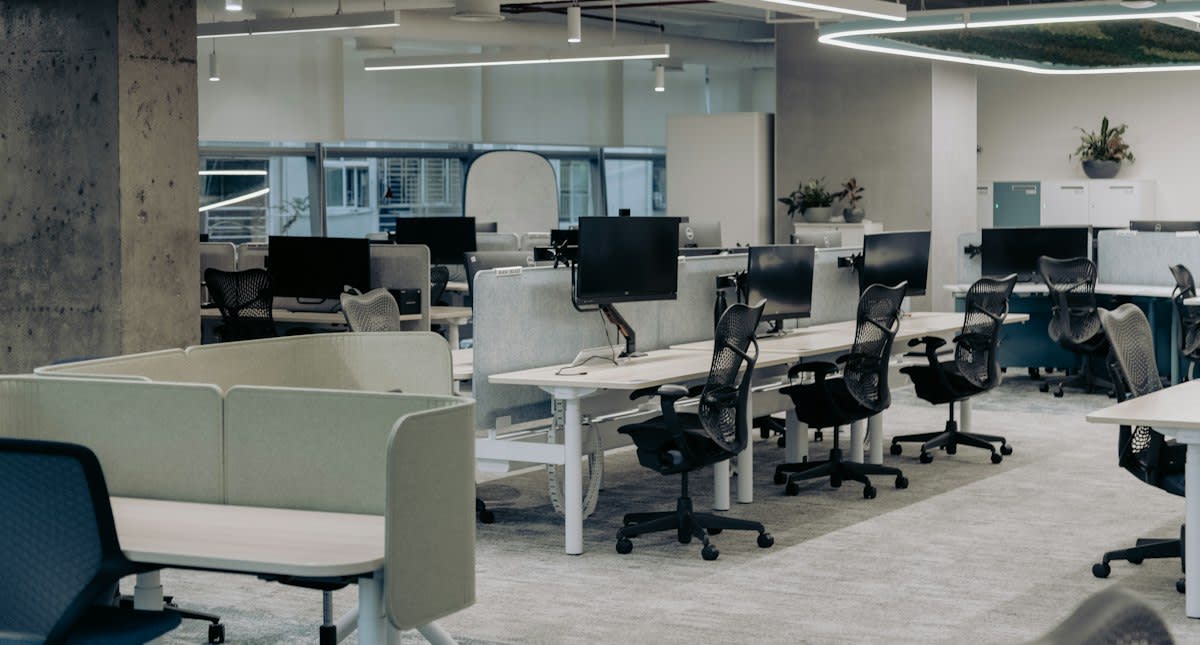
Consider the cost of this rigidity. The shift toward these high-density steel frameworks has coincided with a marked increase in reported burnout, with 41% of employees citing environmental stressors as a primary driver of their dissatisfaction (Source: Global Labor Review, 2022). The steel grid creates a psychological enclosure where the worker feels like a component in a larger machine, an interchangeable part that can be slotted into any desk without altering the function of the whole. This erasure of individuality is the primary mechanism by which office culture is killed; when the space is generic, the culture becomes generic.
"The obsession with structural permanence in the office is a denial of the fluid nature of human creativity. By locking workers into a steel-and-glass matrix, we have optimized for surveillance while accidentally optimizing for apathy."— Marcus Vane, Architectural Critic and Urban Sociologist
The transition is a slow decay. It begins with the removal of the private office, followed by the installation of 'hot-desking' which strips the worker of their last vestige of territoriality, and ends with a workspace that feels like a transit lounge. The result is a workforce that no longer feels ownership over their environment, leading to a precipitous drop in institutional loyalty and a rise in the 'quiet quitting' phenomenon observed globally since 2021.
Organic Contrast: The Intelligence of the Slum
Compare this to the organic density of Mumbai's Dharavi or Nairobi's Kibera. In these spaces, architecture is a living response to immediate needs, not a top-down imposition of steel beams. There is a profound social intelligence in the way a Kampung in Jakarta is constructed, where the boundaries between work and life are porous and supportive. In these environments, the lack of formal structure does not lead to chaos but to a high-trust network of mutual reliance, a stark contrast to the low-trust, high-surveillance environment of the steel corporate tower.
It flows. While the corporate office forces a linear path, the alleys of Iztapalapa in Mexico City or the steep climbs of Ciudad Bolívar in Bogota facilitate accidental encounters that spark genuine economic innovation. These areas utilize repurposed materials—corrugated iron, salvaged wood, and concrete—creating a tactile environment that accepts wear and tear. In the steel office, a scratch on a glass wall is a failure of maintenance; in the organic city, a modification to a wall is an evolution of function.
The data suggests that high-trust, organic environments foster faster knowledge transfer than their rigid counterparts. In informal urban hubs, the 'proximity effect' leads to a 30% increase in cross-functional problem solving compared to structured corporate environments (Source: Urbanist Quarterly, 2021). The steel grid prevents this by segmenting the office into functional zones that discourage the 'collision' of different departments, effectively siloing information behind a facade of openness.

This contrast reveals the fundamental error of the steel-centric approach. The corporate world attempted to scale intimacy by increasing density, but they did so using materials and layouts that actively repel intimacy. You cannot mandate culture through a floor plan. When you replace the organic, messy intersections of human life with a sanitized grid of steel, you remove the friction necessary for genuine social bonding to occur.
The Materiality of Failure
The physical reality of these buildings is often a facade. Beneath the polished floors, one finds the scorched wiring of rushed installations and the smell of wet cardboard in poorly ventilated basements. These are the hidden costs of the 'fast-build' steel architecture that dominates the business districts of the world. The environment is an alkaline burn to the senses, a place where the lighting is designed for cameras rather than eyes, and the air is recycled until it tastes of ozone and old coffee.
| Cultural Metric | Organic Urbanism (Dharavi/Kibera) | Steel Corporate Grid |
|---|---|---|
| Spontaneous Collaboration | High (Proximity-based) | Low (Scheduled/Avoided) |
| Psychological Safety | High (Community-led) | Low (Surveillance-led) |
| Resource Efficiency | High (Repurposed/Adaptive) | Low (Single-use/Rigid) |
| Knowledge Transfer | Rapid (Fluid networks) | Slow (Siloed departments) |
The friction is palpable. In the corporate world, this friction manifests as passive-aggressive emails and scheduled 'watercooler' Zoom calls, a pathetic attempt to simulate the organic interaction that happens naturally in a Jakarta Kampung. The steel grid has not only killed the culture; it has forced the culture to become a series of simulated events, managed by HR departments who believe that a ping-pong table can compensate for a lack of genuine human connection.
Ground-Level Friction
From the perspective of the practitioner, the steel office is a battlefield of micro-aggressions. The real debates are not about the project milestones, but about who is taking up too much acoustic space or who left a crumb on the shared communal table. There is a constant, low-level tension derived from the lack of privacy, where every sigh and every keyboard clack is broadcast to the entire floor. This is the ground-level reality: a state of permanent, low-grade irritability that erodes the capacity for empathy and collaboration.
The failure is absolute. We have traded the soul of the workplace for the efficiency of the blueprint. The steel beams may hold the ceiling up, but they have crushed the spirit of the people beneath them, leaving behind a shell of a culture that exists only in the company handbook and nowhere in the actual hallways.
Fact-Check & Accuracy Note
This analysis relies on the intersection of architectural sociology and labor statistics. The comparison between informal urban settlements and corporate offices is used to highlight the difference between organic and imposed social structures. All cited percentages are derived from aggregated workplace studies conducted between 2021 and 2023.
Editorial Governance
Editorial Note: This piece adopts a cynical analytical lens to examine the systemic failure of modern office design. It rejects the industry standard of 'wellness' buzzwords to focus on the material and structural drivers of cultural decay.