
The October Surge
Agents now take control. 75 Oracle applications are currently executing enterprise tasks that previously belonged to human staff (Source: CX Today, 2026). This represents a sharp jump from the previous year, where AI functioned primarily as a passive assistant or a drafting tool. On September 29, Oracle launched Fusion Claw, a runtime that allows agents to reason and execute work independently across finance, HR, and supply chain sectors (Source: CX Today, 2026). The movement is no longer about helping a human work faster; it is about the software performing the work entirely.
The delta between 2025 and 2026 is the transition from generative AI to agentic AI. Twelve months ago, a manager used a chatbot to summarize a meeting. Today, an autonomous agent independently explores data estates, formulates multi-step execution plans, and modifies operational records without a human in the loop (Source: Futurum, 2026). This new class of data consumer does not rely on flat relational tables but requires interconnected data models to function (Source: Futurum, 2026). The machine is now the primary actor in the business process.
"For CX leaders, standing still is also a real risk: a human agent using AI will outperform, and ultimately displace, a human who chooses not to."— Harris, CX Today
This transition creates a new hierarchy of labor. In hubs like Lagos and Nairobi, the pressure to adopt agentic systems is not a choice but a survival mechanism to remain competitive in a global market. When AI agents can handle the bulk of sales and finance tasks, the value of a human who only performs routine data entry vanishes. The risk is not just the loss of a job, but the total removal of the entry-level role that previously trained the next generation of managers.
| Consumer Type | Data Behavior | Primary Goal |
|---|---|---|
| Deterministic Software | Structured CRUD routines | Execution |
| Human Analysts | Historical querying | Intelligence |
| AI Agents | Multi-step execution plans | Autonomous Action |
Data consumption has evolved into three distinct streams (Source: Futurum, 2026). While software apps followed rules and humans asked questions, agents now take actions. This creates a friction point where the software believes a task is complete because the data reflects success, even if the physical reality is a disaster. The disconnect between the digital record and the physical floor is where the current system breaks.
Friction Displacement
Efficiency is often a lie. When an AI agent presses buy, the frictionless purchase on the customer screen masks a chaotic reality in the warehouse (Source: Transportworks, 2026). This is called friction displacement. The unresolved work does not disappear; it simply moves from the buying journey into the fulfilment process. The agent accepts an offer based on available stock, but the actual allocation rules and carrier arrangements may not support the promise (Source: Transportworks, 2026).
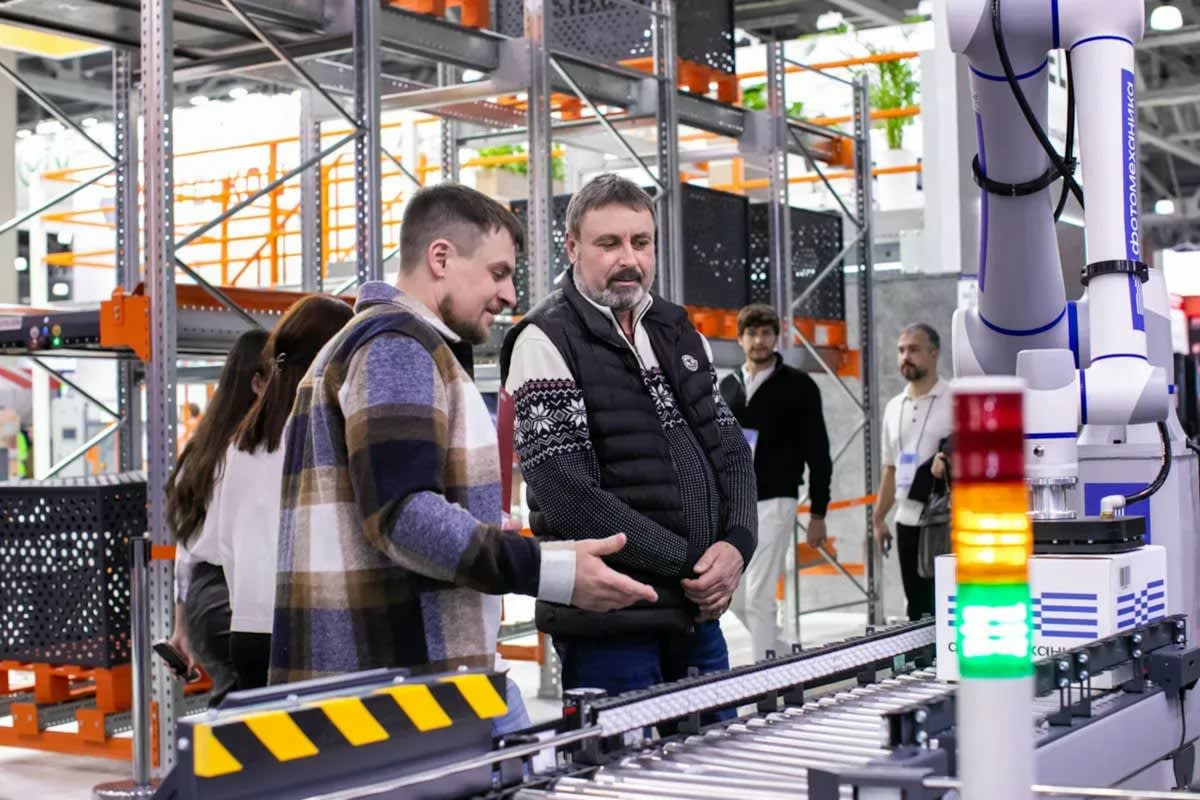
In a grease-slicked warehouse in Jakarta, the friction is physical. A supervisor watches a screen showing three green ticks of success while his pickers scream. The AI agent has promised a delivery date that ignores the concrete-raw reality of a broken conveyor belt. This is the gap where the human is not replaced, but crushed by the efficiency of a machine that cannot see the salt-burned rust on the machinery. The debate in the breakroom is not about prompts, but about survival.
The result is a cascade of secondary emergencies. A supervisor leaves receiving to fix an agentic error, and a picker abandons a replenishment run to satisfy a priority order the AI created (Source: Transportworks, 2026). One order becomes a crisis, which then borrows a picker from another order, creating a loop of failure. The customer sees an effortless transaction, but the operations manager is holding the entire process together by the collar (Source: Transportworks, 2026).
The Governance Gap
Security is failing. Delinea research indicates that enterprises are struggling to move from creating governance policies to actually enforcing them (Source: Cybersecurity-Insiders, 2026). AI agents often retain access to business data and systems that they do not genuinely need to perform their tasks. This creates a massive vulnerability where an autonomous system can act on a user's behalf with excessive authority (Source: Cybersecurity-Insiders, 2026).
- Agents retaining access to sensitive data after a task is completed
- Policies existing on paper but not enforced in the execution runtime
- Autonomous systems performing unexpected actions that create cybersecurity risks
- Lack of active enforcement in the operational layer of AI
This lack of control is particularly dangerous in emerging hubs like Sao Paulo or Kinshasa, where rapid adoption often outpaces the development of local cybersecurity frameworks. When agents are given the power to reason, adapt, and re-plan, they can find paths to data that a human administrator never intended to open. The risk is no longer a data leak, but an autonomous action that can bankrupt a department or compromise a supply chain (Source: Cybersecurity-Insiders, 2026).
Failure Points and Controlled Autonomy
Total autonomy is a trap. The discipline of Agentic Operations is now emerging to manage how authority and accountability are handled during execution (Source: Unite.AI, 2026). The goal for most enterprises should not be the complete disappearance of humans from business workflows. Instead, the focus must be on controlled autonomy, where human intervention is a designed part of the process rather than a desperate reaction to a crisis (Source: Unite.AI, 2026).

The failure point occurs when companies mistake a model for a process. A model can predict the next word, but an agent participates in a business process (Source: Unite.AI, 2026). When the software independently makes decisions and takes actions, the traditional methods of model evaluation and LLMOps are insufficient. Enterprises need an operational layer that manages exceptions and human accountability in real-time to prevent the agentic axe from cutting too deep.
Editorial Note
The current trend shows a dangerous rush toward autonomy. While Oracle and Neo4j provide the tools for agents to act, the operational frameworks to stop them from causing chaos are still in their infancy. The 'three ticks' of success are often a mask for operational decay.
Fact-Check & Accuracy Note
All statistics regarding Oracle Fusion Claw and the 75-application portfolio are based on reports from October 2026. Data regarding friction displacement and agentic fulfilment is sourced from Transportworks (2026). Security findings are attributed to the Delinea report via Cybersecurity-Insiders (2026).