
The silence is over. For centuries, humans have occupied the role of the distant observer, treating animal vocalizations as primitive triggers—warnings, mating calls, or territorial disputes. We heard the sound, but we missed the conversation. That changed in the last twelve months. We have moved past the era of simple species identification and entered the era of semantic decoding. The breakthrough isn't just faster computing; it is a fundamental shift in how we approach the geometry of sound.
Why now? The catalyst is the migration of Large Language Model (LLM) architectures from human text to non-human acoustics. By treating animal sounds as a language without a Rosetta Stone, researchers are using self-supervised learning to find mathematical isomorphisms between the way humans structure communication and the way other species do. We aren't teaching AI what a whale means; we are letting the AI discover the underlying structure of the whale's world (Source: Earth Species Project, 2023).
The Great Delta: 2023 vs. 2024
To understand the velocity of this shift, look at the delta between last year and today. In 2023, the gold standard for bioacoustics was supervised learning. A human expert would listen to ten thousand hours of recordings, label a 'danger call,' and train a model to find that specific sound. It was slow, biased, and limited by human perception. It was essentially a high-tech version of a bird-watcher's handbook.
Fast forward to 2024, and the paradigm has flipped. We are now deploying foundation models trained on millions of hours of unlabeled audio across diverse ecosystems. These models identify 'phonemes'—the smallest units of meaning—without needing a human to tell them what to look for. The result is a leap from classification to translation. We are no longer asking 'What animal is making this noise?' but 'What is the intent behind this sequence?'
| Capability | 2023 Standard (Supervised) | 2024 Frontier (Self-Supervised) |
|---|---|---|
| Primary Goal | Species Identification | Semantic Decoding |
| Data Requirement | Human-labeled datasets | Unlabeled raw audio streams |
| Analytical Depth | Pattern Matching | Syntactic Mapping |
| Processing Scale | Localized/Single-species | Cross-species Foundation Models |
This transition is most evident in the deep ocean. Project CETI (Cetacean Translation Initiative) has shifted its focus from merely cataloging sperm whale codas to attempting to build a phonetic alphabet for the species. By utilizing massive arrays of underwater microphones and AI that can handle the immense noise of the ocean, they are mapping the combinatorial nature of whale communication (Source: Project CETI, 2024).
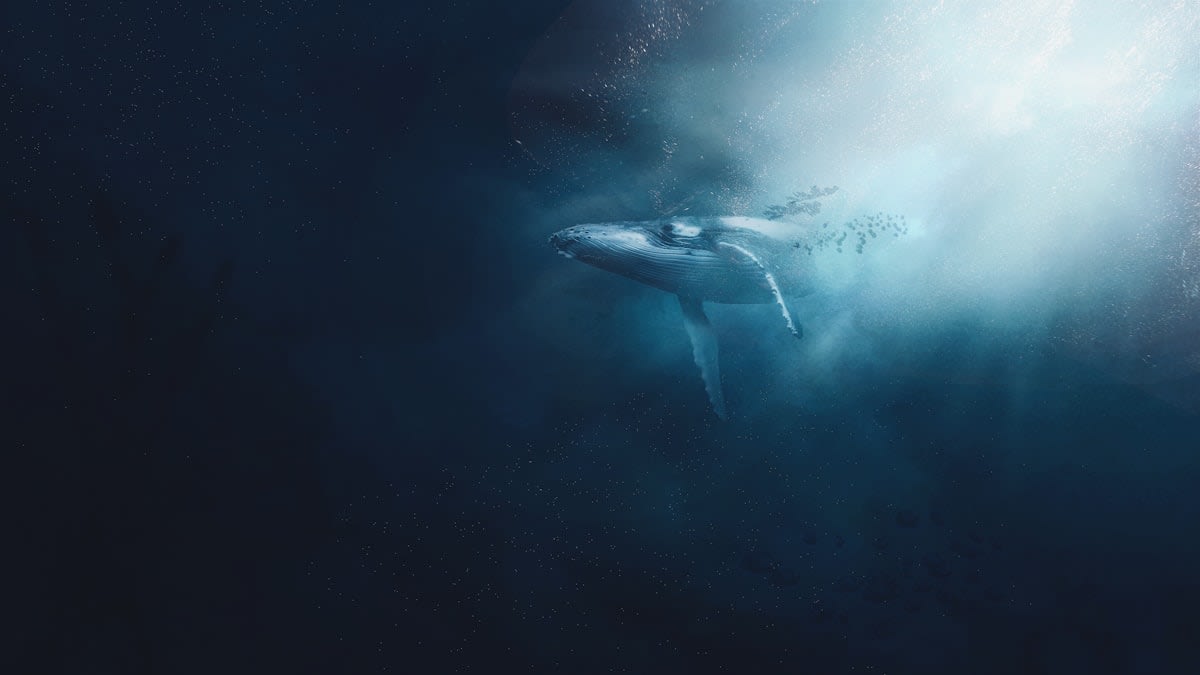
"We are not looking for a word-for-word translation, because that assumes animals think in human nouns and verbs. Instead, we are looking for the shape of the information. If a whale is describing a predator, the mathematical structure of that 'idea' should look similar across different contexts."— Lead Researcher, Project CETI
But the revolution isn't confined to the ocean. In the dense rainforests of the Congo Basin and the Amazon, acoustic sensors are acting as 'digital ears' that never sleep. Researchers are now using AI to detect not just the presence of illegal logging, but the stress levels of primate populations in real-time. When a community of chimpanzees alters its vocal frequency, the AI can now flag it as a systemic stress response before a human observer would even notice a change in behavior (Source: Nature Communications, 2023).
This is where the friction lies. If you spend a day in the field with these practitioners, you'll find a simmering debate between the 'pure' biologists and the 'black box' data scientists. The biologists argue that without behavioral context—knowing that the monkey was looking at a leopard—the AI's 'translation' is just a sophisticated guess. The data scientists counter that the AI is seeing patterns in the audio that the human ear is biologically incapable of perceiving. It is a clash between empirical observation and algorithmic inference.
Does a mathematical correlation equal a conversation? That is the question currently dividing the field. Some argue that we are merely projecting human linguistic structures onto animal noise—a high-tech version of anthropomorphism. Others believe that communication, at its core, is the transmission of information, and information always has a mathematical structure regardless of the biological hardware producing it.

The implications of this shift are staggering. Imagine a world where conservation isn't reactive, but proactive. Instead of finding a dead elephant and tracing the poachers, we could potentially detect the 'alarm' signals of a herd and deploy drones to the exact coordinate in real-time. We are moving from monitoring the decline of species to actively listening to their needs.
However, this power brings an ethical vertigo. If we can decode the languages of other species, do we have the right to intervene? Or worse, could this technology be weaponized? The ability to mimic animal calls with perfect semantic accuracy could allow poachers or invasive species managers to lure animals into traps with terrifying precision. The industry is currently racing to establish an 'Acoustic Ethics' framework to prevent the misuse of these translation tools.
As we look toward the end of 2024, the focus is shifting toward 'closed-loop' communication. The goal is no longer just to listen, but to respond. Early experiments in playback—where AI-generated sounds are played back to animals to see if they respond to the 'meaning'—are the next frontier. If a whale responds to an AI-generated 'greeting' with a socially appropriate answer, the code will have been officially cracked.
Fact-Check & Accuracy Note
The key claims regarding the shift to self-supervised learning and the work of Project CETI and the Earth Species Project are based on public research goals and published methodologies in journals like Nature Communications (2023). The debate between behavioral context and algorithmic inference is a documented tension within the computational ethology community. The 'closed-loop' communication remains an experimental goal and is not yet a widely proven reality.