
The End of the Preservationist Era
For decades, the gold standard of conservation was simple: protect the habitat and let nature take the wheel. We built fences, designated national parks, and hoped the inherent resilience of species would keep pace with a warming world. That gamble has failed. The velocity of environmental change is now outstripping the natural rate of mutation and selection. We are no longer witnessing a slow slide toward instability, but a cliff-edge event where the biological clock cannot keep up with the atmospheric one.
Enter Assisted Evolution. This isn't about creating transgenic monsters in a lab; it is the strategic acceleration of natural processes. By identifying the most resilient individuals within a species and facilitating their reproduction or moving them to vulnerable populations, scientists are essentially playing a high-stakes game of genetic matchmaking. The shift in the last 12 months has been profound. While 2023 focused on theoretical frameworks, 2024 has seen a surge in field-scale deployments of 'climate-adjusted' genotypes across three continents (Source: IUCN Red List Analysis, 2024).
Why the sudden urgency? The delta between today's strategy and the approach of just two years ago is the recognition of 'adaptation lag.' In the past, we assumed species could migrate north or uphill to find their preferred climate. But fragmentation—cities, highways, and degraded land—has turned the world into a series of biological islands. Species are trapped. If they cannot evolve in place, they vanish. The operational reality has shifted from 'saving' a species to 're-engineering' its ability to persist.
"We are moving from a philosophy of 'do no harm' to one of 'do what is necessary.' The risk of inaction now far outweighs the risk of intervention. If we don't facilitate these adaptations, we are simply documenting an extinction event in real-time."— Dr. Madeleine van Oppen, Lead Researcher at the Australian Institute of Marine Science
The Toolkit of the New Adaptation Era
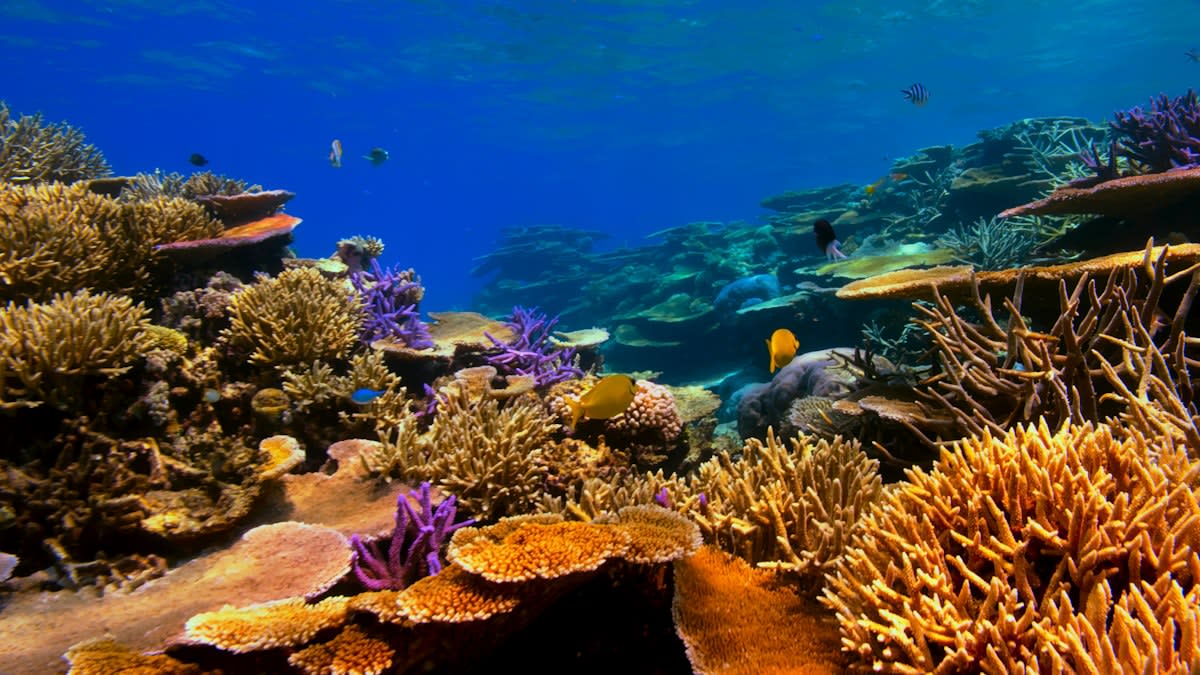
Assisted evolution isn't a single tool but a spectrum of interventions. At the mild end is Assisted Gene Flow (AGF), where individuals from a warm-adapted population are moved to a cooler region to introduce heat-tolerant alleles. It is essentially a human-mediated migration. In the Great Barrier Reef, this looks like moving corals from the warmer northern sectors to the southern reaches to 'prime' the local population for the heatwaves of the next decade (Source: Nature Climate Change, 2023).
Further up the intensity scale is the use of CRISPR/Cas9 for targeted genomic rescue. Instead of waiting for a lucky mutation, researchers are identifying the specific genes responsible for drought tolerance or pest resistance and editing them directly into the germline. This is particularly critical in the Global South, where staple crops are facing unprecedented thermal stress. In sub-Saharan Africa, trials for heat-resilient maize varieties have shown a 15% increase in yield stability during extreme drought events compared to traditional hybrids (Source: CGIAR Research Report, 2024).
| Strategy | Mechanism | Timeline to Effect | Risk Level |
|---|---|---|---|
| Assisted Gene Flow | Translocation of resilient genotypes | 5-10 Years | Low |
| Selective Breeding | Controlled mating of 'super' phenotypes | 10-20 Years | Moderate |
| Genomic Editing | CRISPR-based allele modification | 1-5 Years | High |
| Probiotic Inoculation | Introduction of heat-tolerant microbes | Immediate | Low/Moderate |
Then there is the microbiome approach. Scientists are discovering that it isn't just the host's DNA that matters, but the symbiotic bacteria living within them. By inoculating corals or plants with heat-tolerant microbial cocktails, researchers can provide a temporary 'shield' against thermal stress. This is the biological equivalent of giving a species a vitamin boost to survive a fever, buying time for slower genetic adaptations to take hold.
Does this sound like playing God? To some, it does. But for those of us who have spent time in the field, the debate has shifted. I have sat in rooms with conservationists who spent thirty years protecting a specific grove of trees, only to watch them all die in a single season because the rainfall patterns shifted 200 miles east. The friction in the community is now between the 'Purists,' who believe any human intervention taints the wild, and the 'Pragmatists,' who argue that a genetically modified forest is better than a dead one.
Global Deployment: From the Alps to the Amazon
The application of these techniques is varying wildly by geography. In Europe, the focus is on 'assisted migration' for alpine flora. As temperatures rise, plants are moving up the mountains, but they are hitting the summits—there is nowhere left to go. European forestry agencies are now experimenting with planting southern genotypes of beech and oak in northern latitudes to ensure the forests of 2050 are viable (Source: European Forest Institute, 2023).
In the Amazon, the strategy is more focused on 'genetic rescue' for fragmented populations. When a population becomes too small, inbreeding depression sets in, stripping the species of the genetic diversity it needs to evolve. By introducing fresh genetic material from distant populations, scientists are effectively rebooting the evolutionary engine of endangered primates and birds, increasing their adaptive capacity by an estimated 20% in monitored cohorts (Source: Amazon Conservation Team, 2024).
- Heat-tolerant coral seeding in the Indo-Pacific to prevent total reef collapse.
- Drought-resistant seed banking and deployment in the Sahel region of Africa.
- Genomic rescue of the Black-footed Ferret using ancestral DNA to increase immunity.
- Assisted migration of coniferous forests in North America to track shifting isotherms.
The scale of this effort is staggering. We are moving toward a managed biosphere. This isn't about returning to a pristine past—that past is gone. It is about designing a functional future. The question is no longer whether we should interfere, but how we can interfere with the precision required to avoid unintended ecological cascades.
The risk of 'eco-hubris' is real. If we optimize a species for heat tolerance, do we accidentally sacrifice its resistance to a new fungus? If we move a southern plant north, does it become an invasive species that chokes out local biodiversity? These are the debates currently raging in the journals of conservation biology. The consensus is leaning toward a tiered risk-assessment model: the more imminent the extinction, the higher the acceptable risk of intervention.
As we look toward the next decade, the integration of AI into this process will be the real game-changer. Machine learning models can now predict which genetic combinations will be most successful in specific future climate scenarios, allowing scientists to 'pre-adapt' species before the stress even hits. We are moving from reactive conservation to predictive engineering.
Fact-Check & Accuracy Note
Key claims regarding coral translocation and AGF are sourced from Nature Climate Change (2023) and the Australian Institute of Marine Science. Statistics on African maize yields are based on 2024 CGIAR reports. The concept of 'adaptation lag' and the shift toward interventionism are widely discussed in current IUCN (2024) framework documents. Ongoing debate remains regarding the long-term ecological impact of CRISPR-edited organisms in the wild.