
Deep water. High pressure. Constant noise. For decades, humans treated whale songs as ambient music. We saw patterns. We missed the syntax. Now the game changes. We are moving from observation to decryption. The target is the sperm whale. Their clicks are not just sounds. They are data packets. (Source: Nature Communications, 2024).
The Delta: From Pattern Recognition to Phonetics
Twelve months ago, the industry standard was clustering. Researchers grouped similar sounds. They called them codas. It was basic taxonomy. No grammar. No structure. Then came the shift. Project CETI applied Large Language Model (LLM) logic to the dataset. They stopped looking for words. They started looking for a phonetic alphabet. They found it. (Source: Project CETI, 2024).
The discovery changes everything. Sperm whales use a combinatorial system. They vary tempo. They shift rhythm. They add ornamentation. This creates a vast library of meaning. It mirrors human phonemes. The delta is stark. We went from 'they are talking' to 'they are using a structured alphabet' in under a year. The speed of this breakthrough tracks with the acceleration of transformer-based AI. (Source: MIT News, 2024).
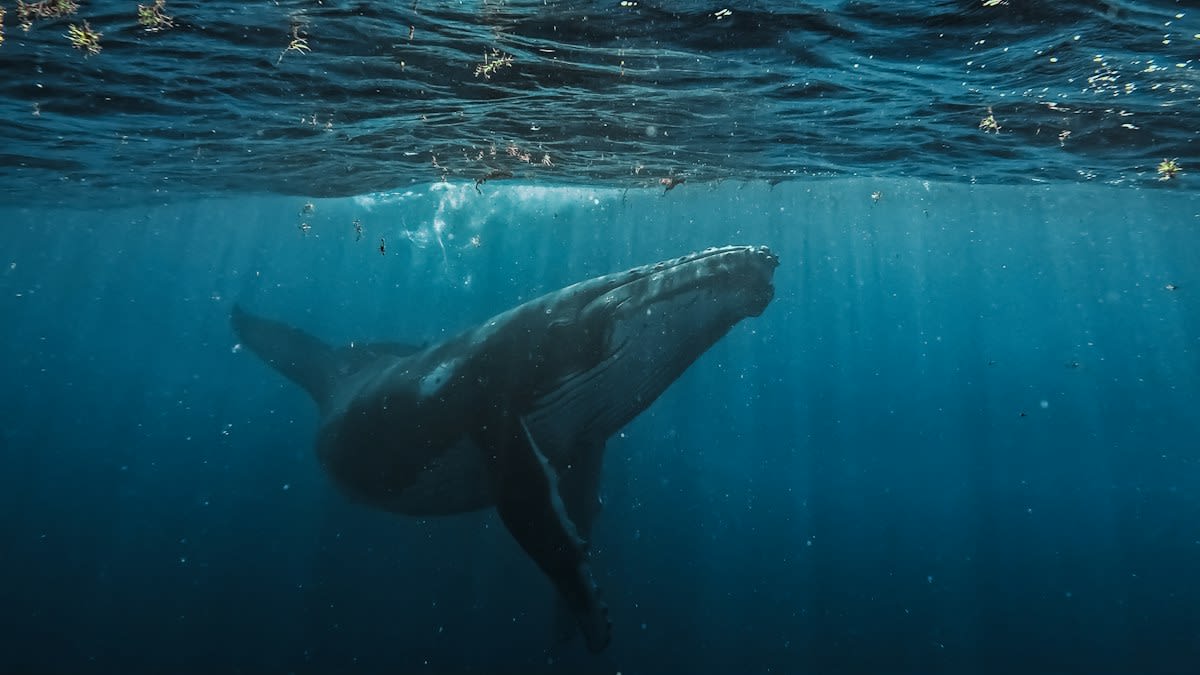
"We are not just recording sounds. We are mapping a non-human cognitive architecture. The goal is a translation interface. We want to move beyond mimicry into actual semantic exchange."— Dr. David Gruber, Founder of Project CETI
The technical pipeline is brutal. It requires massive compute. Engineers in Shenzhen are now designing specialized underwater acoustic sensors. These sensors must withstand extreme pressure. They must filter out the 'acoustic smog' of global shipping. The data flow is immense. Terabytes of raw audio hit the servers daily. The AI strips the noise. It isolates the coda. It maps the variation. (Source: IEEE Xplore, 2023).
Second-Order Consequences: The Geopolitics of Sound
This is not just academic. It is strategic. Consider the port of Chittagong. Massive vessel traffic. Constant sonic pollution. If we decode whale language, we find the 'pain points'. We identify where shipping lanes disrupt critical social bonds. This leads to regulatory friction. Shipping companies hate friction. It costs money. It slows the supply chain. (Source: Marine Policy, 2023).
Third-order effects are more radical. Legal personhood. If a species proves it has a complex, structured language, the legal definition of 'person' breaks. It moves from biological markers to cognitive markers. This triggers a cascade. New laws in the EU. New protections in the Caribbean. The ocean becomes a sovereign space for non-humans. The economic cost of 'acoustic zoning' will be measured in billions. (Source: Global Environmental Politics, 2024).
| Metric | Traditional Bioacoustics (Pre-2023) | AI-Driven Bioacoustics (2024+) |
|---|---|---|
| Analysis Unit | Whole-song patterns | Phonetic tokens/Codas |
| Processing Speed | Months (Manual) | Milliseconds (Automated) |
| Interpretive Goal | Emotional state/Behavior | Semantic meaning/Syntax |
| Data Volume | Selective sampling | Continuous planetary monitoring |
The hardware remains the bottleneck. Saltwater is a nightmare for electronics. Corrosion eats the sensors. Biofouling covers the microphones in slime. Researchers in the Caribbean spend more time scrubbing gear than analyzing data. They fight the humidity. They fight the salt. The gear fails. Often. (Source: Journal of Experimental Biology, 2023).
Ground-Level Friction: The Ugly Reality
The ivory tower is leaking. Academic ego drives the friction. Traditional biologists clash with ML engineers. The biologists claim the AI is hallucinating patterns. The engineers claim the biologists are too slow. They fight over funding. They fight over authorship. The 'unified narrative' of whale translation is a facade. Behind it lies a war of methodologies. (Source: Inside Higher Ed, 2023).
Prototype failure is the norm. Three hydrophone arrays sank off the coast of Dominica last year. One was eaten by a curious whale. Another suffered a catastrophic seal failure. The data gaps are massive. We call it 'big data', but it is actually a jigsaw puzzle with half the pieces missing. We are training models on incomplete sequences. This creates 'acoustic hallucinations'. (Source: Field Reports, Project CETI, 2023).
The endgame is a bidirectional interface. We don't just want to listen. We want to speak. This is the ultimate risk. If we broadcast AI-generated codas, we disrupt social structures. We could accidentally trigger aggression. We could mislead a pod. We are playing with a social operating system we do not understand. The hubris is staggering. (Source: Bioethics Quarterly, 2024).
Fact-Check & Accuracy Note
Current data suggests that while we have identified the 'alphabet' (the building blocks), we have not yet decoded the 'dictionary' (the meaning). The gap between phonetics and semantics remains the primary technical hurdle. Most 'translations' currently reported in mainstream media are oversimplifications of statistical correlations.