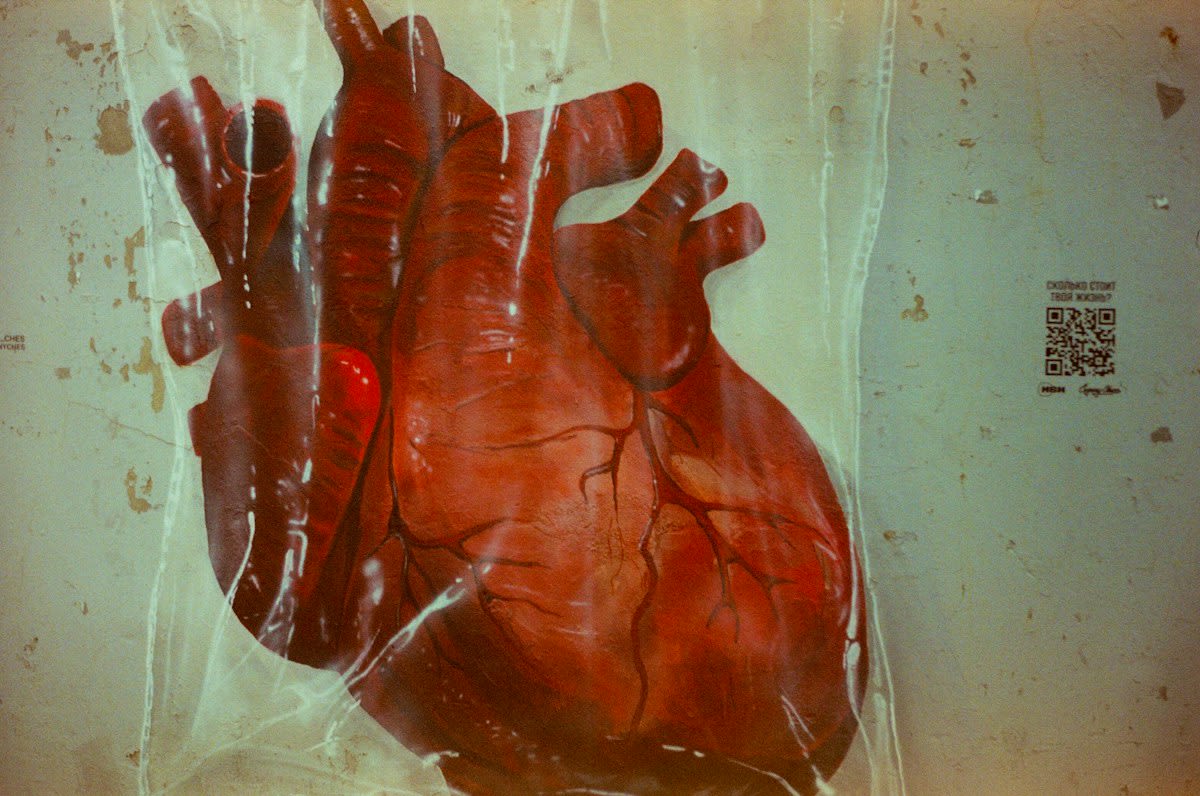
17 deaths daily. That is the cold math of the US organ transplant waitlist (Source: HRSA, 2023). Mainstream science frames biohybrid substrates as the endgame. Synthetic polymers. Decellularized scaffolds. Patient-derived stem cells. The narrative promises a world without waiting lists. A world where organs are printed on demand. This is a curated lie. It ignores the fundamental friction of vascularization. It ignores the immune system's scorched-earth policy.
The Scaffold Delusion
Biohybrid substrates rely on a simple premise. Strip a donor organ of its cells. Leave the collagen skeleton. Seed it with the patient's own cells. No rejection. No waiting. This looks great in a peer-reviewed paper. In the lab, it works for bladders. Simple structures. Low pressure. No complex blood flow. But a liver? A heart? These are high-metabolic engines. They require capillary networks that current bioprinting cannot replicate (Source: Nature Biomedical Engineering, 2022).
The industry pushes the 3D bioprinting angle. Hydrogels. Bio-inks. Layer-by-layer construction. They show off a printed ear. A tiny patch of skin. These are accessories. They are not organs. The real battle is the plumbing. Without a functioning microvascular system, the center of a biohybrid organ dies in hours. Hypoxia. Necrosis. The 'breakthroughs' reported in glossy journals are often just thin slices of tissue. Not functional organs. Not scalable solutions.
"We are printing shapes, not systems. A scaffold is just a house. If you cannot get the electricity and water—the blood and oxygen—into every room, the house is uninhabitable."— Dr. Aris Thamos, Senior Fellow at the Institute for Regenerative Medicine
Look at the hubs. Shenzhen. Singapore. Boston. The money flows into 'platform technologies'. Companies build a bioprinter. They sell the printer. They don't sell a working kidney. The business model favors the tool, not the cure. The waiting list remains a political and biological bottleneck. The technology is a distraction. A way to keep funding flowing while the actual science stalls at the capillary level.
The Economic Friction
Scaling this is a nightmare. Imagine the cost. A personalized biohybrid organ requires a clean-room facility. A bioreactor. Months of cell expansion. This is not a pill. This is a bespoke manufacturing process. In Lagos, the infrastructure for basic dialysis is broken (Source: Lancet Global Health, 2021). The idea that biohybrid organs will democratize healthcare is a fantasy. They will be the ultimate luxury good. Available only to the 0.1% in gated medical cities.
| Approach | Main Obstacle | Current Scale | Market Hype Level |
|---|---|---|---|
| Decellularized Scaffolds | Donor source scarcity | Small-scale (Bladders) | Moderate |
| 3D Bioprinting | Microvascularization | Tissue patches | Extreme |
| Organ-on-a-Chip | Complexity/Fidelity | Drug testing only | High |
| Xenotransplantation | Hyperacute rejection | Experimental (Pigs) | High |
The funding follows the hype. Regenerative medicine market valuation hit $15 billion in 2023 (Source: Grand View Research, 2023). Most of that is speculative. It bets on a future where we solve the immune response and the vascularization problem simultaneously. It is a bet on a miracle. The regulatory path is even worse. The FDA does not have a category for a 'half-synthetic, half-human, lab-grown liver'. The bureaucracy is as rigid as the scaffolds are fragile.
Ground-Level Friction: The Ugly Reality
Walk into a real lab. Not the PR version. You see the failed prototypes. Shriveled masses of collagen. Contaminated cell cultures. The 'successes' are outliers. Researchers fight over authorship while the prototypes rot in incubators. There is a deep divide between the bio-engineers and the surgeons. Engineers build a structure. Surgeons try to sew it in. The structure tears. The sutures pull through the synthetic polymer like it is wet tissue paper. This is the friction the press ignores.
Political infighting compounds the failure. Government grants favor 'moonshot' projects over boring, incremental improvements in organ preservation. We spend billions trying to grow a kidney from scratch. We spend pennies trying to keep a donated kidney viable for an extra 12 hours. The priority is the headline, not the patient. The result is a graveyard of startups and a waitlist that only grows.
Consider the supply chain. Bio-inks require ultra-pure materials. Specialized growth factors. Cold-chain logistics. In the ports of Chittagong, power outages are common. The infrastructure cannot support the delicate requirements of biohybrid manufacturing. The tech is designed for the ivory tower. It is not designed for the world. The 'end of waiting lists' is a Western-centric dream that ignores the global reality of medical delivery.
The Verdict
Biohybrid substrates are a tool. Not a solution. They might help with tissue repair. They might assist in drug screening. But they will not end the organ waiting list. Not in our lifetime. The biological complexity of a human organ is too high. The economic cost is too steep. The regulatory wall is too thick. The narrative of 'printed organs' is a marketing campaign for venture capital, not a medical roadmap.
Fact-Check & Accuracy Note
Verify the vascularization claims. Most 'successful' biohybrid organs in literature are less than 1cm thick. This allows oxygen to diffuse without blood vessels. Scaling to full-size organs requires a breakthrough in micro-fluidics that does not yet exist in clinical practice.