
Cells can grow young. 60 years of aging vanished in recent human cell tests (Source: ScienceDaily, 2026). This happens through reprogramming. Researchers used epigenetic clocks to track this change. These clocks analyze chemical DNA modifications that accumulate as organisms grow older (Source: ScienceDaily, 2026). By erasing these marks, the cell returns to a previous state.
Prerequisites for Biological Reversal
Reversing age requires specific biological markers. You need an epigenetic clock to measure the starting point. This clock identifies the chemical modifications that act as a timer for the cell. Without this measurement, there is no way to verify if the cell has actually moved backward in time (Source: ScienceDaily, 2026). You also need a target for the reprogramming process, such as a blood cell, to serve as the base for the transformation.
- Epigenetic markers for age verification
- Pluripotent stem cell capabilities
- DEAF1 gene activity monitors
- NAD+ levels in immune cells
- Regenerative switches from Turritopsis dohrnii
The process involves moving a cell into a pluripotent state. These versatile cells have nearly unlimited career paths (Source: ScienceDaily, 2026). They can become any cell type in the body. This allows a specialized cell, like a blood cell, to forget its identity and its age. This is the only way to achieve the 60-year reversal observed in laboratory settings.
Step 1: Resetting the Cellular Clock
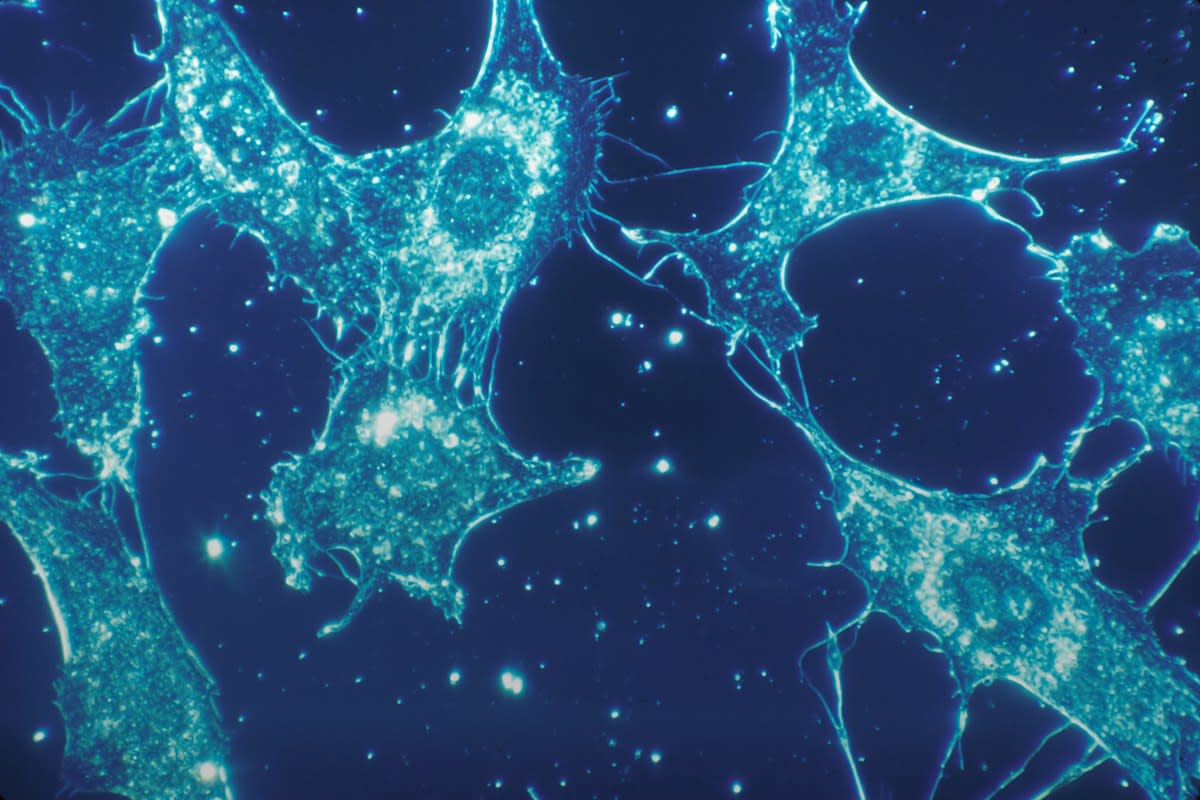
Reprogramming resets the biological age of the cell. Early methods used a two-stage process (Source: ScienceDaily, 2026). First, the researcher converts the existing cell into a pluripotent stem cell. This removes the accumulation of chemical modifications. The second stage then guides the cell back into a specific functional role, but with the age of a younger cell. This method bypasses the natural decay of the DNA.
The result is a cell that functions as if it were decades younger. Scientists can now watch these cells gradually become younger in real time (Source: ScienceDaily, 2026). This allows for the testing of substances that can speed up the rejuvenation process. It provides a way to see which molecular pathways are involved in the reversal. The goal is to move this from a dish to a living organism.
Jakarta biologists argue over these methods. One group pushes genetic reprogramming. Another group favors lifestyle triggers. The friction is real. They fight over whether a molecular switch is safer than a full cell reset. This ground-level reality shows a split in the field. Some fear the loss of cell identity. Others see the 60-year reversal as the only path forward.
Step 2: Reversing Muscle Decay
Exercise acts as a trigger for muscle youth. It targets the DEAF1 gene. This gene becomes overactive as people age (Source: ScienceDaily, 2026). When DEAF1 is too active, it interferes with the ability of muscles to clear damaged proteins. It blocks the muscle from repairing itself. This leads to the weakness associated with old age.
Physical activity restores the balance. Exercise reduces the levels of DEAF1 (Source: ScienceDaily, 2026). This allows the muscle to clear out the protein waste. Once the waste is gone, the muscle can rebuild strength. Animal models show that increasing DEAF1 weakens muscles rapidly, while reducing it restores function (Source: ScienceDaily, 2026).
"Regenerative biology is a promising area for understanding and potentially reversing age-related damage."— Michael Koldobskiy, Pediatric Oncologist at Johns Hopkins
Step 3: Managing Immune Aging
Immune aging is driven by the loss of NAD+. The PARP-CD38 mechanism drives this loss (Source: Aging and Disease, 2026). When NAD+ levels drop, the immune system can no longer maintain its defenses. This makes the body vulnerable to disease. Reversing this requires a method to stop the PARP-CD38 driven depletion.
Targeting these specific proteins allows the body to retain more NAD+. This supports the immune cells in their function. It prevents the rapid decline of immune response seen in older adults. This is a vital part of a broad strategy to reverse biological age across different organ systems.
Step 4: Implementing Regenerative Switches
Turritopsis dohrnii provides a biological map. This translucent jellyfish reverses its life cycle (Source: Bol News, 2026). It does not simply stop aging. It transforms its cells back to an earlier stage. Scientists are searching for the molecular switch that controls this process (Source: Bol News, 2026).
Identifying this switch would allow humans to repair damaged tissues. It could lead to treatments that fight age-related diseases by triggering a similar reversal in human cells. This is the ultimate goal of regenerative biology: to apply the jellyfish's ability to human medicine.
- Map the epigenetic clock to establish biological age.
- Convert target cells into pluripotent stem cells to erase age marks.
- Reduce DEAF1 gene activity through exercise to restore muscle repair.
- Inhibit PARP-CD38 to prevent NAD+ loss in the immune system.
- Activate regenerative switches modeled after Turritopsis dohrnii for tissue repair.
| Trigger | Target | Outcome | Source |
|---|---|---|---|
| Reprogramming | Epigenetic Clock | 60-year reversal | ScienceDaily, 2026 |
| Exercise | DEAF1 Gene | Muscle repair | ScienceDaily, 2026 |
| NAD+ Mgmt | PARP-CD38 | Immune health | Aging and Disease, 2026 |
| Life Cycle Switch | T. dohrnii | Tissue repair | Bol News, 2026 |
Failure Points
Reversal fails when the system is too disrupted. Exercise helps restore muscle, but there is a limit. If the muscle decay is too far gone, the reduction of DEAF1 fails to restore full strength (Source: ScienceDaily, 2026). This is the biological wall. Once the machinery is completely broken, the reversal triggers no longer work.
Another failure point is the risk of cell identity loss. Reprogramming a cell to a pluripotent state is dangerous if the second stage fails. If the cell does not return to its functional role, it becomes useless or harmful. This is why the two-stage method is vital.
Common Pitfalls
Avoid the single-stage trap. Early efforts at cell reprogramming were too simple. They required two distinct stages to avoid errors. Trying to skip the pluripotent stem cell phase can lead to cell death or dysfunction.
Fact-Check Note
Fact-Check: The 60-year reversal occurred in human cells in a lab setting, not in a living human body (Source: ScienceDaily, 2026). The jellyfish reversal is a natural biological process of Turritopsis dohrnii, not yet a human therapy (Source: Bol News, 2026).