
Why do some patches of land thrive during a heatwave while neighboring plots turn to dust? The answer isn't just about the water in the soil; it is about the intelligence of the network beneath the surface. For years, we treated soil as a passive medium—a sponge to hold chemicals. But the reality is that soil is a living communication hub. When we talk about saving a forest or a crop from drought, we are really talking about managing the biologicals and the signaling pathways that allow plants to share resources and alert each other to stress. If you want to build a system that doesn't collapse the moment the rain stops, you have to stop fighting the biology and start engineering it.
Prerequisites for Soil Network Restoration
You cannot simply pour a bottle of microbes onto dead dirt and expect a miracle. To establish a functioning underground network, you need a foundational environment that supports life. This starts with a commitment to regenerative agriculture (RA), which prioritizes soil structure as the primary driver of yield. You will need a strategy for minimizing soil disturbance and a plan to increase organic matter (OM) to provide the carbon fuel these networks require (Source: Dawn, 2026). Without these basics, any biological additive you apply will simply starve and die.
- Low or zero-tillage equipment to prevent the physical shearing of fungal hyphae.
- Diverse cover crop seeds, specifically legumes for nitrogen fixation (Source: Dawn, 2026).
- Organic amendments, such as green manure or farmyard manure, to revive soil organisms (Source: Dawn, 2026).
- A biological integration plan that treats biologicals as complements to, not just replacements for, chemistry (Source: AgroLatam, 2026).
Step-by-Step Implementation of Drought-Resilient Networks
Building a resilient network is a gradual process of layering biological strengths. You don't flip a switch; you cultivate a system. The goal is to create a symbiotic relationship where the plant provides carbon and the underground network provides water, nutrients, and early-warning signals.
- Establish a Low-Disturbance Baseline: Stop deep plowing. Every time you till the soil, you shatter the delicate networks that transport water during droughts. Shift toward zero or low tillage to maintain the integrity of the soil structure (Source: Dawn, 2026).
- Deploy Nitrogen-Fixing Cover Crops: Use legumes to naturally pump nitrogen into the system. In the UK, government subsidies have already been leveraged to encourage this practice, recognizing that cover crops are essential for long-term soil health (Source: Dawn, 2026).
- Integrate Complementary Biologicals: Stop viewing biological products as a binary choice against chemistry. Instead, evaluate where a biological fits within your specific program and under which field conditions it generates a measurable economic response (Source: AgroLatam, 2026).
- Protect the Network from Pathogens: A network is only useful if it is healthy. For instance, in soybean systems, researchers are now stacking genes to provide stronger resistance to threats like the soybean cyst nematode (SCN), ensuring the plant remains healthy enough to support its fungal partners (Source: FarmProgress, 2026).
- Monitor Systemic Signaling: Understand that your plants are communicating. The root-to-shoot signal known as C-TERMINALLY ENCODED PEPTIDE (CEP) is induced during nitrogen starvation and perceived by the CEPR1 receptor in the leaf phloem, which is further mediated by the CEP RECEPTOR INTERACTOR (CERI) kinase (Source: Nature, 2026). Managing this signaling pathway is key to how plants adapt to nutrient stress.
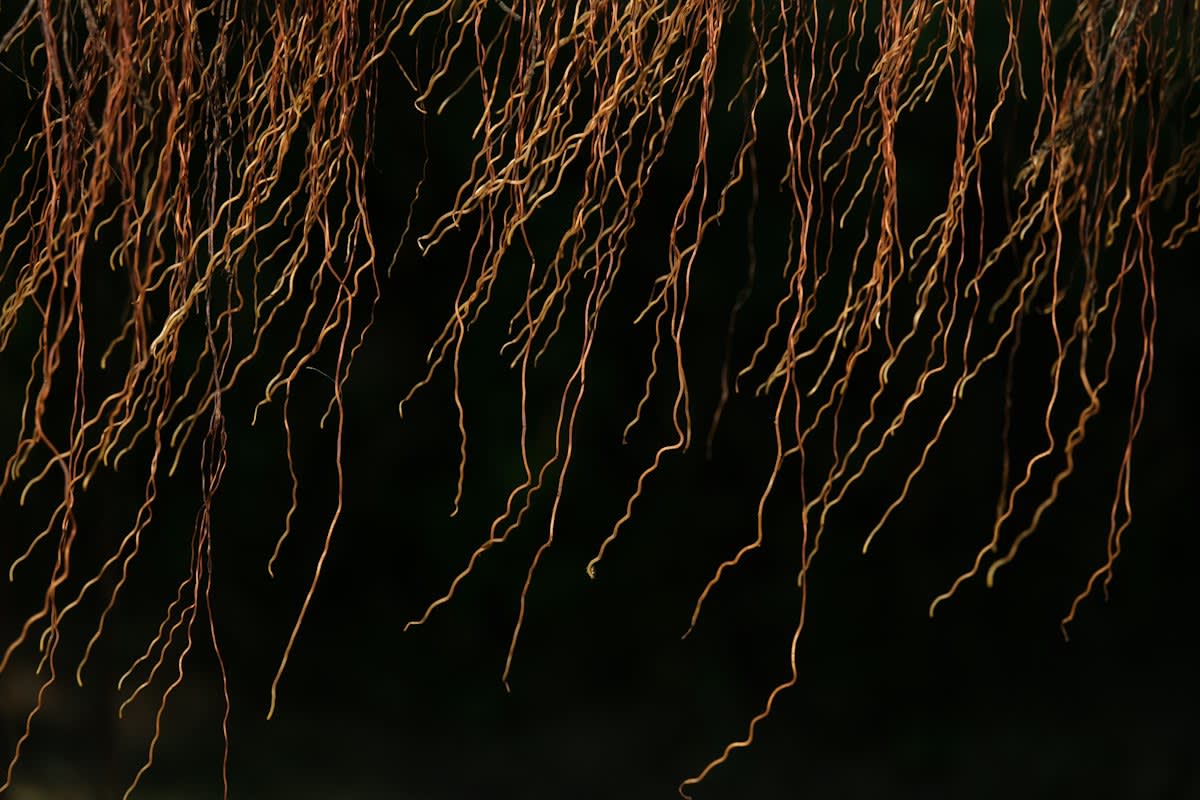
Once these steps are in place, the network begins to function as a systemic insurance policy. When one area of the field or forest hits a water deficit, the interconnected biologicals can help redistribute resources. This isn't magic; it is a biochemical process involving LRR co-receptor kinases that manage systemic demand signaling (Source: Nature, 2026). By optimizing the CERI and CEPR1 interactions, the plant can more effectively signal its needs to the root system, triggering a more efficient search for deep-soil moisture.
The Ground-Level Reality: Friction and Implementation
Let's be honest about the friction here. If you try to pitch a total shift to biologicals to a traditional producer, you will meet immediate skepticism. The real-world argument isn't about whether biology works—it's about the measurable response. Practitioners are constantly debating whether the economic value of a biological additive justifies its place in the production system, especially when compared to the immediate, predictable results of synthetic chemistry (Source: AgroLatam, 2026). I have seen projects stall because the 'measurable response' didn't show up in a single season. Biology moves slower than chemistry. You are building an ecosystem, not applying a coat of paint.
"After years of research, we now have a better understanding of which resistance genes or their specific alleles to stack together, opening a practical path toward developing commercial soybean varieties with more diverse sources of SCN resistance."— Mariola Usovsky, Research Scientist in the Northern Missouri Soybean Breeding Program
This genetic stacking is a perfect example of the 'ugly' side of implementation. You can't just rely on one gene because populations of pests, like the soybean cyst nematode, quickly evolve to reproduce on that resistance (Source: FarmProgress, 2026). You have to constantly iterate, stacking alleles to stay ahead of the evolutionary curve. The same applies to drought resilience; you cannot rely on a single 'miracle' microbe. You need a diverse biological stack.
Scaling Resilience Through Funding and Policy
Scaling these networks requires more than just field-level changes; it requires capital. We are seeing a shift where institutional funding is finally catching up to the science. For example, Ofwat has ringfenced up to £50m for the Water Breakthrough Challenge, specifically targeting projects that combat drought and transform the water sector (Source: Edie, 2026). This kind of funding is critical because the transition to regenerative systems often involves an initial dip in yield or an increase in management complexity before the biological benefits fully kick in.
| Approach | Primary Mechanism | Key Benefit | Source |
|---|---|---|---|
| Regenerative Ag | Low Tillage/OM | Soil Structure Preservation | Dawn, 2026 |
| Biologicals | Complementary Inputs | Systemic Production Value | AgroLatam, 2026 |
| Genetic Stacking | Allele Combinations | Pest/Nematode Resistance | FarmProgress, 2026 |
| N-Signaling | CEP/CEPR1/CERI | Systemic Demand Response | Nature, 2026 |
Common Pitfalls to Avoid
The most common mistake I see is the 'Silver Bullet' fallacy. This is the belief that a single product—like a gamified plant companion or a single strain of fungi—can replace a holistic system. While tools like PlantSenso attempt to use AI to give nature a voice, they are gadgets, not systemic solutions (Source: New Scientist, 2026). Real resilience comes from the interaction between genetic resistance, biological complements, and soil structure.
- Over-reliance on a single resistance gene, which allows pests to adapt (Source: FarmProgress, 2026).
- Treating biologicals as a complete replacement for chemistry rather than a complementary tool (Source: AgroLatam, 2026).
- Ignoring the systemic signaling pathways (CEP/CERI) and focusing only on external water application (Source: Nature, 2026).
- Failing to secure long-term funding for the transition period, ignoring available grants like the Water Breakthrough Challenge (Source: Edie, 2026).
Fact-Check & Accuracy Note
Key claims regarding systemic nitrogen signaling (CEP/CEPR1/CERI) are sourced from Nature (2026). Data on soybean cyst nematode resistance and gene stacking are sourced from FarmProgress (2026). Regenerative agriculture principles and UK cover crop subsidies are attributed to Dawn (2026). Funding figures for drought projects are sourced from Edie (2026), and biological market shifts are sourced from AgroLatam (2026). The role of CERI as a co-receptor kinase is a specific area of recent scientific identification and remains a subject of ongoing study in plant physiology.