The Great Protein Deception
Do we actually want meat, or are we just obsessed with protein structures? Most investors believe that moving from a lab sample to a supermarket shelf is a simple matter of building a bigger tank. It is not. The biology changes when the volume increases. Cells that thrive in a controlled incubator often perish in the violent turbulence of a 10,000-liter stirred reactor. We are not just growing cells; we are attempting to mimic the complex vascularity of a living animal within a stainless steel cylinder.
The current approach relies on induced pluripotent stem cells (iPSCs), which offer the versatility to become any cell type, including muscle and fat. However, the transition from a cell bank to a full-scale bioreactor requires a precise intersection of cell biology and bioprocess engineering (Source: Lonza, 2026). If the nutrient gradient is off by a fraction, the batch dies. If the oxygen transfer rate dips, the cells stop dividing. It is a brutal game of margins.
Prerequisites for Industrial Protein Synthesis
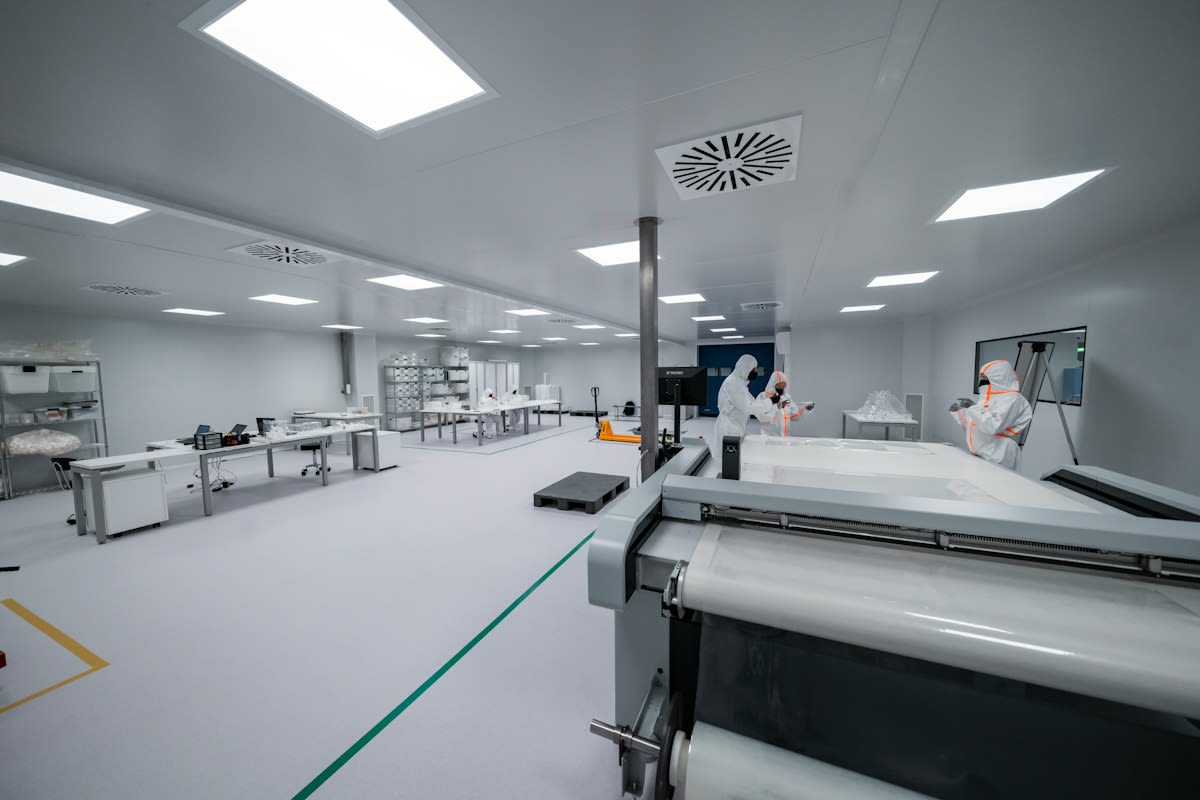
Before you even touch a bioreactor, your foundation must be sterile and genetically stable. You cannot scale a contaminated line. You need a validated cell bank that maintains its phenotype over multiple passages. Without this, the protein expression will drift, and your 'muscle' will lack the structural integrity of animal tissue. You also need a deep understanding of multiphase mixing and particle suspension to ensure the cells do not settle at the bottom and suffocate.
- Validated iPSC cell banks with documented stability (Source: Lonza, 2026).
- Medical-grade nutrient media capable of supporting high-density growth.
- Stirred-tank reactors with advanced hydrodynamic modeling to prevent cell shearing.
- A regulatory dossier that addresses nutritional equivalence to conventional meat (Source: New Food, 2026).
- Real-time monitoring tools for dissolved oxygen and pH levels.
The Scaling Playbook: From Bank to Batch
Scaling is where the theory hits the wall. The process is not linear. It is a series of violent adjustments. You start with a small seed train to expand the cell population before introducing them to the production bioreactor. This is where the collision between biologists and engineers happens. Biologists want a gentle, static environment to protect the cells. Engineers want high-speed impellers to ensure oxygen reaches every cell in the slurry. When these two worlds clash, the result is often a batch of dead cells and a very expensive cleaning bill.
- Establish a Master Cell Bank (MCB) to ensure genetic consistency across all production runs (Source: Lonza, 2026).
- Execute seed train expansion, moving cells from T-flasks to smaller wave bioreactors to build biomass.
- Transfer the biomass into a large-scale stirred reactor, applying machine-learning models to optimize hydrodynamics and particle suspension (Source: TWAS, 2026).
- Induce differentiation, triggering the iPSCs to transform into myoblasts and eventually mature muscle fibers.
- Harvest the protein mass and structure it using scaffolds to mimic the texture of animal muscle.
"The development of novel protein-synthesis strategies for site-specific post-translational modifications is essential for creating biomarkers and complex proteins that recapitulate biological pathology."— TWAS Fellow, Research Lead in Protein-Synthesis Strategies
Look at the work being done in palm-oil-producing regions. Researchers are using blanket fixed-film bioreactors to improve microbial retention and hydrogen yield (Source: TWAS, 2026). While this is focused on renewable energy, the underlying physics of fluid dynamics and waste transformation is the same. Whether you are producing hydrogen or a steak, the struggle is always the same: managing the flow of nutrients through a dense biological mass.
The Regulatory Gauntlet
You can build the perfect steak, but if the government says it is a toxin, you have nothing. The regulatory terrain is fragmented and slow. In the European Union, a cultivated duck-cell application was received in September 2024, yet no animal-cell-cultivated food has been authorized for sale as of late 2026 (Source: New Food, 2026). The burden of proof is on the producer. You must prove that your bioreactor protein is not nutritionally disadvantageous compared to the animal version.
Great Britain is attempting a more agile approach. Three validated cell-cultivated product applications were undergoing risk assessment as of October 2026 (Source: New Food, 2026). The Food Standards Agency (FSA) and Food Standards Scotland (FSS) launched a regulatory sandbox from February 2025 to February 2027 to better understand hazards. Even then, a routine, non-complex application takes approximately 2.5 years for authorisation (Source: New Food, 2026). This timeline kills startups.
Fact-Check & Accuracy Note
The data confirms that while technical scaling (iPSCs and stirred reactors) is advancing, the legal path is the primary bottleneck. Key benchmarks include the EU's 2024 duck-cell application and the UK's 2025-2027 regulatory sandbox. Academic debate continues regarding whether lab-grown proteins can ever truly match the micronutrient profile of pasture-raised muscle without synthetic supplementation.
Editorial Note
Editorial Note: This guide focuses on the industrial reality of bioprocessing. We avoid the marketing hype of 'slaughter-free meat' to focus on the mechanical failure points of bioreactor scaling and the rigid requirements of food safety dossiers.
Common Pitfalls and Mechanical Failures
The most common failure is the 'Nutrient Void'. In large reactors, cells in the center of a clump starve while cells on the edge overfeed. This creates a heterogeneous product—some parts are mature muscle, others are undifferentiated sludge. Another failure is the 'Shear Stress Event'. When the impeller speed is increased to improve oxygenation, the physical force literally rips the cell membranes apart. You end up with a tank full of cellular debris instead of a steak.
Finally, there is the 'Nutritional Gap'. Many practitioners ignore the complex chemistry of animal muscle, which includes heme, fats, and minerals in a specific matrix. If your cultivated product lacks these, it will be flagged as nutritionally disadvantageous during the 2.5-year regulatory review (Source: New Food, 2026). You cannot simply grow protein; you must engineer a food system. Failure to account for this leads to products that are chemically correct but culinarily useless.