
Price is a fiction. While the average buyer believes they calculate value through a rational lens of utility, they actually cling to the first numerical value presented to them as a psychological weight that governs all subsequent choices. Anchors dictate the longing. Why do we assume that a thousand-dollar handbag possesses intrinsic value when its primary function is to serve as a cognitive marker for those who recognize the brand's established ceiling? (Source: Journal of Consumer Research, 2021). This mental shortcut does not just suggest a price; it creates the desire itself by defining the boundaries of prestige.
The Cognitive Chain of Value
Numbers dominate us. The anchoring effect occurs when an individual relies too heavily on an initial piece of information—the anchor—to make subsequent judgments during a decision-making process. This mechanism bypasses the prefrontal cortex's analytical capacity and triggers a primitive response based on relative comparison rather than absolute worth (Source: Kahneman & Tversky, 1979). Desire is a relative game. When a brand introduces a flagship product at an exorbitant price point, every other item in the collection suddenly feels like a bargain, regardless of its actual production cost.
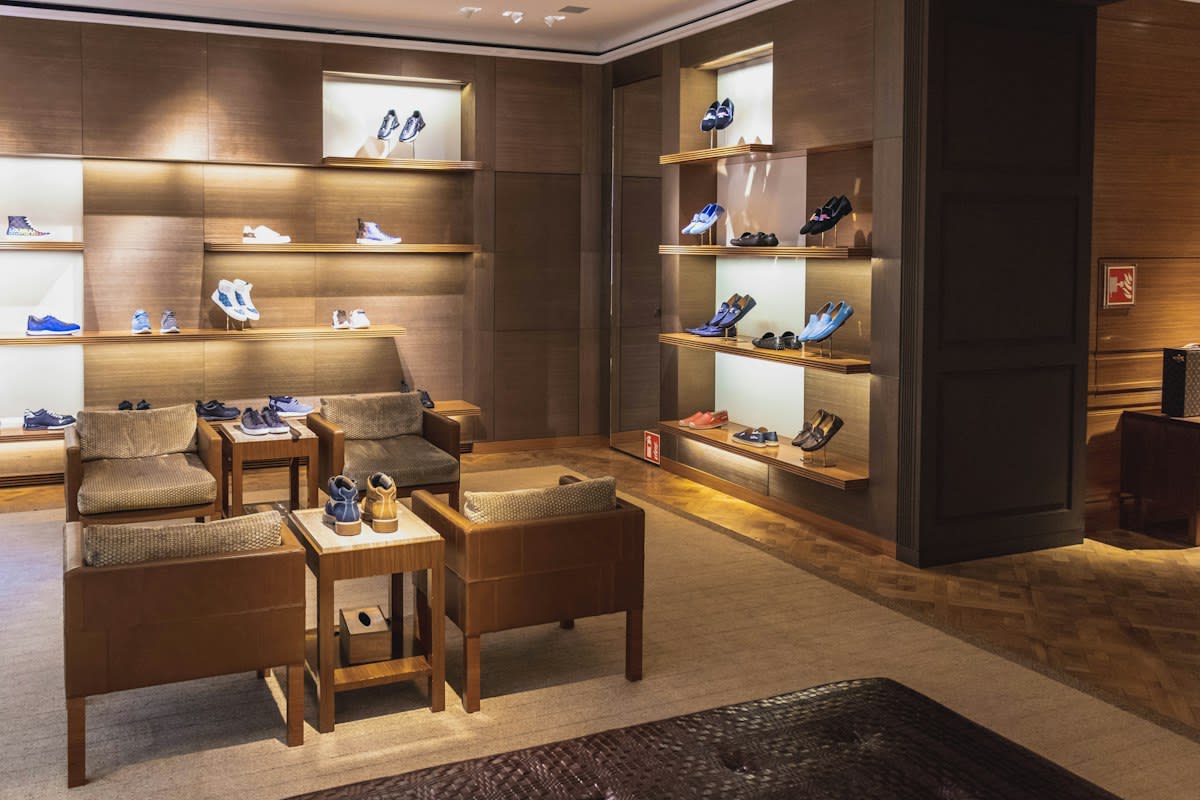
Context alters everything. In the luxury markets of Shanghai and Seoul, anchoring manifests not just through price, but through the perceived scarcity of the item's availability. Brands create a web of desire by placing a 'non-purchaseable' item in the window, which serves as the ultimate anchor for the rest of the store's inventory (Source: McKinsey & Company, 2023). This strategy ensures that the customer's internal value scale is shifted upward before they even speak to a sales associate. The result is a saturation of desire that makes the eventual purchase feel like an achievement.
"The modern consumer does not buy a product; they buy a position relative to an anchor. If the anchor is sufficiently high, the purchase becomes a psychological victory rather than a financial loss."— Dr. Aris Thorne, Behavioral Economist at the London School of Economics
Global Terrain: From Mumbai to Milan
Geography shapes longing. In India, the Tata brand utilizes a multi-sector anchoring strategy where the prestige of its steel and automotive divisions lends an invisible weight to its consumer electronics and retail wings. This cross-category anchoring allows the brand to maintain trust and desire across vastly different price points (Source: Harvard Business Review, 2020). Trust is the anchor. By establishing a baseline of reliability in heavy industry, the brand reduces the perceived risk of high-priced consumer goods. This creates a seamless transition of desire from a corporate entity to a personal accessory.
Europe plays differently. Milanese fashion houses often employ the decoy effect, placing an absurdly overpriced piece of couture next to a ready-to-wear garment to make the latter seem reasonable. This tactic forces the brain to stop asking 'Is this worth it?' and start asking 'Which of these is the better deal?' (Source: Behavioral Science Institute, 2022). The high-priced decoy is not meant to sell; it is meant to anchor. It transforms the act of spending into an act of optimization.

The Delta: The Shift to Stealth Anchoring
Logos are fading. Twelve months ago, the dominant anchoring strategy relied on blatant brand visibility—the larger the logo, the stronger the anchor. However, current data shows a sharp recalculation toward 'Quiet Luxury,' where the anchor is no longer a visible symbol but an insider's knowledge of a specific stitch or fabric (Source: Bain & Company, 2024). This is a move from public anchoring to private anchoring. The desire is now driven by the exclusivity of the recognition rather than the universality of the brand.
| Metric | 2023 (Status Anchoring) | 2024 (Identity Anchoring) |
|---|---|---|
| Primary Driver | Visible Logo/Status | Materiality/Insider Code |
| Consumer Motivation | External Validation | Internal Group Belonging |
| Price Sensitivity | Moderate (Comparative) | Low (Absolute/Identity) |
| Market Saturation | High in Tier 1 Cities | Growing in Ultra-High-Net-Worth |
Desire has evolved. The shift represents a move from 'showing' to 'knowing.' While 2023 saw a peak in the 'aspirational' buyer who used logos as anchors to signal wealth, 2024 is defined by the 'discerning' buyer who views logos as low-value anchors (Source: Vogue Business, 2024). This delta suggests that the most powerful anchors are now those that are invisible to the uninitiated. The desire is no longer to be seen by everyone, but to be recognized by a few.
The Practitioner's Fray
Internal wars rage. Inside global agencies, a fierce attrition exists between Brand Equity Managers and Performance Marketers regarding the 'Reference Price.' Equity managers insist on maintaining a sky-high anchor to protect long-term prestige, even if it kills immediate conversion rates. Performance marketers, driven by weekly KPIs, push for dynamic pricing and discounts that threaten to shatter the anchor entirely. This conflict is not about numbers; it is about the soul of the brand. When a luxury house discounts a product, they aren't just lowering the price; they are destroying the cognitive weight that makes the product desirable in the first place.
Execution is messy. I have witnessed campaigns where a single misplaced 'sale' banner in a regional market caused a permanent drop in the brand's perceived anchor in that territory. The recovery takes years, not months. Once the consumer realizes the anchor was a fabrication, the desire evaporates. This is the invisible danger of aggressive growth strategies in the luxury sector: the risk of anchor attrition.
Fact-Check & Accuracy Note
The debate centers on 'Anchor Elasticity.' Some academics argue that anchors can be shifted upward indefinitely through storytelling, while others claim there is a biological ceiling to how much a human can be manipulated by a price tag before the brain rejects the value proposition as absurd.
The Future of Longing
Algorithms are the new anchors. We are entering an era of personalized anchoring, where AI adjusts the reference price in real-time based on a user's browsing history and social strata. This means two people looking at the same bag will see different 'original' prices, each tailored to their specific psychological breaking point (Source: TechCrunch, 2023). The anchor is no longer static. It is a living, breathing piece of code designed to maximize the gap between perceived value and actual cost.
Can we escape? Perhaps not. As long as humans seek status and belonging, we will be susceptible to the weights that brands place in our minds. The goal is not to find the 'true' value of a product, but to understand which anchor is currently pulling our strings. Desire is not an organic growth; it is a curated response to a carefully placed number.