
Do we actually inherit a family tree, or do we simply inherit a set of liabilities? Most assume that the bonds of kinship are a natural safety net. They are not. In November 2026, the data suggests that the 'family tree' is increasingly something that must be bought, defended, and mechanically repaired to prevent a total collapse of the domestic unit.
The asymmetry of this struggle is stark. While some families fight a biological war against cognitive decline, others battle the economic siphons of urban rental scams that strip away the physical foundations of home. The result is a fragmented experience of kinship where stability is no longer a default state but a luxury commodity.
The Biological Lag: Cardiovascular and Cognitive Collision
Health is the primary currency of the family tree. When it leaks, the entire structure tilts. A 14-year longitudinal study involving more than 5,400 adults has exposed a brutal intersection between heart health and mental stability (Source: Scientific Reports, 2026). The research indicates that cardiovascular disease (CVD) and depressive symptoms do not just coexist; they accelerate cognitive aging in an unexpected way.
The data is precise. Participants categorized as the 'moderate-stable depressive symptoms' group showed significantly lower baseline global cognition, memory, and semantic fluency scores compared to the 'low-stable' group (Source: Scientific Reports, 2026). This is not a gradual slide. It is a mechanical failure of the brain's ability to resist the attrition of age when the heart and mind are both under siege.
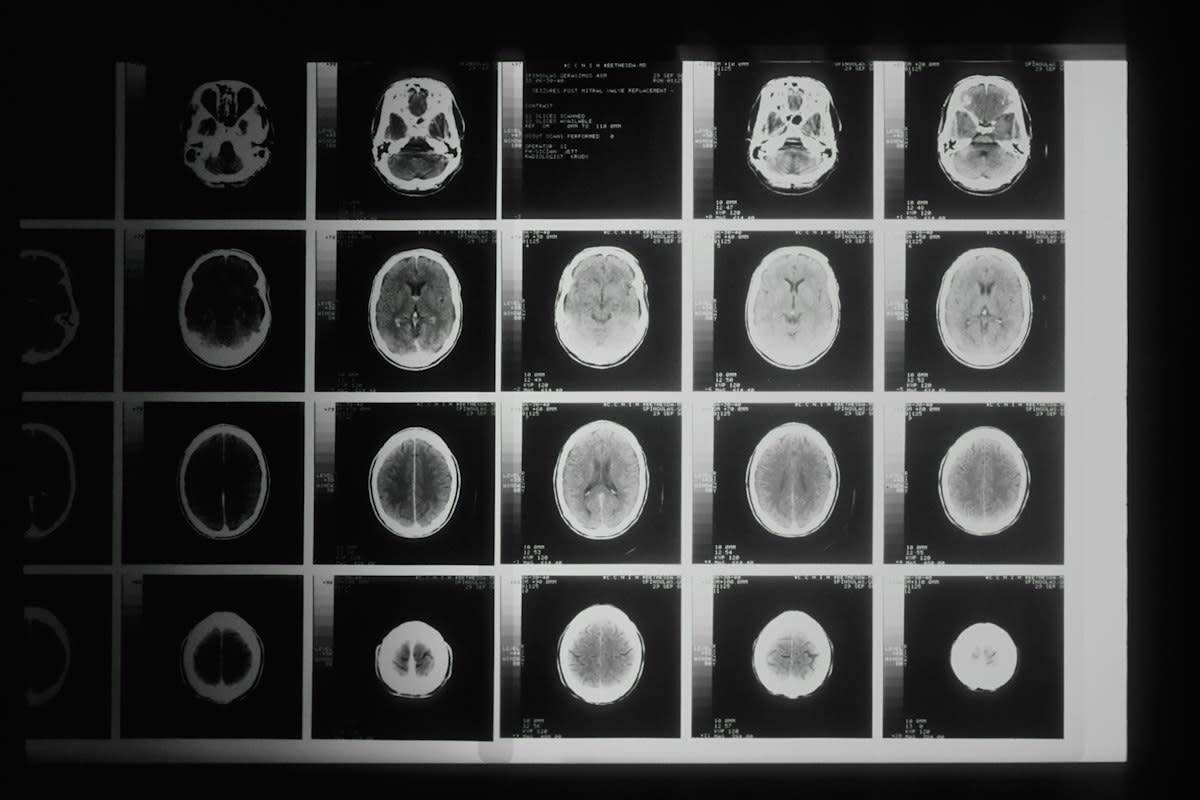
This biological debt creates a massive burden for the next generation. When a patriarch or matriarch suffers this dual decline, the family tree does not just lose a leaf; it loses its memory. The cognitive lag forces children to become parents to their parents, shifting the psychological tether of the family toward a state of permanent crisis management.
The Kinship Strain: The Unpaid Emotional Tax
Not every family tree is biological. Kinship care—where relatives step in to raise children—is a critical but invisible support system. However, the emotional cost is staggering. These carers often operate in a vacuum of isolation, facing mental health challenges that threaten to destabilize the very children they are trying to save (Source: Kinshipcarecharity, 2026).
Why do we ignore this? The social inertia surrounding kinship care assumes that 'family will figure it out.' This assumption is a lie. The stress of kinship care acts as a siphon, draining the caregiver's mental reserves until the support system itself becomes a point of failure.
"Being a kinship carer is stressful. Connecting with others who understand your situation can make a real difference, helping to reduce feelings of isolation."— Official Statement, Kinshipcarecharity
This shift toward recognizing 'chosen' or 'emergency' family structures is a hard turn from the traditional nuclear model. It acknowledges that the family tree is often a patchwork of desperate interventions rather than a seamless genetic line.
Mechanizing the Connection: BCI and the Fight for Voice
When the body fails, the family tree is severed. For those with Amyotrophic Lateral Sclerosis (ALS), the loss of speech is the final wall. But in November 2026, a new attempt to 'buy' back this connection has emerged. Cognixion is now enrolling participants in an NIH-funded study for a wearable Brain-Computer Interface (BCI) (Source: BioSpace, 2026).
This is not a simple gadget. The system combines an AI Context Engine, AR display glasses, and a 'Digital Twin' of the patient to bypass the limitations of traditional eye-tracking devices (Source: BioSpace, 2026). It is an attempt to use silicon to replace the biological tether that has been snapped by disease.
| Communication Method | Mechanism | Core Limitation |
|---|---|---|
| Eye-Tracking | Optical sensors tracking gaze | Physical fatigue and slow input speed |
| Cognixion BCI | Neural interface + AI Digital Twin | Experimental status and hardware bulk |
The industry dispute here is subtle but fierce. Practitioners are divided: does a 'Digital Twin' preserve the patient's identity, or does it create a synthetic proxy? The friction lies in the gap between functional communication and authentic presence. We are essentially buying a prosthetic for the soul.
The Environmental Leak: When the Root is Fraud
Physical stability is the soil in which the family tree grows. When that soil is poisoned by fraud, the tree collapses. In New York City, the rental market has become a hunting ground. A recent indictment reveals a man who used a dozen aliases to fleece apartment hunters out of $61,625 (Source: NY Post, 2026).
The human cost exceeds the dollar amount. Fifteen victims were targeted, some finding other families already living in the apartments they thought they had secured (Source: NY Post, 2026). This is a collision of desperation and predation. For a family seeking a new start, this kind of fraud is not just a financial loss; it is a psychological trauma that erodes trust in the very concept of 'home'.

When a family is displaced by a scam, the ripple effect is immediate. The stress siphons energy away from child-rearing and career growth, creating a downward spiral. The 'better family tree' is thus not just about genetics or health, but about the ruthless defense of one's physical territory.
Fact-Check & Accuracy Note
The research cited here relies on the English Longitudinal Study of Aging (ELSA) for cognitive data and the NIDCD/NIH for BCI trials. A point of academic debate remains whether 'Digital Twins' in BCI can truly replicate semantic fluency or if they merely predict likely responses based on historical data patterns.
Editorial Perspective
Editorial Note: This report highlights the shift from 'organic' family growth to 'managed' family stability. The trend observed in November 2026 is the increasing reliance on external systems—medical, legal, and technological—to perform functions previously handled by kinship bonds.
The convergence of these trends is clear. We are moving toward a model of the family tree that is actively engineered. Whether through the management of cardiovascular health to stave off cognitive decline, the use of BCIs to maintain a voice, or the navigation of predatory real estate markets, the modern family is a project of constant maintenance.