DNA is a failure. 80-year-old donors provide the baseline for current epigenetic reprogramming (Source: Times of India, 2026). The accumulation of molecular errors ensures that biological aging is a downward trajectory of efficiency. This decay is not a single event but a cascade of failures across multiple cellular layers. Understanding why these systems collapse is the only way to move beyond the myth of inevitable decline.
The Failure of Proteostasis
Cellular recycling mechanisms fail long before the organism expires. Chaperone-mediated autophagy, or CMA, serves as a primary defense against senescence-driven inflammation (Source: Bioengineer, 2026). J. Fred Dice first described this pathway in 1982, noting that lysosomes could degrade specific cytosolic proteins (Source: Bioengineer, 2026). This process relies on cytosolic chaperones that recognize target proteins carrying a KFERQ-like motif. These chaperones then deliver the targets to the lysosomal membrane protein LAMP2A for translocation.
"The mechanistic link between CMA and senescence rests on the peculiar biology of the pathway itself."— Nature Aging Commentary, 2026
When LAMP2A levels drop, these toxic proteins accumulate, triggering the senescence that leads to age-related disease. The broader hallmarks of aging framework, articulated by Lopez-Otin and colleagues in 2023, lists the loss of proteostasis and altered intercellular communication as defining features (Source: Bioengineer, 2026). The decline of CMA is a central driver of these hallmarks. When proteostasis fails, the cell can no longer maintain its internal order, leading to a state of chronic dysfunction.
Senescent cells accumulate as the CMA pathway declines. These cells do not simply stop dividing; they become active sources of inflammation. They secrete inflammatory mediators and extracellular matrix components that poison neighboring tissues (Source: Tyler Morning Telegraph, 2026). This biological decay creates a brittle environment where regenerative capacity vanishes. The burden of age-related diseases grows as chronic inflammation drives tissue dysfunction (Source: Bioengineer, 2026).
Regenerative Signaling and MGF
MGF peptides offer a potential counter-measure to this decline. Research suggests that MGF may modify the local signaling environment to influence how cells respond to regenerative cues (Source: Tyler Morning Telegraph, 2026). Instead of acting as a direct regulator, the peptide facilitates communication between differentiated cells and progenitor populations. This interaction is essential for maintaining tissue viability. Without such signaling, the body cannot repair the damage caused by cellular senescence.
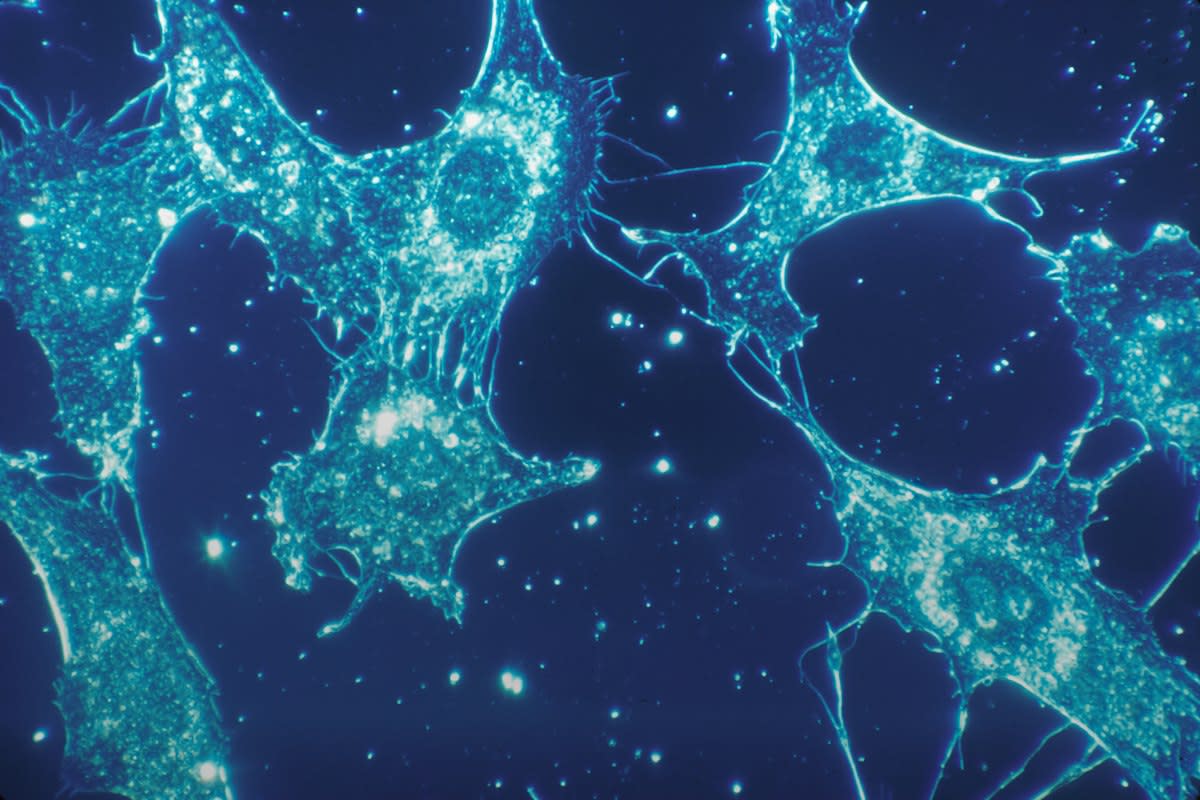
Molecular failures at the cellular level eventually manifest as epigenetic drift.
Epigenetic Reprogramming and the Bonn Study
Epigenetic markers provide a more accurate measure of age than a birth certificate. Scientists can estimate biological age by examining chemical modifications to DNA that influence gene function (Source: Times of India, 2026). A study in Bonn demonstrated that these markers are not permanent. Researchers successfully turned blood-cell precursors from an 80-year-old donor into neural stem cells (Source: Times of India, 2026). The resulting cells displayed an epigenetic age below 20.
The reprogramming process took 100 days to complete (Source: Times of India, 2026). This timeline suggests that cellular rejuvenation is a slow, methodical alteration of molecular markers. This study provides a model for observing how cells change during reprogramming. It also allows researchers to investigate the mechanisms underlying cellular aging in a controlled environment. However, the transition from a petri dish to a human patient remains an open question.
| Metric | Donor Age (Chronological) | Reprogrammed Age (Epigenetic) | Functional State |
|---|---|---|---|
| Age Marker | 80 Years | < 20 Years | Juvenile |
| Cell Type | Blood Precursor | Neural Stem Cell | Progenitor |
| Process Duration | N/A | 100 Days | Active |
Neural stem cells are particularly valuable for Alzheimer's research. Because they can generate nerve cells, they allow for the study of the nervous system without invasive human trials (Source: Times of India, 2026). By creating young cells from old donors, scientists can isolate the effects of aging from other variables. This method helps in testing hypotheses regarding age-related neurological conditions. The goal is to understand why neural cells fail and how to prevent that failure.
While cellular decay is often viewed as a loss, some evidence suggests an evolutionary trade-off.
Cognitive Adaptation and Wisdom
The aging brain may prioritize wisdom over raw memory. Evidence suggests that the brain rewires itself to focus on understanding the bigger picture rather than remembering specific details (Source: ScienceDaily, 2026). This transition may be an evolutionary adaptation. It allows older adults to preserve and share acquired knowledge with younger generations (Source: ScienceDaily, 2026). Fernandez suggests that this trade-off provides a hidden edge to growing older.
Cognitive aging is traditionally viewed as a decline in function. However, the prioritization of wisdom suggests that the brain is not simply losing abilities but altering its focus (Source: ScienceDaily, 2026). This suggests that biological aging is not a linear path toward uselessness. Instead, it is a reconfiguration of resources. The loss of memory is the price paid for the ability to synthesize decades of experience into actionable wisdom.

The gap between these laboratory findings and clinical application is where the real struggle lies.
Practitioner Perspective and Failure Points
In laboratories from Jakarta to Bonn, the friction persists between molecular success and organismal decay. Practitioners face the reality that resetting an epigenetic clock in a cell does not automatically repair a failing heart or a scarred liver. The debate centers on whether cellular rejuvenation can be scaled without inducing oncogenic growth. Many researchers remain skeptical that a 100-day cellular process can be replicated across trillions of cells in a living human. The ground-level reality is a slow grind of trial and error.
The primary failure point in current anti-aging research is the lack of body-wide coordination. While a single cell type can be rejuvenated, the intercellular communication remains broken (Source: Bioengineer, 2026). The hallmarks of aging—loss of proteostasis, cellular senescence, and altered communication—are intertwined (Source: Bioengineer, 2026). Fixing one does not fix the others. Chronic inflammation continues to drive tissue dysfunction even if individual cells are epigenetically young.
Editorial Note
This article is written from a clinical, skeptical perspective. The data presented reflects laboratory successes which have not yet been validated in large-scale human clinical trials.
Fact-Check Note
Fact-Check: The CMA pathway was indeed first described in 1982 by J. Fred Dice. The Bonn study's 100-day reprogramming process is a documented laboratory result, not a medical treatment. The 2023 hallmarks framework by Lopez-Otin is the current scientific standard for defining biological aging.