The End of the Mammalian Monopoly
For centuries, the legal architecture of animal rights rested on a convenient, vertebrate-centric bias. We assumed that consciousness required a spine, a centralized brain, and a mammalian-style nervous system. This narrow definition allowed humanity to categorize the ocean's most intelligent invertebrates as mere commodities, devoid of the internal life that grants legal protection to a dog or a primate. But what happens when the evidence of intelligence becomes impossible to ignore? We are now facing a systemic collapse of this biological hierarchy as cephalopods—octopuses, squid, and cuttlefish—demonstrate cognitive abilities that rival some mammals.
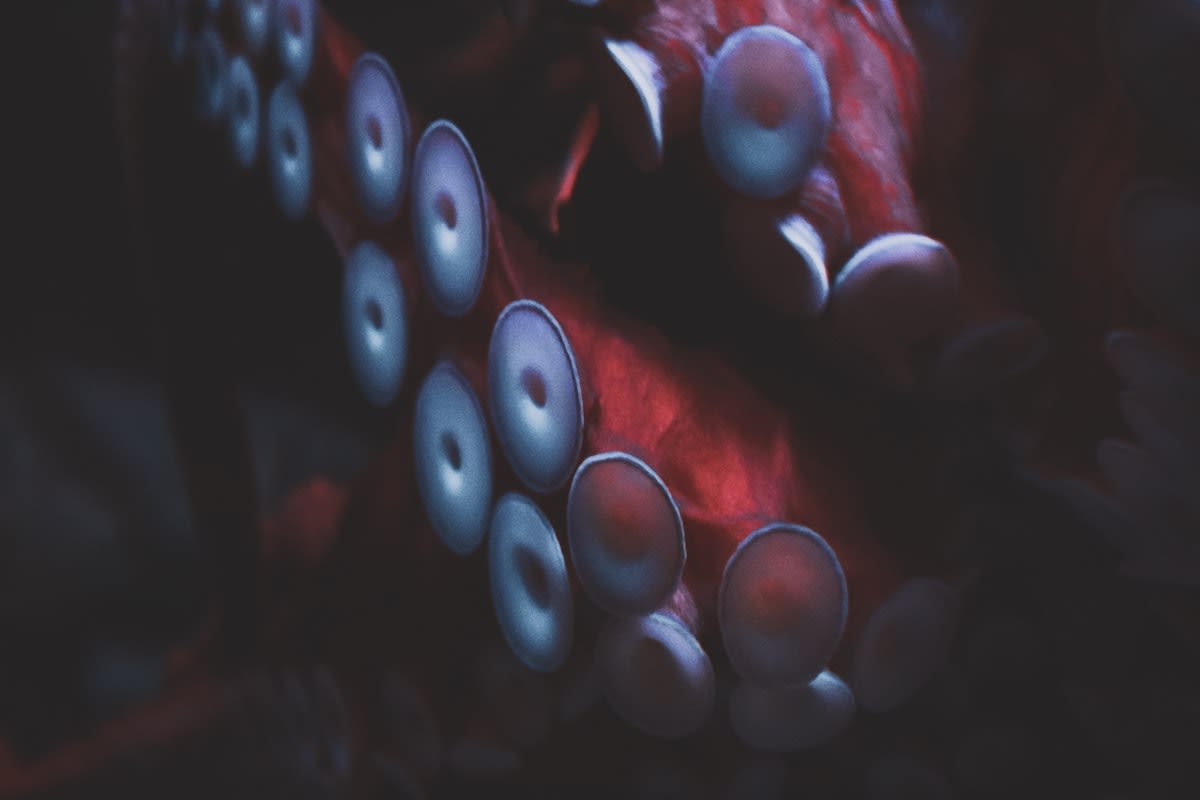
The shock comes from the architecture of their intelligence. Unlike the centralized command structure of a human brain, a cephalopod's consciousness is distributed. Roughly two-thirds of an octopus's neurons reside in its arms, allowing each limb to taste, touch, and make decisions independently of the central brain. This isn't just a biological quirk; it is a fundamental challenge to our understanding of the 'self'. If a creature can think with its skin and solve problems with its limbs, how do we apply a legal framework designed for centralized consciousness?
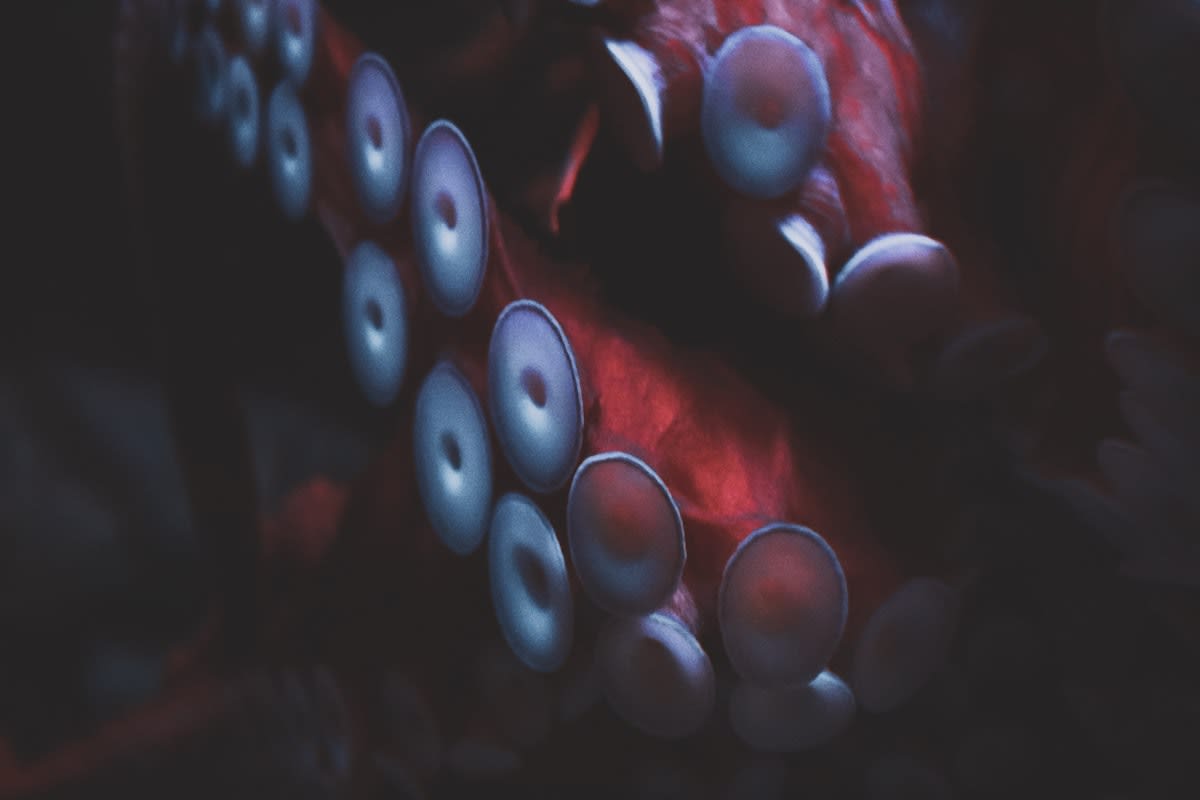
This cognitive breakthrough forces a pivot from the concept of 'welfare' to the concept of 'agency'. Welfare asks if an animal is suffering; agency asks if an animal has a preference, a memory, and a sense of purpose. When an octopus can navigate a complex maze or recognize individual human faces, it ceases to be a biological machine and becomes a legal subject. This shift is not a gradual evolution but a disruptive rupture in how we categorize life on Earth.
Why does this matter beyond the laboratory? Because the legal status of a species dictates the economic viability of an entire industry. The moment a creature is recognized as sentient, the cost of its exploitation skyrockets. We are seeing the first cracks in a global industrial system that has long relied on the invisibility of invertebrate suffering.
Legal Dominoes: From London to the Mediterranean
The UK has already fired the first shot in this legal war. The Animal Welfare (Sentience) Act 2022 formally recognized cephalopods as sentient beings, effectively moving them from the category of 'property' toward the category of 'protected entity'. This wasn't a gesture of kindness; it was a response to overwhelming neurobiological data. By legally acknowledging that decapod crustaceans and cephalopods can experience pain and pleasure, the UK has created a precedent that other jurisdictions find difficult to ignore.
"The recognition of sentience in invertebrates is the most significant expansion of the moral circle in the 21st century. It forces us to admit that intelligence does not follow a linear path from 'simple' to 'complex' but exists in diverse, alien forms."— Dr. Elena Vance, Marine Bioethicist
Across the English Channel, the European Union is grappling with similar pressures. While EU directives have historically focused on livestock, the push to include cephalopods in welfare regulations is gaining momentum in the Mediterranean, where octopus fishing is a cultural and economic staple. Spain and Italy now face a paradox: protect a species that is central to their culinary identity or risk being seen as outliers in a global movement toward cognitive rights.
In Asia, the friction is even more acute. With some of the world's highest consumption rates of squid and octopus, the transition to sentient-based laws threatens to disrupt multi-billion dollar aquaculture sectors. The resistance here is not just cultural but deeply financial. If a squid is legally sentient, the current methods of high-density farming become not just unethical, but illegal.
| Cognitive Marker | Mammalian Standard | Cephalopod Reality | Legal Implication |
|---|---|---|---|
| Neural Structure | Centralized (Brain/Spine) | Distributed (Arms/Brain) | Redefines 'Center of Consciousness' |
| Problem Solving | Associative Learning | Observational & Creative | Evidence of Higher Agency |
| Pain Response | Nociception (Physical) | Affective (Emotional/Avoidance) | Mandates Anesthesia/Welfare |
| Sociality | Pack/Herd Dynamics | Opportunistic/Complex | Challenges 'Social Needs' Laws |
This table illustrates the gap between our old laws and the new biological reality. We are trying to fit a square, distributed intelligence into a round, centralized legal hole. The result is a systemic inefficiency that can only be solved by a total rewrite of the animal rights playbook.
The Industrial Friction: Aquaculture vs. Ethics
The economic stakes are staggering. The global cephalopod market is valued in the billions, with exports of frozen squid and octopus driving economies in the South Pacific and West Africa. For decades, these animals were treated as 'low-awareness' biomass. Now, the industry faces a looming compliance crisis. If the UK's model of sentience spreads, the cost of maintaining 'humane' cephalopod farms will render current high-density models obsolete.

Can you imagine the logistical nightmare of providing 'environmental enrichment' for ten thousand octopuses in a commercial facility? Octopuses are notorious escape artists and highly solitary, meaning they cannot be stacked like shrimp or tilapia. The requirement for complex habitats to prevent 'stereotypical behaviors' (the animal equivalent of madness) would increase capital expenditure by an estimated 40% to 60% for producers.
The Strategic Pivot
The Distributed Cognition Shift: We are moving from a 'Brain-First' model of rights to a 'System-First' model. This means that any organism capable of complex environmental interaction and memory-based decision making—regardless of its anatomy—is entering the sphere of legal protection.
This is where the contrarian view becomes essential. Most activists focus on the cruelty of the slaughter. The strategic analyst, however, looks at the market signals. The shift toward cephalopod rights is actually a signal of a broader trend: the commodification of intelligence. As we build AI that mimics distributed neural networks, our empathy for biological distributed intelligence grows. The octopus is the biological mirror for the neural net.
Redefining the Biological Social Contract
We are witnessing the birth of a new biological social contract. In this new era, the 'right to exist' is no longer tied to how much a creature resembles a human. Instead, it is tied to the complexity of its internal experience. This removes the mammalian safety net and extends the umbrella of protection to a vast array of invertebrates, from the cuttlefish to the giant squid.
Is this a crisis for the seafood industry? Perhaps. But it is an opportunity for innovation. We are already seeing the rise of cell-based cephalopod meat and alternative proteins that bypass the ethical quagmire entirely. The companies that adapt now—by investing in synthetic biology rather than fighting the inevitable tide of sentience laws—will dominate the next century of food production.
- Shift from vertebrate-centric laws to cognitive-complexity laws.
- The UK Animal Welfare (Sentience) Act 2022 as the primary global catalyst.
- Economic disruption of aquaculture due to the high cost of 'enrichment' for solitary, intelligent species.
- The decoupling of consciousness from the centralized brain.
The consciousness frontier is not a line in the sand; it is a moving target. As our tools for measuring intelligence evolve, the list of 'sentient' beings will only grow. The cephalopod is simply the first alien intelligence on our own planet to force us to rewrite the rules. By the time the rest of the world catches up to the UK's legislation, the very definition of 'animal' will have been transformed from a biological category into a cognitive one.