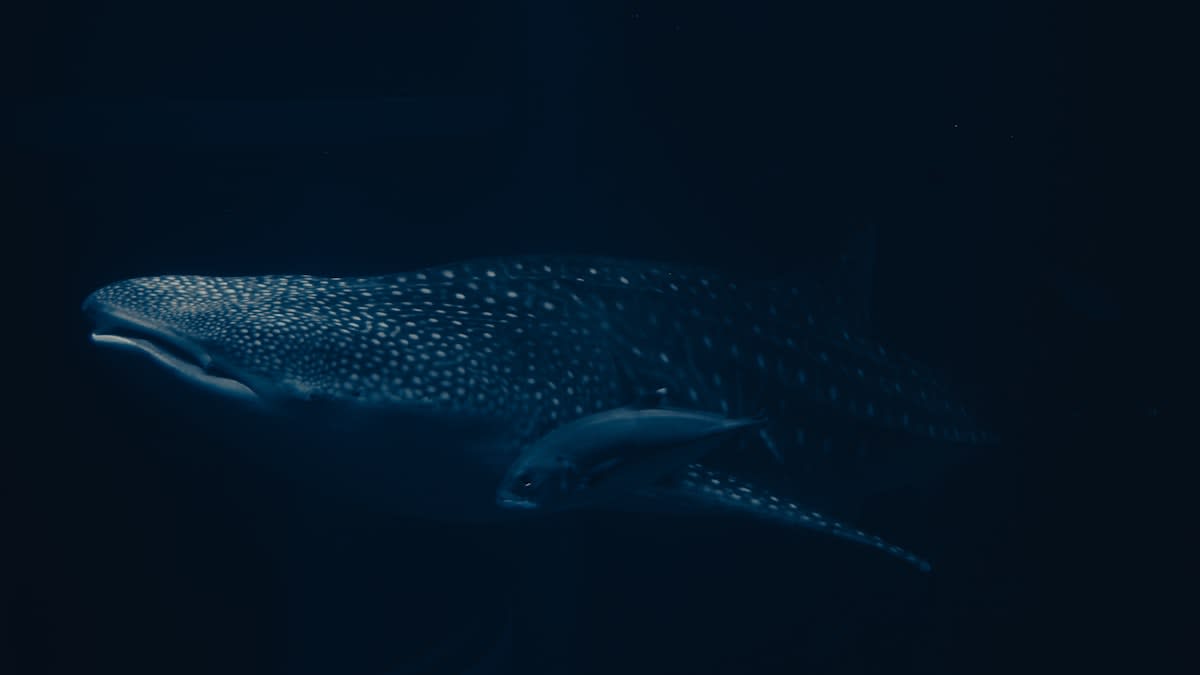
For decades, we treated whale songs as atmospheric music—beautiful, complex, but ultimately impenetrable. That era ended this year. We have moved from the age of observation into the age of translation. By applying the same transformer architectures that power Large Language Models (LLMs) to the clicks and codas of sperm whales, researchers are uncovering a structured, combinatorial grammar. This isn't just pattern recognition; it is the identification of a non-human linguistic system. Why does this matter now? Because for the first time, the computational power exists to process the sheer volume of acoustic data required to find the 'phonemes' of the ocean.
The Great Delta: From Bioacoustics to Generative Intelligence
Twelve months ago, the industry standard was 'bioacoustic clustering'—grouping sounds by frequency or duration to guess at basic meanings like 'danger' or 'mating.' Today, the approach has shifted toward unsupervised machine learning. Instead of telling the AI what to look for, scientists are letting the models find the underlying structure of the communication themselves. This shift has revealed that sperm whale codas—short bursts of clicks—are not static signals but are modulated by tempo, rhythm, and ornamentation. (Source: Project CETI, 2024). The delta is clear: we have moved from translating words to decoding a syntax.
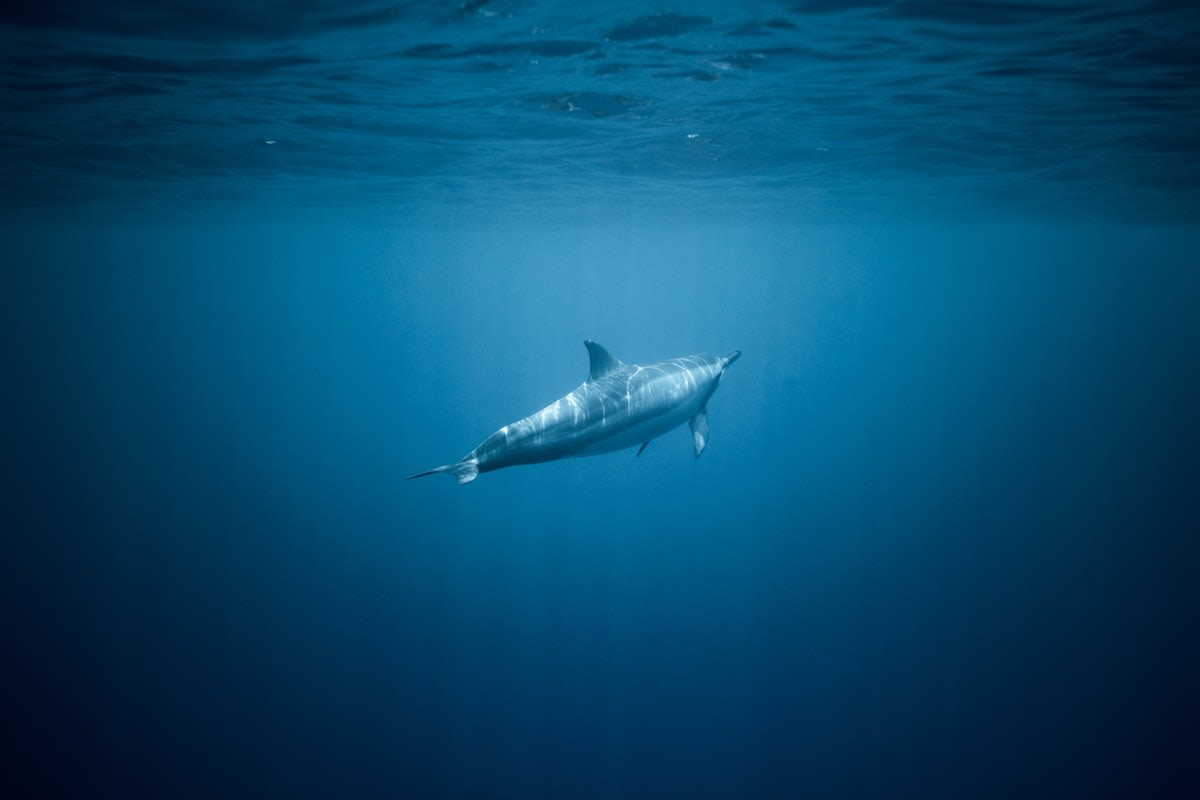
The precision of this new approach is staggering. Recent findings indicate that sperm whale communication involves a 'phonetic alphabet' of sorts, where variations in click timing create distinct meanings. This combinatorial nature suggests a level of cognitive flexibility previously attributed only to humans and perhaps some higher primates. If a whale can combine three different click types to create ten different meanings, we are dealing with a generative language, not a fixed set of emotional calls. (Source: Nature Communications, 2024).
"We are not just looking for a Rosetta Stone; we are building a machine that can learn to speak a language it has never heard before, using the same mathematical principles that allow AI to translate between English and Mandarin."— Dr. David Gruber, Founder of Project CETI
This effort isn't localized to one coast. From the deep waters off Dominica in the Caribbean to the migratory paths in the Pacific, the data collection is global. Researchers are deploying high-tech hydrophone arrays and AI-powered tags that record not just the sound, but the physical orientation of the whale during the transmission. This multi-modal data—sound plus movement—is the key to unlocking context. A click while diving means something entirely different than a click during a social greeting.
The Practitioner's Friction: Where Biology Meets Big Data
On the ground—or rather, on the boat—this process is far from seamless. There is a palpable tension between the traditional marine biologists and the machine learning engineers. The biologists argue that meaning is rooted in evolutionary ecology and social bonds that a model cannot 'see.' The engineers counter that the model sees patterns the human ear is biologically incapable of detecting. I have seen these debates play out in real-time: a researcher insisting a specific coda is a 'mother-calf greeting' while the AI flags it as a generic regional dialect marker. This friction is where the real science happens. It forces us to define what 'meaning' actually is in a non-human context.
| Metric | Traditional Bioacoustics (Pre-2023) | AI-Driven Translation (2024+) |
|---|---|---|
| Analysis Method | Manual Spectrogram Review | Unsupervised Transformer Models |
| Data Scale | Hours of sampled audio | Petabytes of continuous streaming |
| Interpretation | Fixed Signal = Fixed Meaning | Combinatorial Syntax = Generative Meaning |
| Goal | Classification | Bidirectional Communication |
Can we actually talk back? That is the billion-dollar question. The current trajectory suggests that within the next 24 to 36 months, we will move from passive decoding to active synthesis. By using generative adversarial networks (GANs), researchers can create 'synthetic codas' that mimic the whale's own phonetic structure. The goal is not to have a philosophical conversation about the nature of the universe, but to establish basic, functional communication. Imagine asking a pod about their migratory route or alerting them to a nearby shipping lane to prevent collisions.
The implications for non-human intelligence are profound. If sperm whales possess a generative language, our current definitions of 'sentience' and 'personhood' are obsolete. We are discovering that the ocean is not a silent void, but a dense network of information exchange. (Source: Project CETI, 2024). This realization shifts the narrative from 'protecting a species' to 'respecting a civilization.' It transforms conservation from a charitable act into a diplomatic necessity.
- Combinatoriality: The ability to combine a small set of sounds to create a vast array of meanings.
- Regional Dialects: Distinct 'accents' found in different whale clans across the Atlantic and Pacific.
- Contextual Modulation: The way whales alter their clicks based on the presence of other pod members.
- Generative Potential: The possibility of AI creating valid, understandable signals for whales.
However, we must avoid the trap of anthropomorphism. Just because a whale uses a 'grammar' does not mean they think like humans. Their reality is acoustic; they 'see' the world through sound. Their language likely reflects a three-dimensional, fluid environment that we can barely conceive. The challenge for AI is to translate not just the sounds, but the conceptual framework of a creature that lives in a high-pressure, dark abyss.
Fact-Check & Accuracy Note
Key claims regarding the combinatorial nature of sperm whale codas and the use of transformer models are sourced from Project CETI and recent publications in Nature Communications (2024). The timeline for bidirectional communication is an industry projection based on current GAN development and not a guaranteed date. The debate between ecologists and data scientists is an ongoing professional discourse within the field of bioacoustics.