The Architecture of the Internal Clock
Most people treat sleep as a binary state: you are either awake or you are not. This is a fundamental misunderstanding of human biology. Your body does not operate on a simple on-off switch but rather a complex, interlocking series of rhythms that coordinate nearly every systemic function. From the way your heart beats to how your brain processes complex information, everything is governed by a circadian clock. It is not just about when you hit the pillow; it is about how your immune response, metabolism, and cardiovascular functions like blood pressure and heart rate fluctuate across a twenty-four-hour cycle (Source: Texas Public Radio, 2026).
"Sleep is the most obvious circadian rhythm that we all know, but our internal clock will coordinate essentially all of our bodily functions throughout day and night... Not just the sleep-wake cycle, but our immune response, our metabolism, our cardiovascular function, like blood pressure, heart rate, body temperature. Our cognition will change throughout the day."— Kevin Koronowski, PhD, Assistant Professor at the Long School of Medicine
Why does this matter for cognitive output? Because trying to perform deep analytical work during a biological trough is like trying to drive a car with no fuel. Every tissue and organ in your body possesses its own rhythm (Source: Texas Public Radio, 2026). When these rhythms are desynchronized—a state often induced by erratic schedules or artificial light pollution—you experience cognitive fog, metabolic inefficiency, and emotional volatility. To achieve maximum output, you must stop viewing your schedule as a series of time slots and start viewing it as a biological symphony that requires precise tuning.
Prerequisites for Synchronization
Before implementing a sync protocol, you need the right tools. You cannot optimize a system you cannot measure or influence. Whether you are a developer in Bangalore or a trader in New York, the biological requirements remain identical. You will need a way to control your light exposure and a commitment to consistency over intensity. The goal is not a one-day 'reset' but a sustainable realignment of your nervous system.
- Light Therapy Tools: Specifically red light therapy (RLT) devices for targeted morning and evening protocols.
- Environment Control: Blackout curtains or high-quality sleep masks to eliminate nocturnal light pollution.
- Tracking Metrics: A method to monitor sleep-onset speed and daytime energy levels over a 14-day window.
- Cognitive Mapping: A journal to track when your focus peaks and troughs throughout the day.
Biology does not negotiate. If you provide the wrong signal at the wrong time, your body will respond accordingly. The following steps are designed to provide the correct signals to your internal clock to ensure your cognitive peaks align with your most demanding tasks.
The Step-by-Step Alignment Protocol
- Morning Priming: Use red light therapy immediately upon waking to accelerate ATP synthesis and eliminate sleep inertia.
- Cognitive Load Mapping: Schedule your most complex analytical tasks during your identified biological peak, avoiding the mid-day metabolic dip.
- Evening Down-Regulation: Implement a red light protocol 2-3 hours before bed to lower HRV stress markers and open the sleep gate.
- Environmental Hardening: Adopt 'sleepmaxxing' principles by reducing all non-essential nighttime light and maintaining a cool, quiet environment.
- Consistency Loop: Repeat the light and temperature protocols for 10 to 14 days to lock in the new circadian rhythm.
The morning phase is about energy production. By utilizing red light therapy in the early hours, you aren't just waking up; you are priming your cells. This process accelerates ATP synthesis, which is the primary energy currency of the cell, effectively combating the heavy fog of sleep inertia (Source: Kaiyan Medical, 2026). This is the difference between waking up 'tired but caffeinated' and waking up with genuine biological alertness. When your ATP production is optimized, your cognitive ramp-up time is slashed, allowing you to enter a flow state significantly faster.
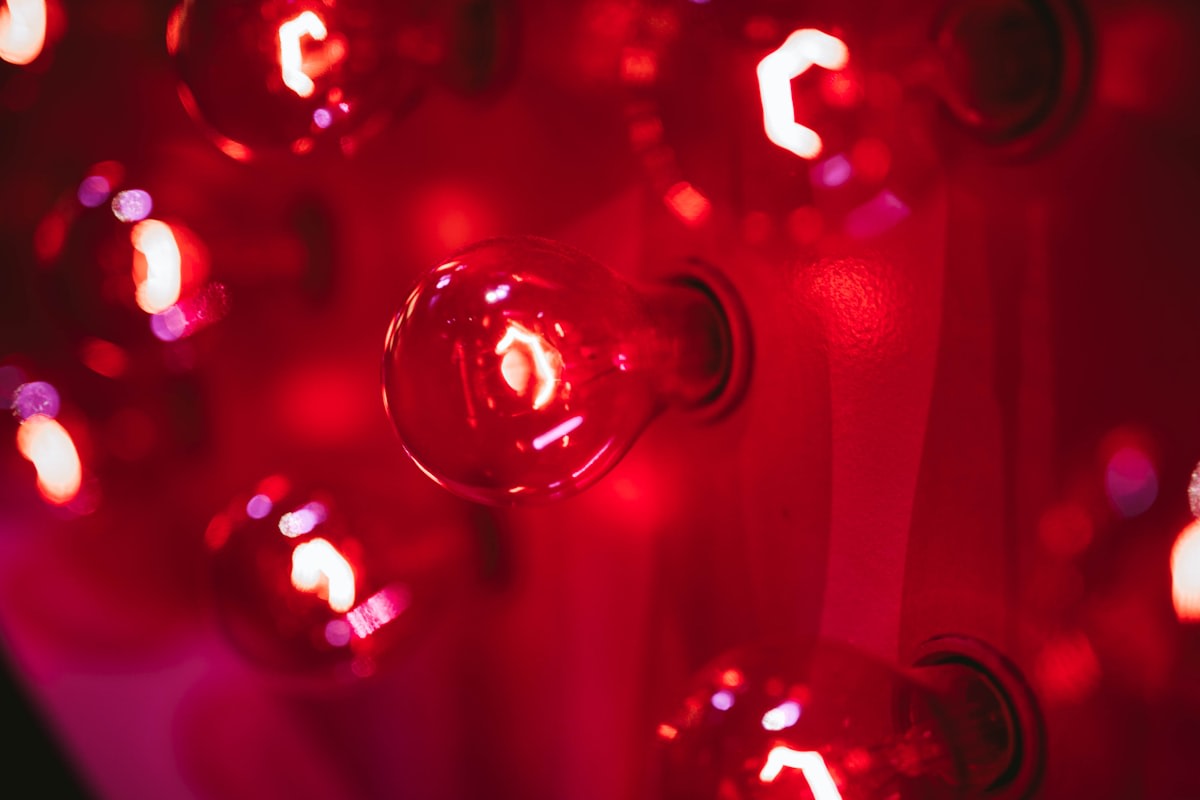
As you transition into the evening, the objective shifts from energy production to nervous system down-regulation. The goal here is to calm the vagal tone and lower heart rate variability (HRV) stress markers (Source: Kaiyan Medical, 2026). By doing so, you effectively 'open the sleep gate,' signaling to the brain that the period of cognitive output has ended and the period of systemic repair has begun. This is not merely about relaxation; it is a clinical approach to resetting the parasympathetic nervous system.
| Timing | Biological Effect | Cognitive Outcome | Ideal Application |
|---|---|---|---|
| Morning | Accelerates ATP Synthesis | Reduced Sleep Inertia | Pre-workout or Office Productivity |
| Evening | Calms Vagal Tone / Lowers HRV Stress | Faster Sleep Onset | Insomnia Protocols / Wind-down |
To see tangible results, the frequency of these interventions is non-negotiable. Clinical protocols suggest 3 to 5 sessions per week. Most users report a noticeable improvement in sleep-onset speed within 10 to 14 days of consistent evening use (Source: Kaiyan Medical, 2026). If you treat this as an occasional luxury rather than a biological requirement, you will fail to shift the underlying rhythm.

Beyond light therapy, we are seeing the rise of 'sleepmaxxing'—the transformation of sleep from a passive necessity into an optimization project governed by metrics and routines (Source: 2 Minute Medicine, 2026). While the term may sound like internet slang, the core principles are sound: reducing nighttime light exposure and creating a strictly controlled sleep environment overlap with established behavioral approaches to sleep. When you treat your bedroom as a recovery lab, you ensure that the cognitive gains made during the day are consolidated during the night.
The Practitioner's Perspective: Beyond the Protocol
On the ground, the debate among practitioners isn't about whether circadian rhythms exist—it's about the most effective way to manipulate them for specific populations. For instance, there is a significant internal debate regarding the efficacy of bright light therapy versus cognitive behavioral therapy (CBT) for insomnia. In specific high-stress contexts, such as women undergoing chemotherapy for breast cancer, evidence suggests that CBT may actually be superior to bright light therapy for managing insomnia (Source: 2 Minute Medicine, 2026). This highlights a critical truth: biological optimization is not one-size-fits-all. What works for a healthy executive might be counterproductive for someone dealing with systemic medical stress.
I have seen too many people obsess over the metrics of 'sleepmaxxing' while ignoring the fundamental biological signals. They buy the most expensive mattresses and trackers but still scroll through blue-light-emitting screens until 2 AM. You cannot out-buy a bad biological signal. The friction always occurs at the intersection of convenience and discipline. True alignment requires the courage to shut down the digital world to allow the biological world to take over.
Common Pitfalls to Avoid
The most frequent mistake I encounter is the 'weekend reset' fallacy. People adhere to a strict sync protocol from Monday to Friday, only to completely abandon it on Saturday and Sunday. This creates a state of 'social jetlag,' where the internal clock is perpetually chasing a moving target. If you shift your wake-up time by more than two hours on the weekend, you effectively erase the progress made during the week, forcing your ATP synthesis and vagal tone markers to restart their alignment process from scratch.
Another pitfall is the over-reliance on supplementation over signaling. While many turn to melatonin or caffeine to force a state of alertness or sleep, these are chemical masks, not biological signals. They do not align the circadian clock; they merely override it. To achieve maximum cognitive output, you must prioritize light and temperature signals—the primary zeitgebers—over chemical interventions.
Fact-Check & Accuracy Note
Key claims regarding the systemic nature of circadian rhythms are sourced from Dr. Kevin Koronowski of the Long School of Medicine. Red light therapy efficacy for ATP and vagal tone is based on protocols from Kaiyan Medical (2026). The distinction between CBT and light therapy for specific insomnia cases is attributed to 2 Minute Medicine (2026). Ongoing debate exists regarding the universality of light therapy across different health demographics.
Editorial Note
This guide is intended for cognitive optimization and does not replace medical advice. Individuals with pre-existing cardiovascular or sleep disorders should consult a physician before implementing high-intensity light therapy protocols.