
We have spent the last decade treating human attention as an infinite resource, an endless well that could sustain a thousand open tabs and a dozen simultaneous notifications. This is a fundamental accounting error. In reality, every time we trade deep, sustained focus for the quick hit of a notification or the shallow engagement of a gamified app, we are taking out a high-interest loan against our future cognitive capacity. I call this cognitive debt. It is not merely a matter of being distracted; it is a systemic bankruptcy of the executive functions that allow us to synthesize complex information and make nuanced decisions.
Why does this matter now? Because the tools we built to enhance our productivity have instead optimized for engagement. We see this shift globally, from the hyper-digitalized classrooms of East Asia to the corporate hubs of North America and Europe. The systemic shift is clear: we have decoupled the act of 'interacting' with information from the act of 'processing' it. When the metric of success becomes the time spent on a platform rather than the depth of the insight gained, the brain stops investing in the expensive, slow processes required for deep thought.
The Engagement Trap: When Interaction Masks Stagnation
The education sector provides the most glaring example of this cognitive bankruptcy. For years, the industry has chased 'engagement' as the primary KPI for educational technology. If students are using the app and enjoying the interface, the assumption was that learning was happening. This is a dangerous fallacy. A new report from the American Psychological Association warns that student engagement on ed-tech apps should not be equated with learning (Source: Education Week, 2026). We are essentially confusing the pleasure of the tool with the progress of the mind.
"The choice that we’re making is whether a particular learning experience is better with that technology and what students give up when that technology is used. It’s really easy to just say we’re going to put a ban on something, but to me, that is almost usurping the more important questions: What is this technology doing?"— Nicole Barnes, Executive Lead Psychologist for Education at the American Psychological Association
This highlights a contrarian truth: banning technology is a lazy solution that avoids the harder work of cognitive architecture. The real question isn't whether a tablet belongs in a classroom, but what neural pathways are being bypassed when a student uses a shortcut instead of struggling through a complex problem. When we remove the friction from learning, we remove the very mechanism that builds cognitive strength. Struggle is the interest payment on the loan of knowledge; if you don't pay it, you don't own the asset.
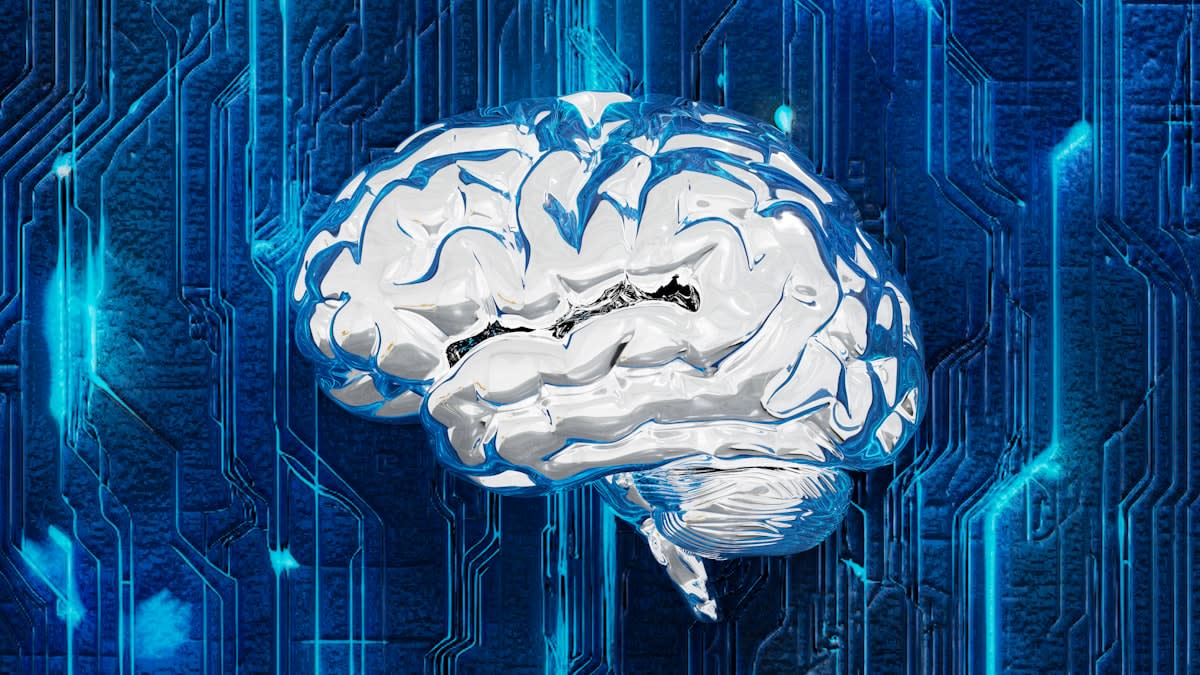
In the rooms where we design these cognitive frameworks, the friction isn't about whether iPads belong in classrooms—that's a solved, albeit boring, debate. The real war is over the definition of engagement. We see practitioners arguing over whether a student's high time-on-app metric is a sign of mastery or a symptom of cognitive friction. The industry is currently obsessed with gamification, but the veterans know that a dopamine loop is not a learning loop. The debate is shifting from 'how do we get them to use it' to 'what is the cognitive cost of this specific interaction'?
The Biological Cost of Hyper-Connectivity
The debt isn't just metaphorical; it's biological. Frequent media multitasking encourages a rapid shifting of attention rather than a deep focus on a single activity, which increases cognitive demands and makes it harder to retain information (Source: ANSI Blog, 2026). For developing brains, the stakes are even higher. Excessive screen use and multitasking are linked to poorer executive functioning and academic performance because they interfere with critical processes like myelination and neural pathway formation (Source: ANSI Blog, 2026). We are effectively rewriting the hardware of the next generation to be optimized for scanning, not thinking.
| Cognitive State | Primary Driver | Neural Outcome | Long-term Value |
|---|---|---|---|
| Surface Engagement | Dopamine/Novelty | Rapid Attention Shifting | Low (Transient Knowledge) |
| Deep Processing | Effort/Curiosity | Myelination/Strong Pathways | High (Synthesized Wisdom) |
| Cognitive Debt | Convenience/Speed | Executive Function Erosion | Negative (Mental Fatigue) |
To understand the extreme end of cognitive impairment, we can look at the intersection of physical trauma and cognitive assessment. A Boston University study recently revealed a disturbing gap in how we measure brain health, finding that NFL players with advanced CTE often did not qualify for compensation because they performed better on league testing than their posthumous brain pathology suggested (Source: USA Today, 2026). This study, involving 33 former players, proves that our current metrics for cognitive impairment are often too blunt to catch the nuance of actual decay (Source: USA Today, 2026). If we cannot even accurately measure the bankruptcy of a brain with advanced CTE, how can we hope to measure the subtle, slow-motion erosion of executive function in a population addicted to multitasking?
This suggests a systemic blind spot. We rely on standardized assessments that measure a snapshot of performance, rather than the resilience and flexibility of the mind. Whether it is a retired athlete or a corporate executive, the inability to switch tasks efficiently or manage errors is the first sign that the cognitive reserves are depleted.
Paying Off the Debt: The Path to Resilience
If we are bankrupt, how do we restructure the debt? The answer lies in targeting executive function—the brain's management system. Interestingly, the recovery isn't found in more 'brain training' apps, which often fall into the same engagement trap, but in physical intervention. Research indicates that aerobic exercise can significantly improve executive functions, specifically task-switching speed and error management (Source: MedicalXpress, 2026).
In a study of 93 insufficiently active women aged 20–67, those who engaged in aerobic exercise showed measurable cognitive gains within three months, with benefits strengthening through a six-month period (Source: MedicalXpress, 2026). Notably, these gains were most pronounced in postmenopausal participants, suggesting that cognitive resilience can be rebuilt even when biological headwinds are strong. However, there is a critical caveat: while executive function improved, memory and processing speed did not show the same gains (Source: MedicalXpress, 2026).

This distinction is vital. We cannot simply 'speed up' a bankrupt brain; we must instead improve its ability to organize, plan, and switch between tasks. The fact that 8 in 10 women in the study completed three months of the program, and 7 in 10 completed the full six months, suggests that the perceived benefit—feeling sharper and more flexible in daily activities—is a powerful motivator (Source: MedicalXpress, 2026). We are seeing a shift toward a holistic model of cognitive health where the body is the primary tool for repairing the mind.
The opportunity here is to stop viewing cognitive decline as an inevitable slide and start seeing it as a manageable balance sheet. By intentionally introducing friction—through deep work, physical exercise, and the rejection of shallow engagement—we can begin to pay down our cognitive debt. The goal isn't to return to a pre-digital era, but to develop a sophisticated relationship with our tools where we dictate the terms of engagement.
Editorial Note
The current debate in neuropsychology is shifting away from 'screen time' as a raw number and toward 'cognitive load' and 'neural plasticity.' The focus is no longer on how many hours we spend online, but on the quality of the neural pathways being reinforced during that time.
Fact-Check & Accuracy Note
Key claims regarding ed-tech engagement are sourced from the American Psychological Association (2026). Data on CTE and cognitive testing is attributed to the Boston University study (2026). Findings on aerobic exercise and executive function are sourced from research cited by MedicalXpress (2026). The links between multitasking and neural development are attributed to the ANSI Blog (2026). There remains an ongoing debate regarding the precise threshold at which digital multitasking becomes permanently detrimental to neural pathway formation.