
The Architecture of the Invisible Cage
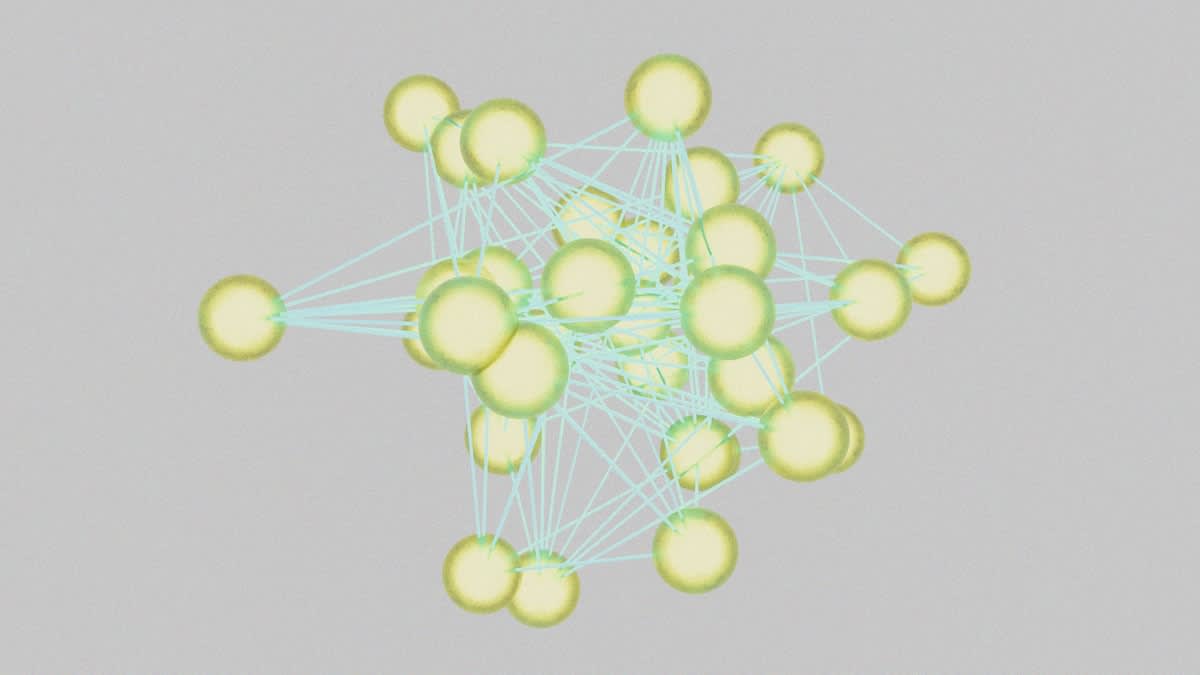
Your digital environment is not a window to the world; it is a mirror. For the last decade, the primary goal of every major social platform has been engagement, and the most efficient path to engagement is confirmation. By feeding you content that validates your existing biases, algorithms create a frictionless psychological experience. This is the 'Filter Bubble,' a term coined to describe the personal ecosystem of information that isolates us from opposing views (Source: Eli Pariser, 2011). When you stop encountering friction, you stop thinking. You begin to mistake the consensus of your feed for the consensus of reality.
Why does this happen? It is a marriage of machine learning and primal human psychology. We are evolutionarily wired for tribalism and confirmation bias—the tendency to search for, interpret, and recall information in a way that confirms one's prior beliefs (Source: Psychology Today, 2023). The algorithm simply automates this instinct. In my years of implementing cognitive frameworks for executives and analysts, I have seen the same pattern: the more 'accurate' the algorithm becomes at predicting your interests, the narrower your intellectual horizon shrinks. You aren't being lied to; you are being curated into a state of cognitive fragility.
"The danger of the filter bubble is that it doesn't just hide the other side; it makes the other side seem nonexistent or delusional, fundamentally altering our perception of social truth."— Eli Pariser, Author and Tech Critic
Breaking this loop requires more than just 'following people you disagree with.' That often leads to 'hate-following,' which actually reinforces the echo chamber by framing the 'other' as a caricature to be mocked. True cognitive diversification is a disciplined protocol. It is about diversifying the structure of your information intake, not just the labels of the people you follow. It requires an intentional injection of cognitive friction back into your daily routine.
Prerequisites: Preparing Your Mind for Friction
Before you change your settings, you must change your expectations. Most people fail at diversification because they expect to feel 'enlightened.' In reality, the first stage of breaking an echo chamber is discomfort. You will encounter cognitive dissonance—the mental stress experienced by a person who holds two or more contradictory beliefs simultaneously (Source: Leon Festinger, 1957). If you feel a surge of irritation or a desire to immediately debunk a source, you have found a boundary of your bubble. That irritation is the signal that growth is possible.
- A 'Burner' Digital Identity: A separate browser profile or account with zero history to see 'neutral' search results.
- RSS Feed Aggregator: Tools like Feedly or Inoreader to bypass algorithmic curation entirely.
- A Diversification Log: A simple notebook to track the sources you consume and identify recurring themes.
- VPN Access: To bypass regional content curation and see how news is framed in different geographies.
The goal here is to move from a passive consumer to an active curator. Most users treat their feed as a stream they are floating in; a master practitioner treats it as a laboratory. You are no longer looking for 'the truth' in a single post, but rather observing how different ideological lenses interpret the same set of facts.
The Protocol: Step-by-Step Implementation
- The Information Audit: Spend one week logging every source you encounter. Categorize them by ideological lean and medium. You will likely find that 80% of your information comes from 20% of your sources, all sharing a similar worldview.
- Mapping the Blind Spots: Identify a topic you feel strongly about. Actively search for the most intelligent, well-reasoned argument against your position. Do not look for 'crazy' versions of the opposing view; look for the 'steel-man' version.
- Implementing the 'Rule of Three': For every major news event, commit to reading three perspectives: one from a source you trust, one from a source you distrust, and one from a source in a different geographic region (e.g., if you are in the Americas, read a source from Southeast Asia or the EU).
- The Algorithmic Reset: Periodically clear your cookies, reset your ad preferences, and use 'Incognito' mode for research to strip away the personalization layer that biases your search results.
- The Synthesis Phase: Once a month, write a brief summary of a complex issue from the perspective of someone you disagree with. If you cannot make a compelling case for their side, you haven't diversified enough.
One of the most powerful tools in this protocol is 'Steel-manning.' Unlike straw-manning, where you attack the weakest version of an argument, steel-manning requires you to build the strongest possible version of your opponent's argument before you attempt to critique it. When I worked with intelligence analysts, this was a mandatory exercise. If you can't argue the other side better than they can, you don't actually understand the issue; you only understand your own reaction to it.
On the ground, this looks like a constant battle against the 'path of least resistance.' In professional circles, there is a fierce debate about the 'Backfire Effect'—the idea that exposing people to opposing views actually makes them dig in their heels further (Source: Stanford University, 2017). However, the consensus among high-level practitioners is that this only happens when the exposure is adversarial. When the exposure is systematic and curiosity-driven, it leads to cognitive flexibility.
Sustaining Intellectual Autonomy
Diversification is not a one-time event; it is a hygiene practice. The algorithm is always working to pull you back into the loop. To resist, you must create 'Cognitive Friction Rituals.' This might mean spending one hour a week reading long-form essays from a decade ago to break the 'recency bias' of the news cycle, or engaging in deep-dive discussions with people whose life experiences are fundamentally different from your own.
| Feature | Passive Consumption | Active Diversification |
|---|---|---|
| Source Selection | Algorithmic Recommendation | Intentional Curation |
| Emotional Response | Validation/Comfort | Tension/Curiosity |
| Goal | Efficiency/Confirmation | Accuracy/Nuance |
| Outcome | Reinforced Bias | Cognitive Flexibility |

Common Pitfalls: Where Most People Fail
The most common mistake I see is the 'Illusion of Balance.' This occurs when a person reads two opposing views and assumes the truth lies exactly in the middle. This is a fallacy. Sometimes, one side is simply wrong. Diversification is not about finding a middle ground; it is about ensuring you have all the available data to make an informed judgment. Do not sacrifice accuracy for the sake of perceived neutrality.
Another trap is 'Outrage Consumption.' Many believe they are diversifying because they spend hours reading the 'insane' takes of the opposing political camp. This is not diversification; it is a form of intellectual slumming. It reinforces your own superiority and strengthens your bubble by proving to you that 'the other side is crazy.' To truly diversify, you must seek out the most sophisticated, intellectual versions of the opposing view, not the loudest or most extreme.
The Practitioner's Mindset
Remember: The goal is not to lose your convictions, but to ensure your convictions are based on a complete map of the landscape, not a curated snapshot provided by a profit-driven algorithm.
Fact-Check & Accuracy Note
Key claims regarding the 'Filter Bubble' and 'Confirmation Bias' are sourced from the works of Eli Pariser (2011) and established psychological frameworks (Festinger, 1957). The 'Backfire Effect' mentioned is a subject of ongoing academic debate, with recent studies from institutions like Stanford suggesting its prevalence may be lower than previously thought depending on the delivery method of the information.