
For a century, the eight-hour workday stood as the undisputed gold standard of professional endurance. We treated focus as a linear resource, assuming that if you sat in a chair for eight hours, you produced eight hours of value. That illusion has finally shattered. We are now witnessing the era of cognitive fragmentation, where the rapid integration of generative AI and the hyper-acceleration of digital infrastructure have rendered the concept of the 'deep focus block' an industrial relic. The shift isn't gradual; it is a systemic collapse of the traditional attention span, forcing a global pivot toward work redesign and cognitive recovery.
Twelve months ago, the conversation around AI was centered on efficiency—how many hours a tool could save a worker. Today, the dialogue has shifted to the erosion of the cognitive architecture itself. In educational settings, the impact is already visceral. Teachers are reporting a decline in students' persistive and creative abilities, as the temptation to surrender thinking to bots creates a gap in deep processing. The old strategy of prohibition—the 'just say no' approach—has failed spectacularly, mirroring the failed drug prevention campaigns of previous decades (Source: Education Week, 2026).
"Policing AI use is impossible: In-class writing assessments privilege quick thinking over deep thinking, and no take-home assignment, however creative or personal, is fully AI-proof."— Teacher and AI Literacy Advocate, Education Week
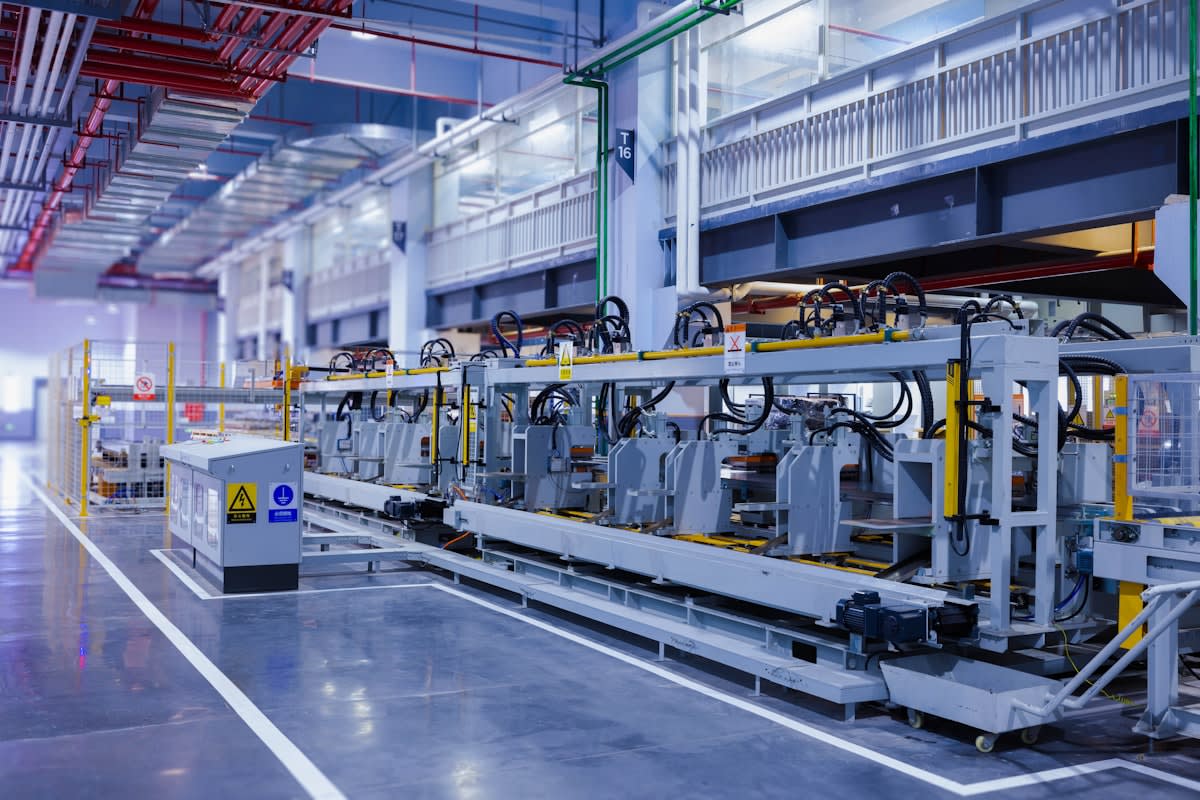
This fragmentation isn't limited to the classroom; it has migrated into the highest levels of industrial productivity. In India, the manufacturing sector is realizing that simply automating existing processes is a dead end. Future productivity gains now depend entirely on how companies redesign work and reshape their organizational structures to deploy talent more fluidly (Source: India's News.Net, 2026). The focus has shifted from 'how long' a worker is on the line to 'how' value flows across the organization, emphasizing decision rights and governance over raw hours clocked.
On the ground, this transition is creating intense friction between legacy management and the new cognitive reality. I have spoken with operations leads who are still trying to enforce 'quiet hours' or 'deep work Wednesdays,' only to find their teams are fundamentally unable to sustain that level of focus. The debate in the hallways of global firms isn't about whether focus is declining—it is about whether we should even try to reclaim the 8-hour block or simply build a new system that accepts fragmentation as the baseline. The friction lies in the gap between a KPI system built for the 1950s and a brain wired for 2026.
The physical world is racing to keep up with this cognitive shift, though the cost is mounting. The massive demand for memory chips to support the AI data centers that fuel this fragmented workflow is driving up prices for everything from laptops to automobiles (Source: Consumer Reports, 2026). We are essentially paying a hardware premium to support a software-driven fragmentation of our attention. This isn't just a tech trend; it is a macroeconomic pressure point.
| Metric | Traditional Model (Pre-2025) | Fragmented Model (2026+) |
|---|---|---|
| Primary Productivity Unit | The 8-Hour Block | High-Intensity Sprints |
| Cognitive Requirement | Linear Persistence | AI-Augmented Literacy |
| Management Focus | Time-on-Task | Work Redesign & Value Flow |
| Infrastructure Driver | Local Computing | Hybrid Cloud/Massive RAM |
This acceleration is putting unprecedented pressure on global infrastructure. In Australia, the surge in data center construction is so aggressive that it is actively draining the construction workforce, creating shortages of electricians and communications technicians that are delaying housing projects (Source: Infrastructure Magazine, 2026). We are literally diverting the people who build our homes to build the servers that facilitate our cognitive fragmentation.
If the traditional focus block is dead, what replaces it? The answer lies in structured cognitive recovery. We are seeing a rise in lifestyle interventions that treat brain health as a performance metric rather than a medical necessity. In Latin America, research has shown that combining exercise, healthy eating, cognitive training, and social engagement can improve cognition by 55% more than basic health advice alone (Source: Science Daily, 2026).
"The results demonstrate for the first time in Latin America that culturally adapted lifestyle interventions can be successfully implemented across diverse countries and communities, and deliver cognitive benefits for populations that are often underrepresented in clinical research."— Lucia Crivelli, Ph.D., Lead Author at Fleni Neurological Institute
This suggests a new professional cadence: intense, AI-integrated bursts of fragmented work followed by aggressive, lifestyle-based cognitive recovery. The 'lunch break' is being replaced by 'cognitive resets.' Organizations that continue to demand linear 8-hour focus will likely see a spike in burnout and a drop in actual output, as they are fighting against the biological and technological currents of the era.

The final piece of this puzzle is AI literacy. As the Education Week report highlights, we cannot design our way around AI; we must integrate it into the cognitive process (Source: Education Week, 2026). This means moving away from 'using AI' as a tool and toward 'thinking with AI' as a hybrid capability. The competitive advantage no longer belongs to the person who can focus the longest, but to the person who can navigate the fragmented landscape with the most precision.
Even the way we handle data is mirroring this fragmentation. School districts are moving toward hybrid cloud environments, balancing on-premises security with public cloud flexibility to manage the massive influx of AI-driven data (Source: EdTech Magazine, 2026). This architectural split—part local, part cloud—is a perfect metaphor for the modern mind: part deep-seated biological processing, part externalized digital intelligence.
Fact-Check & Accuracy Note
Key claims regarding the 55% improvement in cognition are sourced from the LatAm-FINGERS study reported by Science Daily (2026). Data on AI's impact on student cognitive persistence is sourced from Education Week (2026), and manufacturing productivity shifts are based on the KPMG report via India's News.Net (2026). Debate continues regarding the long-term neurological effects of AI-dependency on deep thinking.