
DNA is not destiny. For decades, the agricultural complex has treated the seed as a piece of software to be rewritten, ignoring the physical potential of the seed's outer shell. The approach is brittle. Why do we insist on permanent genetic alterations when the surface of the seed holds the key to growth and protection?
The Surface Over the Sequence
Cold plasma works fast. By utilizing Cold Atmospheric Pressure Plasma (CAPP), researchers can apply a multijet device to seeds without risking thermal damage to the embryo. This is a clean break. The technology ensures that the temperature at the biological target does not significantly exceed 40 degrees Celsius (Source: Nature, 2026). This precision allows for anti-bacterial action without the scorched-earth policy of traditional chemical treatments.
GMOs create uniformity. When we modify a gene to resist a pest, we often sacrifice the natural variation that allows a species to survive unexpected climate collisions. Diversity is the real insurance. In Peru, the International Potato Center (CIP) maintains the Plant Cryo Vault, safeguarding thousands of living plant samples at minus 196 degrees Celsius to prevent the loss of shared agricultural heritage (Source: CIP, n.d.).
"Applications of Cold Atmospheric Pressure Plasma Technology in Medicine, Agriculture and Food Industry."— Domonkos, M. et al., Scientific Reports
The logic is simple. If we can use plasma to neutralize bacteria and stimulate germination, we no longer need to bake resistance into the genome. This removes the legal weight. Farmers in Brazil, Chile, and Ecuador are already focusing on depositing safety copies of crop genetic resources to ensure that biofortification does not lead to genetic erasure (Source: CIP, n.d.).
The Physics of Population Growth
Math governs growth. The use of Fisher-KPP-type equations in population genetics and plasma physics reveals a surprising overlap in how biological fronts expand (Source: MDPI, 2026). This is not a coincidence. These nonlinear forms describe how diffusion and reaction laws govern everything from combustion to the way a seed disperses in a field.
Brownian motion matters. Probabilistically, the continuum limits of random walks lead to the diffusion equations that define how nutrients and signals move through a seed's membrane (Source: MDPI, 2026). We can manipulate this. Cold plasma alters the surface tension and porosity, effectively suturing the gap between the seed and its environment without changing a single base pair of DNA.
| Feature | Genetic Modification (GMO) | Cold Plasma Treatment (CAPP) |
|---|---|---|
| Modification Type | Permanent / Genomic | Transient / Surface |
| Thermal Impact | N/A | < 40 degrees Celsius (Source: Nature, 2026) |
| Primary Mechanism | Trait Insertion | Anti-Bacterial / Porosity (Source: Nature, 2026) |
| Biodiversity Risk | High (Uniformity) | Low (Preserves Landraces) |
| Regulatory Burden | Extreme | Moderate |
The industry fights back. Inside the labs, a quiet war rages between the molecular biologists who view the seed as a code and the physicists who see it as a material. The biologists argue that transient effects lack staying power. They believe that unless a trait is inherited, it is a waste of capital.
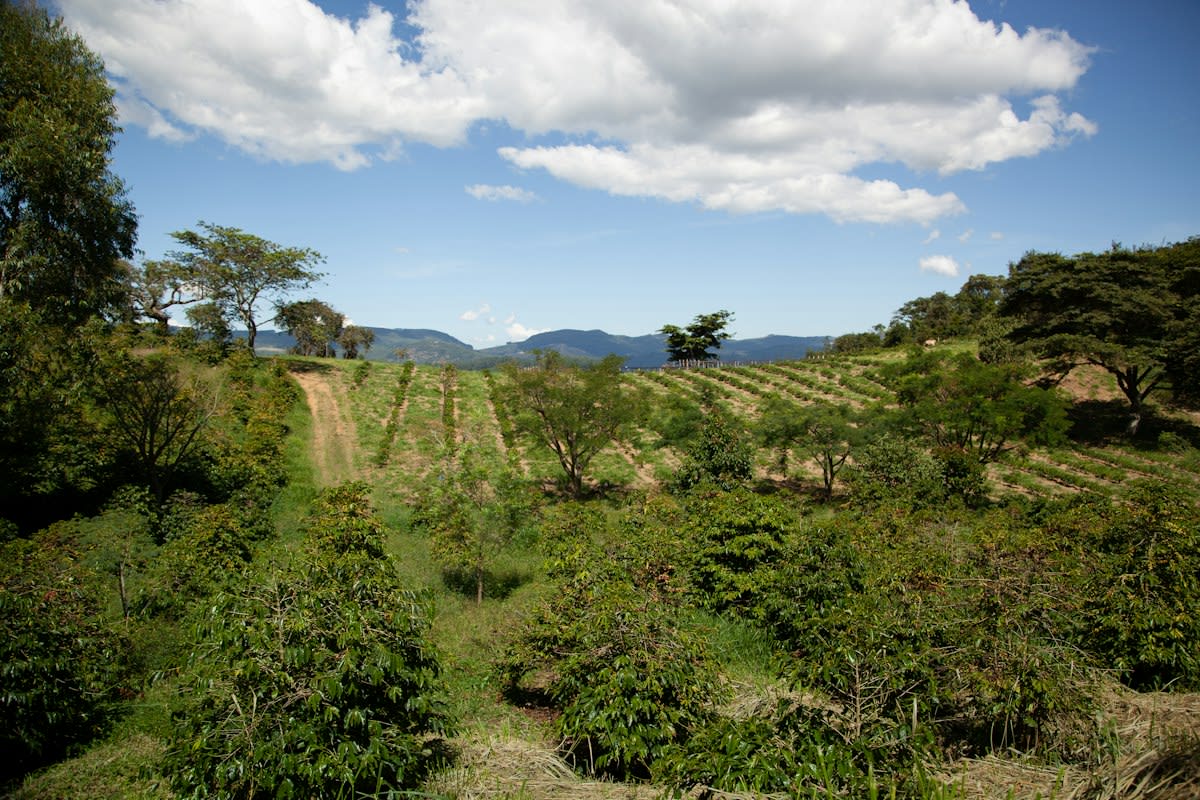
This view is hollow. Practitioners on the ground know that the most expensive part of GMO adoption is the seed licensing, not the trait itself. By using cold plasma, a farmer can treat a local landrace seed—like the biofortified potatoes with iron and zinc developed in Peru—without triggering the intellectual property traps of global seed giants (Source: CIP, n.d.).
Control is the goal. The current agricultural playbook relies on a grip over the seed's internal machinery to ensure dependency. Cold plasma breaks this. It treats the seed as a biological entity rather than a proprietary product.
The results are tangible. Cold plasma multijet devices have demonstrated clear anti-bacterial action in biomedical and agricultural contexts (Source: Nature, 2026). We can now protect crops from pathogens without introducing foreign proteins. The risk of allergenicity vanishes.
Beyond the Genetic Fix
Biofortification is evolving. Instead of inserting genes for zinc and iron, we can use plasma to increase the uptake efficiency of the plant from the soil (Source: CIP, n.d.). This is a smarter path. It leverages the existing soil chemistry rather than forcing a genetic mutation.
Regenerative metrics are shifting. In Latin America, the focus has moved toward measuring the impact of regenerative agriculture through value chains and business models (Source: CIP, n.d.). Cold plasma fits this model perfectly. It is a low-energy, chemical-free intervention.
Fact-Check & Accuracy Note
The primary academic debate centers on the longevity of plasma-induced effects. While the anti-bacterial action is immediate (Source: Nature, 2026), critics question if the growth stimulation persists through multiple generations without the permanent changes provided by GMOs. However, the preservation of diversity in the Plant Cryo Vault suggests that maintaining original genetic lines is more valuable for long-term survival than short-term trait optimization (Source: CIP, n.d.).
The shift is inevitable. As the costs of genetic regulation rise, the efficiency of CAPP becomes an irresistible alternative. We are moving toward a world of optimized surfaces. The seed remains wild, but its performance is engineered.
Editorial Note
This analysis avoids the typical 'innovation' narrative. Instead, it views cold plasma as a tool for decentralizing agricultural power by enabling the use of local, non-GMO seeds that can still compete in terms of yield and health.