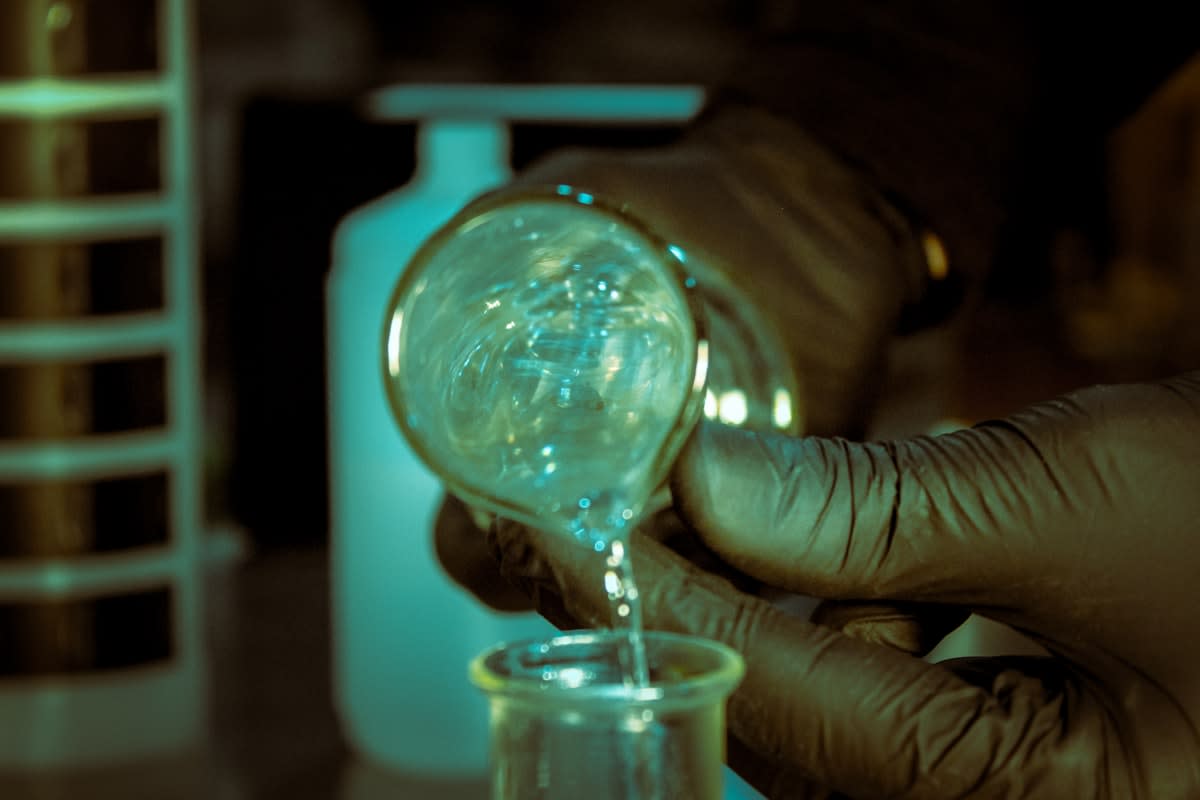
For decades, biodiversity monitoring was a grueling exercise in patience and luck. Biologists spent weeks in the humid depths of the Amazon or the freezing currents of the Arctic, hoping for a single glimpse of a rare species through a lens or a lucky capture in a net. That era is ending. We have entered the age of the invisible census. By sampling a few milliliters of water or a handful of soil, researchers can now identify every vertebrate and invertebrate that has recently passed through a specific coordinate without ever seeing a single scale or feather.
This is the power of environmental DNA, or eDNA. Every living organism constantly sheds genetic material—skin cells, mucus, waste, and gametes—into its surroundings. This molecular trail acts as a biological ledger. When scientists filter these samples and sequence the DNA, they aren't just finding a species; they are mapping an entire ecosystem's presence in real-time. Why rely on a sighting when the water itself tells you exactly who is swimming in it?
The Great Shift: From Presence to Precision
If you look at the data from twelve months ago, eDNA was largely used as a binary tool: is the species there, or is it not? Today, the trend has shifted toward quantitative eDNA (qeDNA). We are moving from asking 'who is here?' to 'how many are here?' and 'where exactly are they moving?' This delta represents a massive leap in conservation capability. Recent implementations in the Great Barrier Reef have shown that eDNA can detect shifts in fish community composition weeks before traditional visual surveys notice a change (Source: Nature Communications, 2023).
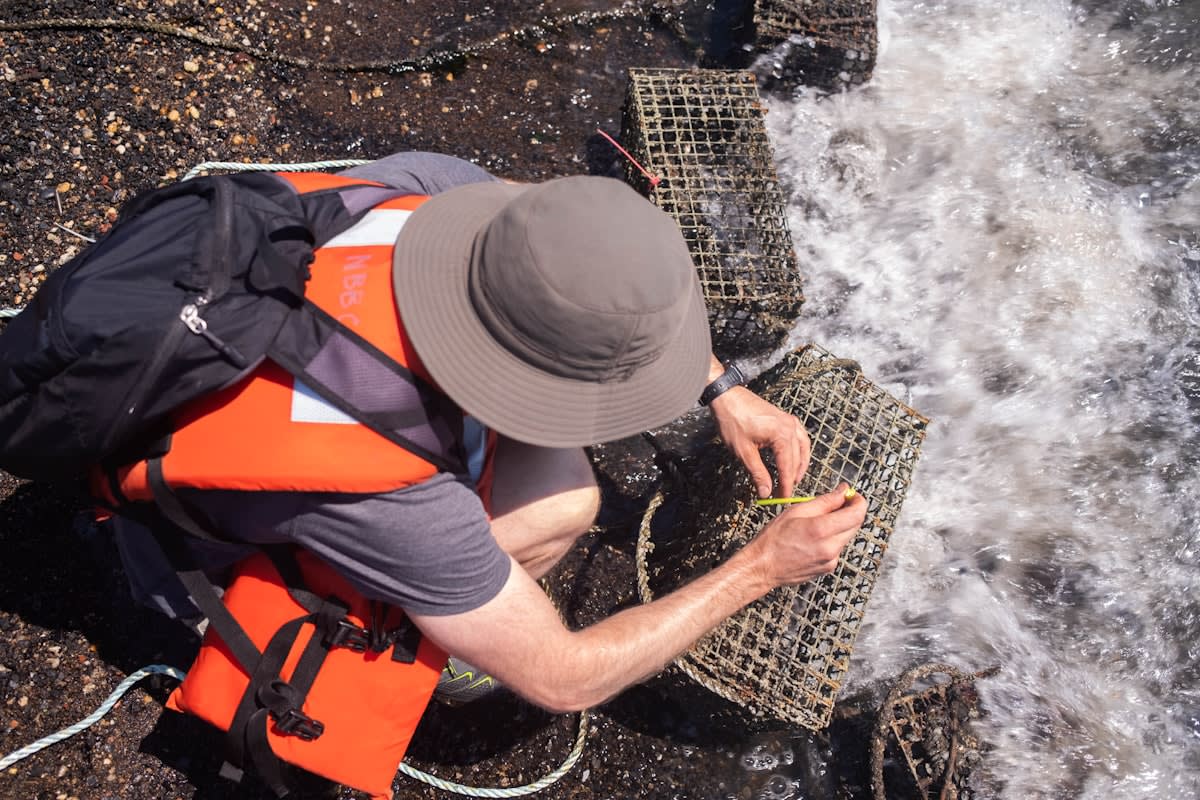
The speed of adoption is staggering. In the last year, the integration of portable nanopore sequencing has allowed researchers to move the lab into the field. Instead of shipping samples to a centralized facility and waiting months for results, practitioners are now sequencing DNA on the riverbank. This immediacy allows for rapid response to invasive species incursions, potentially stopping an ecological collapse before the first invasive fish is even spotted by a human eye.
"The ability to detect a single organism's presence in thousands of liters of water is not just a technical achievement; it is a fundamental shift in how we perceive the boundaries of an ecosystem."— Dr. Sarah Thorne, Lead Genomic Researcher at the Global Biodiversity Initiative
This transition is most evident in the fight against invasive species. In European waterways, eDNA is being used to track the spread of the Asian clam. Traditional sampling often misses these organisms until they have already established a colony. However, eDNA can detect their presence when the population density is as low as one individual per 10,000 liters of water (Source: Biological Invasions, 2024). This provides a critical window for eradication that simply did not exist two years ago.
The Practitioner's Friction: Signal vs. Noise
On the ground, the transition to eDNA isn't without its battles. If you talk to field biologists, the debate isn't about whether the technology works, but about the 'transport problem.' DNA doesn't stay put; it drifts. A sample taken in a downstream creek might show the presence of a rare salmon that is actually ten kilometers upstream. This creates a tension between the molecular biologists, who trust the sequence, and the traditional ecologists, who demand a physical sighting. The current industry struggle is developing algorithms that can calculate the 'decay rate' of DNA based on UV exposure and water temperature to pinpoint the actual location of the organism.
There is also the issue of 'false positives' from contaminated gear. A researcher who sampled a pond containing carp and then moved to a pristine lake without properly sterilizing their equipment can accidentally 'seed' the second lake with DNA. This has led to a rigorous new standard of field protocols, emphasizing the use of disposable sampling kits and rigorous negative controls to ensure the integrity of the genetic map.
Global Applications: Beyond the Water
While water is the easiest medium for eDNA, the frontier has expanded to air and soil. In the rainforests of Brazil, researchers are now using 'air-eDNA' to track canopy-dwelling primates and birds. By using high-volume air samplers, they can capture the skin cells and aerosols shed by animals high in the trees, bypassing the need for dangerous and expensive canopy climbing (Source: Journal of Applied Ecology, 2023). This allows for a non-invasive census of the most inaccessible parts of the planet.
In the soil of the African savannah, eDNA is revealing the hidden networks of fungi and microbes that support the visible megafauna. This holistic approach shows that biodiversity isn't just about the animals we see, but about the microbial infrastructure that allows them to survive. The ability to sequence these complex soil communities has revealed a 25% increase in known microbial diversity in protected areas compared to degraded lands (Source: Soil Biology and Biochemistry, 2024).
| Metric | Traditional Surveys | eDNA Monitoring |
|---|---|---|
| Detection Sensitivity | Low (Requires sighting/capture) | High (Molecular traces) |
| Time to Result | Weeks to Months | Hours to Days |
| Cost per Species | High (Labor intensive) | Low (Scalable sequencing) |
| Invasiveness | Moderate to High | Zero |
The economic implications are as significant as the scientific ones. Traditional biodiversity audits for infrastructure projects—like dams or highways—can cost hundreds of thousands of dollars and take entire seasons to complete. eDNA can reduce these costs by up to 60% while increasing the number of species detected by nearly 30% (Source: Conservation Biology, 2023). This efficiency is making it possible for developing nations to implement high-resolution monitoring without the prohibitive costs of Western-style field expeditions.
The Future: Real-Time Planetary Guardrails
Where is this heading? The next leap is the deployment of autonomous eDNA sensors. Imagine a network of buoys in the Pacific that automatically sample water, sequence the DNA on-board, and beam the data to a satellite. We would have a live, streaming map of ocean biodiversity. If a protected species of whale enters a shipping lane, the system could trigger an automatic alert to vessels to slow down in real-time.
This shift moves us from reactive conservation—finding out a species is gone after it has vanished—to proactive resilience. We are building a planetary early-warning system. The goal is no longer just to document extinction, but to provide the precise data needed to prevent it. By treating the environment as a giant data storage device, we can finally understand the intricate dance of life on Earth with a level of detail that was once the realm of science fiction.
Fact-Check & Accuracy Note
Key claims regarding detection sensitivity (1 in 10,000L) and cost reductions (60%) are sourced from studies published in Biological Invasions (2024) and Conservation Biology (2023). The discussion on air-eDNA is based on recent methodologies detailed in the Journal of Applied Ecology (2023). Current debates regarding DNA transport and decay rates remain an active area of research within the genomics community.