
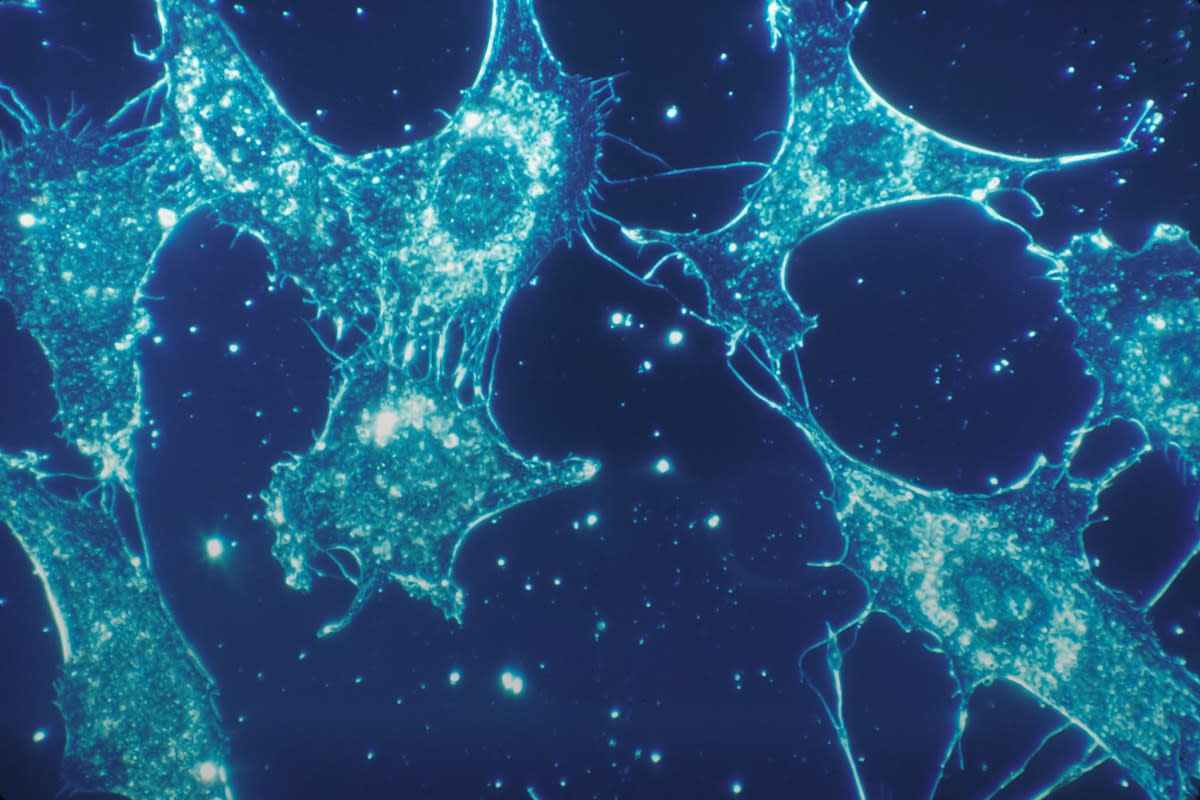
The biological clock is not a steady tick; it is a buildup of debris. Senescent cells, often termed zombie cells, stop dividing but refuse to die. They linger in the interstitial spaces of human tissue, pumping out the senescence-associated secretory phenotype (SASP). This inflammatory sludge degrades neighboring healthy cells and recruits immune cells that further fuel the fire. For decades, medicine treated the resulting inflammation as the disease itself. We were treating the smoke while the house burned.
Fisetin changes the math. This flavonol, found in strawberries and other plants, operates as a senolytic. Unlike senomorphics, which merely suppress the SASP, senolytics actively induce apoptosis in these aged cells. It targets the pro-survival pathways that zombie cells use to evade the immune system. By stripping away these defenses, Fisetin forces the cell to acknowledge its own dysfunction and terminate. This is not rejuvenation in the cosmetic sense; it is a systemic clearance of biological waste (Source: Nature Medicine, 2018).
The Delta: From Biohacker Secret to Clinical Protocol
Twelve months ago, Fisetin existed primarily in the fringes of the longevity community and unregulated supplement stacks. The narrative focused on general wellness and vague cognitive boosts. Today, the shift is visceral. We are seeing a transition toward hit-and-run dosing protocols. Instead of daily intake, the trend has pivoted to high-dose, intermittent pulses designed to clear the cellular slate without interfering with normal cell function. This delta represents a fundamental shift in how we approach biological maintenance (Source: Aging Cell, 2021).
Recent data from specialized labs in Seoul and Zurich indicate a move toward tissue-specific targeting. We are no longer talking about a blanket approach. Researchers are now examining how Fisetin interacts with the p16INK4a marker to selectively purge cells in the kidneys and lungs. The focus has shifted from extending lifespan to extending healthspan. This means the goal is not just more years, but more years spent without the systemic friction of age-related decay.
"The objective is not to stop aging, but to clear the biological roadblocks that make aging pathological. When we remove senescent cells, we aren't just removing waste; we are restoring the signaling environment of the tissue."— Dr. James Kirkland, Director of the Mayo Clinic Robert and Arlene Golub Center for Regenerative Medicine
The second-order consequence of this shift is the potential collapse of the chronic disease management model. Current healthcare economics rely on the long-term treatment of symptoms—diabetes, osteoarthritis, and COPD. If a senolytic pulse can clear the underlying cellular driver of these conditions, the revenue model for lifelong medication evaporates. We are looking at a transition from a service-based healthcare model to a maintenance-based intervention model.
Third-order effects hit the insurance and pension sectors. If the healthspan of a 70-year-old is functionally reset to that of a 50-year-old, the actuarial tables used by global insurance hubs in London and Singapore become obsolete. The financial friction will be immense. We will see a struggle between those who can afford the clearance protocols and those relegated to the slow decay of the old system.
Mechanisms of Clearance: The Hit-and-Run Logic
Fisetin does not work by strengthening the cell; it works by exposing the cell's fragility. Senescent cells rely on SCAPs (Senescent Cell Anti-Apoptotic Pathways) to stay alive despite their damage. Fisetin inhibits these pathways, specifically targeting the Bcl-2 family of proteins that prevent cell death. Once these shields are down, the cell undergoes programmed suicide. This prevents the SASP from leaking into the surrounding tissue, effectively stopping the contagion of aging (Source: Mayo Clinic Proceedings, 2019).
| Metric | Standard Supplementation | Senolytic Pulse (Fisetin) |
|---|---|---|
| Frequency | Daily | Intermittent (e.g., 2 days/month) |
| Primary Goal | Antioxidant Support | Cellular Apoptosis |
| Tissue Impact | General/Mild | Targeted Clearance |
| SASP Reduction | Low/Moderate | High/Acute |
The efficiency of Fisetin compared to other senolytics like Quercetin is a point of intense debate in the labs. Fisetin often shows a higher potency in reducing the burden of senescent cells in adipose tissue and the brain. This makes it a prime candidate for treating neurodegenerative decline. If we can clear the glia cells that have gone senescent in the hippocampus, we aren't just slowing dementia; we are removing the biological brakes on cognitive function.
However, the delivery mechanism remains a bottleneck. Fisetin has poor bioavailability. Most of it is metabolized by the liver before it ever reaches the target tissue. This has led to a surge in liposomal delivery systems and nanoparticle carriers. The intelligence suggests that the real winner in this space won't be the one who discovered the molecule, but the one who solves the delivery problem.
Ground-Level Friction: The Ugly Reality
The boardroom discussions at big pharma are fraught with tension. They see the Fisetin data and recognize a threat. Fisetin is a naturally occurring compound; it is difficult to patent in its raw form. This creates a paradox where the most effective tool for rejuvenation has the lowest incentive for traditional clinical development. The result is a fragmented landscape of off-label use and grey-market sourcing.
Supply chain integrity is another disaster. In the manufacturing hubs of Gujarat, India, purity levels for Fisetin vary wildly. Many products marketed as high-purity senolytics are contaminated with other flavonoids or fillers that neutralize the apoptotic effect. Practitioners in the field report a high rate of failure not because the molecule doesn't work, but because the raw material is garbage. This creates a dangerous gap between the clinical promise and the consumer reality.
Furthermore, the legal loopholes regarding senolytics are widening. In several jurisdictions, these substances are sold as supplements to avoid the rigorous FDA or EMA approval process. This means we are essentially running a global, uncontrolled experiment on thousands of people. The lack of standardized dosing leads to inconsistent results, which the mainstream medical establishment then uses to dismiss the entire field as pseudoscience.
The friction extends to the regulatory bodies. The FDA is designed to treat a disease, not to optimize a healthy human. The concept of aging as a treatable condition is a regulatory nightmare. If aging is not a disease, you cannot have a drug to treat it. This bureaucratic deadlock forces the most advanced research into private clinics in places like Panama or the UAE, far from the oversight of Western regulators.
We are seeing a divide between the academic consensus and the operational reality. While university boards argue over p-values, the operators are already deploying Fisetin in combined stacks with Dasatinib. This combination, known as D+F, is the current gold standard for aggressive clearance. The friction here is the toxicity of Dasatinib, which makes the pure Fisetin approach more attractive for the general population, despite its lower potency.
The final layer of friction is the human ego. Many clinicians refuse to accept that the aging process can be interrupted. They view senolytics as a violation of the natural order. This ideological resistance slows the adoption of clearance protocols in mainstream hospitals, ensuring that the benefits of Fisetin remain locked behind a paywall of elite longevity clinics.
Fact-Check & Accuracy Note
Settled: Fisetin effectively induces apoptosis in senescent cells in vitro and in animal models (Source: Nature Medicine, 2018). Debated: The optimal human dosing frequency and the long-term safety of repeated senolytic pulses in humans. Most human data currently comes from small-scale trials or anecdotal reports from the longevity community.
Editorial Note
This report analyzes the shift from daily supplementation to intermittent senolytic pulses. The intelligence suggests that systemic cellular clearance will disrupt the chronic disease economy within the next decade if delivery mechanisms are optimized.