Most professionals treat burnout as a sudden crash, a wall they hit after months of ignoring the warning signs. They wait for the insomnia, the cognitive fog, or the total emotional exhaustion before they admit something is wrong. This is a reactive strategy, and in a high-stakes global economy, it is a losing one. The reality is that your body begins signaling a breakdown long before your conscious mind acknowledges the stress. The key lies in Heart Rate Variability (HRV), the naturally occurring variation in time intervals between heartbeats. It is not a measure of heart health in the clinical sense, but a window into your autonomic nervous system (ANS).
Why does a variation in milliseconds matter? Because your heart does not beat like a metronome. A healthy, resilient heart is actually erratic. When you are recovered and adaptable, the intervals between beats vary significantly, reflecting a balanced tug-of-war between the sympathetic nervous system (fight or flight) and the parasympathetic nervous system (rest and digest). When burnout looms, this variability collapses. Your system becomes locked in a sympathetic state, your heart beats with robotic precision, and your capacity to handle additional stress vanishes. By tracking this metric, you can see the burnout coming weeks before it manifests as a crisis.
The Critical Distinction
Do not confuse Heart Rate (HR) with Heart Rate Variability (HRV). HR is the number of beats per minute. HRV is the variation in time between those beats. A low HR can be a sign of fitness, but a low HRV is almost always a sign of stress or fatigue.
Prerequisites: Your Bio-Tracking Toolkit
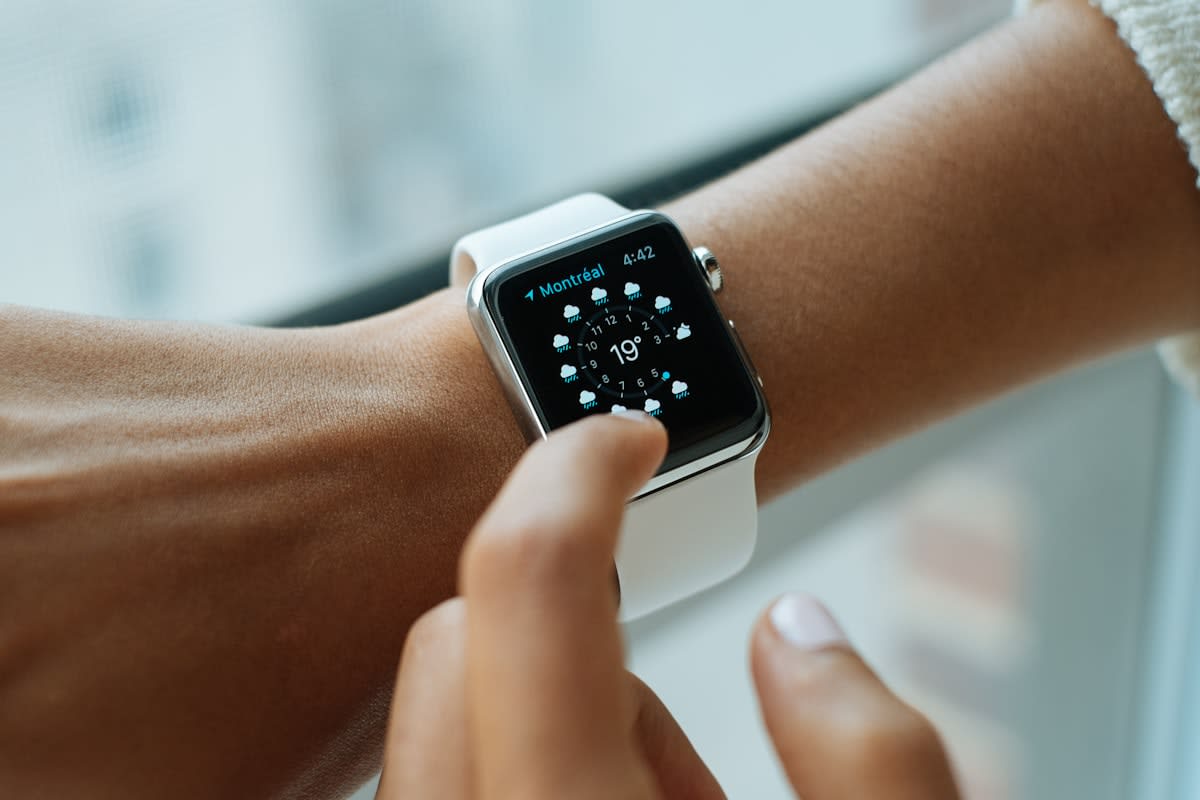
You cannot manage what you do not measure. To implement the HRV Blueprint, you need a consistent way to capture R-R intervals (the time between heartbeats). While high-end medical equipment exists, the current generation of consumer wearables has made this data accessible for the everyday executive or athlete. Whether you are navigating the high-pressure financial districts of Singapore or managing remote teams from Berlin, the hardware requirements remain the same: consistency over precision.
- Wearable Hardware: An Oura Ring, Whoop strap, Garmin watch, or Apple Watch (with updated HRV tracking) for passive, overnight monitoring.
- Precision Hardware: A chest-strap monitor (like the Polar H10) for active, morning-of measurements, which are generally more accurate than wrist-based sensors.
- Analysis Software: Apps such as HRV4Training or Elite HRV to aggregate data and provide trend analysis rather than isolated snapshots.
- A Digital Journal: A simple tool to track subjective markers like sleep quality, mood, and workload to correlate with biometric shifts.
The Implementation Protocol: A Step-by-Step Guide
The biggest mistake beginners make is reacting to a single day's data. HRV is highly individual; your 'low' might be someone else's 'high.' The goal is not to hit a specific number, but to understand your own baseline and recognize deviations from it. Follow this protocol to turn raw numbers into a predictive system for your mental and physical health.
- Establish Your Baseline: For 14 to 21 days, track your HRV every morning upon waking. Do not change your habits during this period. This creates your 'normal' range, allowing you to see what your nervous system looks like when you are functioning at equilibrium.
- Identify Your Trend Line: Stop looking at the daily number and start looking at the 7-day rolling average. A single dip is a fluke; a three-day downward trend is a signal. This trend line filters out the noise of a bad night's sleep or a single heavy meal.
- Correlate Subjective and Objective Data: Every morning, rate your perceived stress and energy from 1-10. When your HRV drops while your perceived stress remains low, you are in the 'Danger Zone'—your body is stressed even if your mind is convinced you are fine.
- Set Your Action Thresholds: Define what a significant drop looks like for you. For most, a 20% drop below the 7-day baseline is the trigger for a 'Pivot Day.'
- Execute the Pivot: When the threshold is hit, aggressively reduce your cognitive and physical load. This means canceling non-essential meetings, skipping the high-intensity workout, and prioritizing an extra hour of sleep.
This system transforms your approach to productivity from a linear climb to a wave-like progression. Instead of pushing through the fatigue—which only accelerates the path to burnout—you lean into the recovery. This is how elite performers in high-stress environments, from surgeons in Tokyo to hedge fund managers in New York, maintain longevity. They don't work harder; they recover smarter.
Decoding the Signal: What Your HRV is Telling You
Interpreting the data requires a nuanced understanding of the body's state. A drop in HRV isn't always a bad thing; sometimes it is a sign of acute adaptation. However, when combined with other markers, it becomes a powerful diagnostic tool. The table below outlines how to read these signals in a professional context.
| HRV Trend | Subjective Feel | System State | Recommended Action |
|---|---|---|---|
| Stable/High | Energetic | Optimal/Ready | Push for high-impact goals; take on complex projects. |
| Slight Drop | Tired but Focused | Acute Stress | Maintain current pace; prioritize sleep and hydration. |
| Significant Drop | Irritable/Foggy | Overreached | Pivot Day: Reduce load by 50%; eliminate optional stress. |
| Chronic Low | Apathetic/Exhausted | Burnout Phase | Immediate intervention: Full recovery break; medical consult. |
When you see a chronic low trend, you are no longer dealing with simple fatigue. You are dealing with a systemic failure of the parasympathetic nervous system to bring you back to baseline. At this stage, a weekend off won't suffice. You require a fundamental shift in workload and a deliberate focus on vagus nerve stimulation—such as deep diaphragmatic breathing or cold exposure—to force the system back into a state of recovery.

Common Pitfalls in HRV Tracking
Many users abandon HRV tracking because they misinterpret the data or become obsessed with the numbers, creating a new source of stress. To avoid this, you must treat the data as a compass, not a law. The goal is to augment your intuition, not replace it.
- The 'Number Obsession' Trap: Getting anxious because your HRV is low today. Remember: the number is a reflection of your state, not a grade on your performance.
- Ignoring the Context: Forgetting that alcohol, late-night meals, or a flight across time zones will crash your HRV regardless of your burnout level.
- The 'Push Through' Fallacy: Seeing a low HRV and deciding to work harder to 'catch up' on productivity, which effectively pushes the system closer to a total collapse.
- Inconsistent Measurement: Taking readings at different times of the day. HRV is highly volatile; for the data to be useful, you must measure it in the same physiological state every time.
"The most dangerous state for a high-performer is not stress, but the inability to recover from it. HRV gives us the first objective map of that recovery capacity."— Master Practitioner's Note