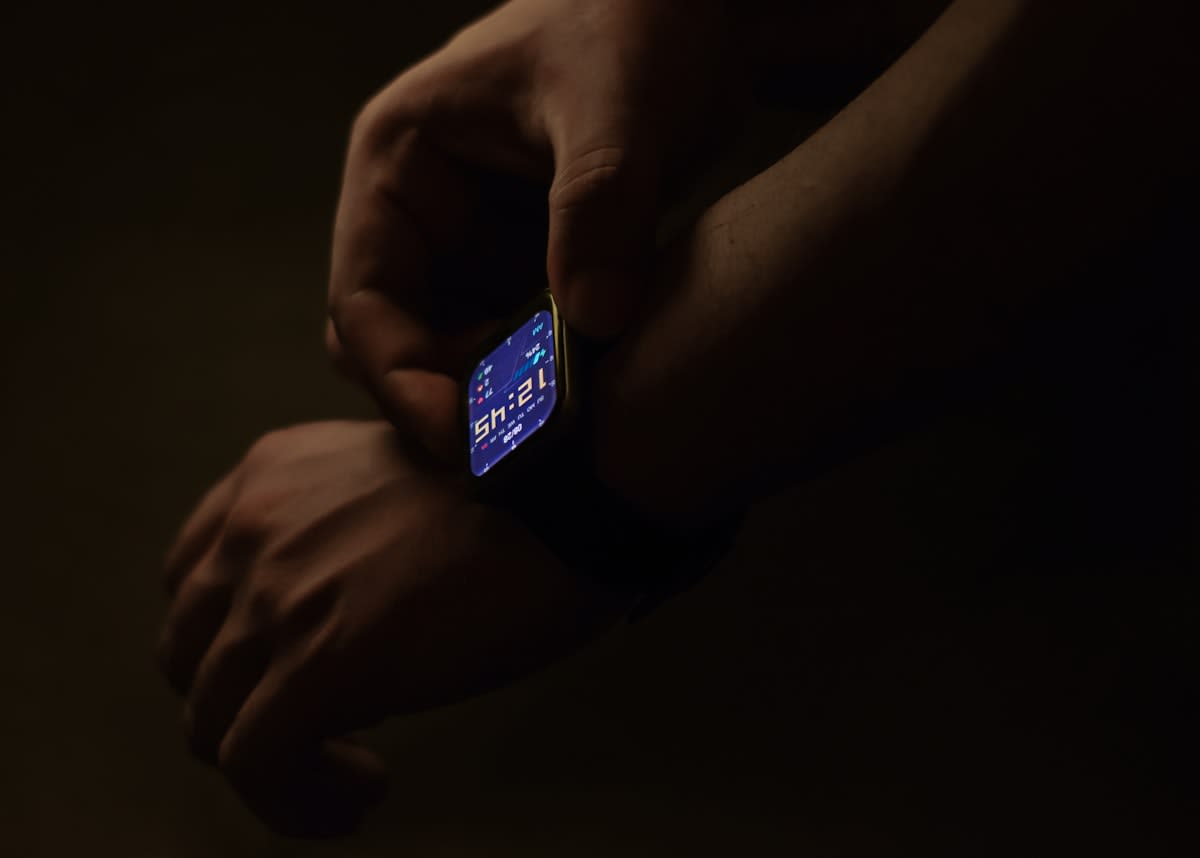
The Biological Early Warning System
Most professionals treat burnout as a psychological event. They wait for the dread of Sunday night or the inability to focus on a simple spreadsheet before admitting they are exhausted. This is a reactive strategy. By the time you feel the mental fog, your physiology has been screaming for help for weeks. The secret lies in Heart Rate Variability (HRV)—not the average beats per minute, but the millisecond fluctuations between those beats. A heart that beats with metronomic precision is actually a sign of a system under extreme stress. A healthy, resilient heart is chaotic; it adapts instantly to the demands of the environment.
Why does this happen? It is a tug-of-war between your sympathetic nervous system (fight or flight) and your parasympathetic nervous system (rest and digest). When you are in a state of high cognitive load—think of a lead developer in Berlin managing a critical server migration or a surgeon in Seoul during a twelve-hour shift—the sympathetic system dominates. If the parasympathetic system never gets a chance to reclaim control, your HRV drops. This decline is the biological precursor to cognitive burnout. If you can track this delta, you can predict a mental crash before it manifests as a performance failure.
The Critical Threshold
The 20% Rule: For most individuals, a drop in HRV of 20% or more below their rolling 7-day average is the primary indicator that the body is failing to recover. This is the 'Red Zone' where cognitive errors increase and emotional regulation plummets.
Prerequisites: Your Toolkit for Precision
You cannot implement this protocol with a basic step-counter. You need hardware capable of measuring R-R intervals (the time between heartbeats) with millisecond accuracy. The goal is to capture data during your most stable physiological state—usually during deep sleep or immediately upon waking. Inconsistency in measurement is the fastest way to produce useless data.
- An HRV-capable wearable (Oura Ring, Whoop, Garmin, or Apple Watch with an HRV app).
- A consistent wake-up window (within 30 minutes of the same time daily).
- A digital log or app to track cognitive load (subjective stress levels 1-10).
- A commitment to a 14-day baseline period before making any lifestyle changes.
The hardware is simply the sensor; the protocol is the intelligence. Whether you are an executive in New York or a researcher in Nairobi, the biology remains the same. However, you must eliminate variables. Alcohol, late-night heavy meals, and extreme temperature shifts in the bedroom can artificially depress your HRV, leading to 'false positives' for burnout. To use this as a predictive tool for cognitive load, you must first stabilize your environmental noise.
The Implementation Protocol
- Establish Your Baseline: Track your morning HRV for 14 consecutive days without changing your routine. Calculate your mean HRV and your standard deviation. This is your biological 'North Star'.
- Map the Cognitive Correlation: For two weeks, log your perceived mental exhaustion every evening. Compare these subjective scores with the following morning's HRV. You will likely see a 24-to-48-hour lag between a high-stress day and a significant HRV drop.
- Identify the Deviation Trigger: Set a threshold. If your HRV drops 1.5 standard deviations below your mean, you have entered the 'Pre-Burnout Phase'. This is not a crisis, but a signal to adjust.
- Execute the Pivot: When the trigger is hit, implement a mandatory recovery protocol. This includes reducing cognitive load by 30%, increasing sleep by 60-90 minutes, and engaging in parasympathetic activation (e.g., box breathing or zone 2 movement).

Step one is where most people fail. They buy a device, see a number, and immediately try to 'fix' it. This is a mistake. HRV is highly individual; a 40ms reading might be a sign of total collapse for one person but a peak performance state for another. By establishing a 14-day baseline, you stop comparing yourself to a global average and start comparing yourself to your own potential. You are looking for the trend, not the number.
Once the baseline is set, the correlation phase reveals the 'invisible' cost of your work. You might find that a day spent in high-stakes negotiations in London doesn't crash your HRV immediately, but a day spent on tedious administrative tasks does. This tells you that your burnout isn't caused by intensity, but by boredom or lack of autonomy. This level of insight allows you to restructure your work week based on biological capacity rather than arbitrary calendar blocks.
| HRV State | Physiological Signal | Cognitive Capacity | Recommended Action |
|---|---|---|---|
| Baseline/High | Parasympathetic Dominance | Peak Focus & Creativity | High-Intensity Work / Learning |
| Slight Decline (-10%) | Balanced Autonomic State | Stable but Limited | Routine Tasks / Maintenance |
| Significant Drop (-20%+) | Sympathetic Overdrive | High Error Rate / Irritability | Mandatory Recovery / 'The Pivot' |
The 'Pivot' is the most critical component of the protocol. Most people respond to a drop in HRV by pushing harder, believing they can 'power through' the fatigue. This is the path to clinical burnout. Instead, the Master Practitioner treats a low HRV reading as a hard ceiling. If the data says you are depleted, your cognitive efficiency will drop by as much as 40%, meaning you will spend four hours doing a task that usually takes two. Pivoting isn't about laziness; it is about optimizing for the highest possible output per unit of effort.
"The goal of monitoring HRV is not to maintain a perfect score, but to develop the wisdom to know when to push and when to protect. Performance is the result of the oscillation between stress and recovery."— Dr. Elena Rossi, Autonomic Specialist

Common Pitfalls and Calibration Errors
The most dangerous error is the 'Gamification Trap.' When you start treating your HRV score like a high score in a video game, you introduce a new source of stress. If you wake up, see a low HRV, and feel anxious about the low score, you are creating a feedback loop that further suppresses your HRV. The data is a guide, not a judge. You must maintain a level of detached observation.
- Confusing illness with burnout: A sudden, massive drop in HRV often precedes a fever or flu by 24 hours. If you feel physically ill, ignore the burnout protocol and prioritize medical recovery.
- Over-reliance on a single day: One bad night of sleep can tank your HRV. Look for a three-day downward trend before declaring a burnout risk.
- Comparing your ms to others: HRV is influenced by age, genetics, and athletic history. A 60ms reading for a 50-year-old executive is vastly different from a 60ms reading for a 22-year-old athlete.
Finally, never ignore the 'Subjective Override.' If your HRV is high but you feel mentally depleted, trust your feeling. Conversely, if your HRV is low but you feel an incredible surge of energy, you may be experiencing 'hypomania' or a stress-induced adrenaline spike. In both cases, the biology and the psychology are misaligned. The most resilient individuals use the HRV protocol as one data point among many, integrating it with intuition and environmental context to navigate their professional lives.