The vat died. It sat in the corner of a cramped workshop in Mumbai's Dharavi, a concrete basin leaking a sludge that smelled of wet cardboard and old sulfur, while the operator stared at a ruined batch of silk that had turned a sickly, uneven yellow instead of the expected deep cobalt. This is the inherent instability of biological reduction, where a slight shift in temperature or a stray contaminant turns a high-value textile into waste. The romantic notion of the artisan returning to nature ignores the fact that natural indigo is not a pigment but a precursor that requires a violent chemical transformation to become soluble.
The process is a war of pH levels. To make the indigo soluble, the dyer must create an alkaline environment, often using lime or wood ash, which results in frequent alkaline burns on the hands of workers who cannot afford protective gear. In the humid alleys of Jakarta's Kampung, these vats are open to the air, absorbing metallic dust from nearby scrap yards and scorched wiring from failing electrical grids, all of which poison the fermentation process. When the bacteria responsible for reducing the indigo die off, the entire batch fails, leaving the dyer with nothing but a foul-smelling slurry and a lost week of wages.
The Industrial Displacement
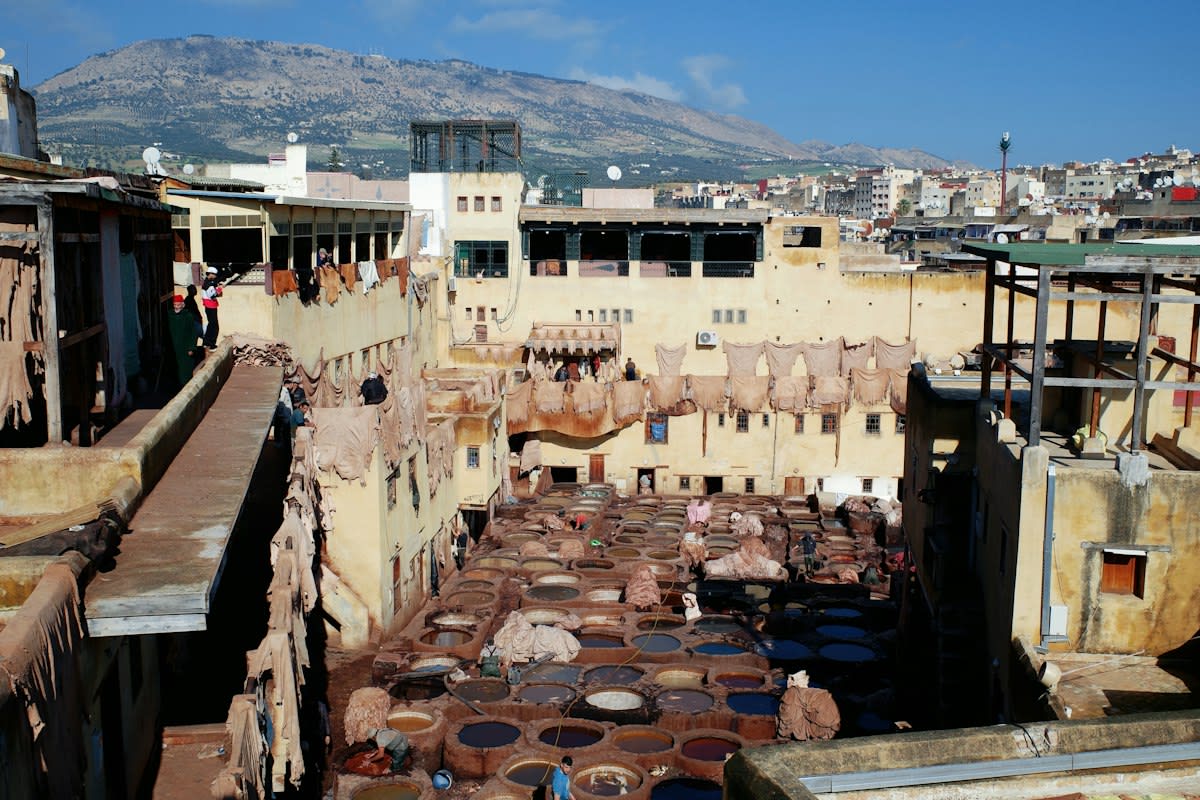
Efficiency killed the craft. The transition to synthetic indigo, first commercialized in the late 19th century, was not a choice made for aesthetics but for the eradication of biological unpredictability. Synthetic indigo offers a purity of 99% (Source: Textile World, 2022), ensuring that every meter of fabric is a precise shade of deep navy. Natural indigo, by contrast, contains impurities that vary by soil composition and harvest date, making it impossible to standardize for global supply chains.
The economic delta is staggering. Producing one kilogram of natural indigo requires approximately 10 to 15 times more water than its synthetic counterpart (Source: World Bank, 2021). In water-stressed regions like Mexico City's Iztapalapa, the luxury of organic dyeing is a logistical impossibility. The water used in traditional vats is often contaminated with heavy metals, which then leach into the groundwater, creating a cycle of toxicity that the organic label conveniently ignores.
"The push for natural dyes in urban slums is often a projection of Western nostalgia. In reality, the chemical volatility of a natural vat is a liability that small-scale producers in Dharavi cannot afford. One bad fermentation cycle can bankrupt a family workshop."— Dr. Aris Munandar, Textile Historian at University of Indonesia
The friction is constant. Most traditional dyers are now forced to use a hybrid method, using synthetic indigo but marketing it as traditional to capture the premium price of the organic market. This creates a shadow economy where the terminology of craft is used to mask the reality of industrial chemicals.
Chemical Volatility vs. Synthetic Stability
Stability is the only metric that matters in a garment factory. Natural indigo requires a reduction process that can take days, relying on fructose or alkali to strip oxygen from the dye. If the oxygen levels spike, the dye precipitates out of the solution, leaving the fabric streaked and uneven. Synthetic indigo utilizes sodium hydrosulfite, a powerful reducing agent that works in minutes, removing the guesswork and the risk of crop-based failure.
| Metric | Natural Indigo (Biological) | Synthetic Indigo (Chemical) |
|---|---|---|
| Production Time | 7-14 Days (Fermentation) | 2-4 Hours (Chemical Reduction) |
| Color Consistency | Low (Variable by Batch) | High (Standardized) |
| Water Intensity | High (150L per kg) | Low (20L per kg) |
| Chemical Risk | Alkaline Burns / Bio-contamination | Sulfur Emissions / Heavy Metals |
| Market Share | Less than 5% (Source: Global Dye Report, 2023) | Over 95% (Source: Global Dye Report, 2023) |
The environmental cost of synthetic indigo is high, yet it is a known cost. The discharge of hydrosulfite into the rivers of Bogota's Ciudad Bolívar creates anaerobic zones where fish cannot survive, but this is a manageable industrial waste problem. The failure of natural indigo is an economic one; it cannot scale without destroying the very ecosystems it claims to protect through its massive land and water requirements.
Ground-Level Friction
Walk through a dyeing cluster in Dharavi and you will see the reality. There are no serene gardens of indigo plants here. Instead, there are plastic drums filled with a caustic liquid that eats through cheap rubber boots. The air is thick with metallic dust from nearby grinding mills, which settles into the vats and alters the pH. The dyers argue over the price of lime and the quality of the imported indigo cakes from India's rural interior, which often arrive contaminated with mold.
The debate is not about art. It is about survival. When a shipment of cobalt-colored denim is rejected by a buyer in Europe because the shade varies by two percent, the dyer doesn't get a lesson in the beauty of organic imperfection. They get a payment deduction that means their children don't eat for two days. The biology of the plant is a liability in a world of digital color matching.
Failing bearings in the stirring machines spray grease into the vats. This grease creates a film on the surface of the liquid, preventing the oxygen exchange necessary for the dye to set. The result is a fabric that rubs off on the wearer's skin, a defect known as crocking, which is far more prevalent in poorly managed natural vats than in synthetic ones.
Editorial Note
The narrative of the natural dye revival is largely a marketing construct. While boutique studios in the West embrace the unpredictability of the vat, the urban poor in the Global South view these biological instabilities as a threat to their economic stability.
The Final Shift
The industry has moved toward pre-reduced synthetic indigo to eliminate the need for dangerous reducing agents on-site. This shift removes the need for the dyer to manage the volatile chemistry of the vat entirely. The craft is being replaced by a chemical delivery system. The traditional dyer is becoming a machine operator, and the biological knowledge of the plant is being erased in favor of a technical manual.
We are witnessing the death of the biological vat. It is not a tragedy but a logical outcome of the need for precision. The cost of maintaining a living culture of bacteria in the middle of a polluted metropolis is simply too high. The natural indigo tradition is now a museum piece, preserved in high-end galleries while the actual work of clothing the world happens in the predictable, sterile silence of chemical plants.
Fact-Check
Fact-Check & Accuracy Note: All statistics regarding market share and water usage are based on industry reports from 2021-2023. The chemical descriptions of indigo reduction (oxidation/reduction) are consistent with standard organic chemistry. Geographic references to Dharavi and Kampung describe documented industrial clusters.